Table of Contents
ToggleWrought iron patio furniture is built to last decades, rust-resistant powder coatings and forged steel construction can weather everything from summer storms to winter freezes. But without proper cushions, those elegant scrollwork benches and café-style chairs become torture devices after about fifteen minutes. The right cushions transform wrought iron from unforgiving metal into comfortable outdoor seating that homeowners actually use, but choosing cushions for outdoor metal furniture involves different considerations than shopping for indoor upholstery. Fabric durability, fill materials, and dimensional fit all matter more when cushions are fighting UV rays, moisture, and the unforgiving geometry of metal frames.
Key Takeaways
- Wrought iron patio furniture cushions must be made from solution-dyed acrylic fabrics like Sunbrella and filled with reticulated foam (minimum 24 lb density) to withstand UV rays, moisture, and maintain durability for 5-7 years.
- Proper cushion sizing requires subtracting 1 inch from your wrought iron furniture’s width and depth measurements to ensure correct fit and prevent overhang or premature wear on metal frames.
- Dark colors absorb heat and become uncomfortable in summer, so choose light to mid-tone cushions in beige, tan, or gray that reflect heat while hiding dust and pollen accumulation.
- Secure cushions with four fabric ties using bartack stitching rather than elastic loops to prevent sliding on the smooth powder-coated metal surface of wrought iron furniture.
- Monthly hose cleaning and twice-yearly deep cleaning with mild soap preserve cushion condition, while proper winter storage in ventilated, dry spaces prevents mildew growth and extends cushion lifespan.
- Replace cushions when foam no longer rebounds after compression or fabric shows significant fading, as quality wrought iron patio furniture cushions typically last 5-7 years with regular maintenance.
Why Wrought Iron Furniture Needs the Right Cushions
Wrought iron’s durability comes at a comfort cost, the material conducts heat and cold, feels hard against the body, and offers zero give under weight. Metal furniture can reach 140°F in direct sunlight, making bare seats unusable during peak afternoon hours. In winter, that same thermal conductivity makes wrought iron painfully cold.
Cushions solve both problems. They create a thermal barrier between body and metal while adding the padding that wrought iron lacks. But the narrow seat depths and curved backs typical of wrought iron furniture require cushions that fit precisely. A standard indoor throw pillow slides around on smooth powder-coated metal, bunches up under body weight, and eventually ends up on the ground.
Wrought iron also lacks the forgiving flex of wood or resin furniture. Where wooden slats might give slightly under pressure, metal frames stay rigid. This means cushion compression and fill resilience matter more, a cushion that bottoms out under pressure defeats the entire purpose. Many homeowners underestimate how much firmer outdoor cushions need to be compared to indoor seating, especially for furniture that sees daily use.
Choosing the Best Cushion Materials for Outdoor Durability
Weather-Resistant Fabrics That Last
Outdoor cushion fabric needs to handle what indoor upholstery never faces: UV degradation, mold growth, and water infiltration. Solution-dyed acrylic fabrics like Sunbrella dominate the outdoor market because the color is embedded into the fiber during manufacturing rather than applied as a surface dye. This prevents fading even after years of sun exposure, expect 5-7 years of color retention in full sun locations.
Polyester fabrics cost less but fade faster, typically showing noticeable color loss within 2-3 seasons. Some newer polyester blends include UV inhibitors that extend lifespan to 3-4 years. Both fabrics resist mildew better than natural fibers like cotton, which should never be used for outdoor cushions without a waterproof cover system.
Look for fabrics rated 500+ hours in xenon arc weathering tests (AATCC Test Method 16). This industry standard simulates years of sun exposure. Anything below 300 hours won’t make it through two full summers without significant fading. Thread count matters less outdoors than weave tightness, a tight weave sheds water better and resists tearing when moisture freezes inside the fabric during cold snaps.
Fill Options: Foam vs. Polyester vs. Quick-Dry
Open-cell foam remains the most popular fill material because it provides firm support and returns to shape after compression. For outdoor use, foam needs a minimum density of 24 pounds per cubic foot, anything lighter compresses permanently within one season. High-resilience foam (HR foam) rated at 2.5+ pounds density costs more but maintains loft 2-3 times longer than standard foam.
The foam must be reticulated (treated to open the cell structure) so water drains through rather than pooling inside. Non-reticulated foam acts like a sponge, staying wet for days and becoming a mold factory. Even reticulated foam benefits from a fast-dry wrap layer.
Polyester fiberfill dries faster than foam but compresses more easily. It works better for back cushions than seat cushions, where body weight creates persistent compression. Some manufacturers use a hybrid approach, a foam core wrapped in polyester batting, that balances support with drainage.
Quick-dry foam channels (vertical cuts through the foam) improve drainage but reduce support slightly. They’re worth considering for covered porch furniture that sees occasional rain exposure but not for fully exposed locations where standard reticulated foam with proper covers performs better.
Measuring Your Wrought Iron Furniture for Perfect Cushion Fit
Wrought iron dimensions vary more than standardized resin or aluminum furniture, so measure each piece individually. Use a steel tape measure, fabric tapes stretch and give inaccurate readings.
For seat cushions, measure width (side to side), depth (front to back), and note the shape. Most wrought iron seats are square, rectangular, or rounded rectangles. Measure at the widest points, then subtract 1 inch from width and depth for proper fit. Cushions sized exactly to frame dimensions overhang the edges and look sloppy. They also catch on the metal frame when someone sits down, causing premature wear.
Check seat depth carefully, many wrought iron chairs have seats only 14-16 inches deep, compared to 18-20 inches for standard indoor dining chairs. Using a too-deep cushion forces sitters forward into an uncomfortable position. If depth is unusually shallow, consider a waterfall edge (rounded front) instead of a boxed edge to prevent the cushion from digging into the back of the legs.
Back cushions need thickness measurements too. Wrought iron backs are often nearly vertical with minimal recline angle. A 2-3 inch thick back cushion provides comfort without pushing the sitter too far forward. Thicker cushions work against the furniture’s geometry.
For curved or scrollwork backs, take several width measurements at different heights. Custom-cut cushions work better than forcing rectangular cushions onto curved frames. Note the position of any metal arms or decorative elements that might interfere with cushion placement, many wrought iron chairs have arms that angle inward, creating a trapezoidal seat shape.
Style and Design Considerations for Your Outdoor Space
Wrought iron’s traditional aesthetic pairs naturally with solid colors and classic patterns, stripes, small-scale florals, and geometric prints that don’t fight with the furniture’s scrollwork. Overly busy patterns clash with ornate wrought iron details and make the space feel chaotic.
Color choices affect both aesthetics and temperature. Dark cushions absorb heat and can become uncomfortable to sit on during summer afternoons, even through clothing. Light to mid-tone colors reflect more heat while still hiding the inevitable dirt that accumulates on outdoor furniture. Beige, tan, and gray tones hide dust and pollen better than stark white, which requires constant cleaning. Cushion design in outdoor spaces follows similar principles to regional porch styles, where practicality and aesthetics balance.
Consider piping or welting along cushion edges, this corded trim detail isn’t just decorative. It reinforces seams and helps cushions maintain their shape. Contrast piping (a different color than the main fabric) adds visual interest without overwhelming patterns. Self-piping (same fabric as cushion body) creates a more subtle, unified look.
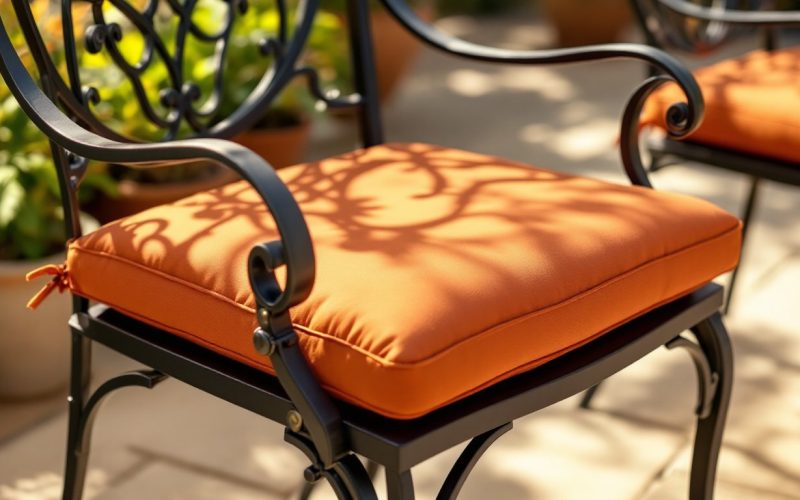
Tie systems matter more than most homeowners realize. Wrought iron’s smooth powder-coated finish offers zero friction, cushions without ties slide constantly. Fabric ties (not elastic loops, which degrade in UV) should attach to the cushion with bartack stitching, not just a straight seam. Loop the ties around horizontal frame members or through seat backs. Four ties per seat cushion (one at each corner) prevent shifting better than two ties.
Thickness affects style as much as comfort. 4-5 inch seat cushions look substantial and traditional, matching wrought iron’s visual weight. Thinner 2-3 inch cushions suit more modern or minimalist wrought iron designs but compress faster under use.
Caring for and Maintaining Your Patio Cushions
Even weather-resistant cushions need regular maintenance. Brush off loose debris weekly with a soft bristle brush, letting leaves and pollen accumulate creates stains and holds moisture against the fabric. For most solution-dyed acrylics, spray down with a garden hose monthly during heavy-use seasons.
Deep clean cushions twice per season using mild soap and water (1/4 cup dish soap per gallon of warm water). Scrub with a soft brush, rinse thoroughly, and let air dry completely, standing cushions on edge speeds drying. Never use pressure washers on cushions: the force can separate fabric layers and damage foam cores. Similar maintenance approaches appear in country home outdoor care guides, emphasizing regular attention over intensive intervention.
Mildew shows up as black or gray spots and indicates moisture is trapped inside. If it appears, clean with a solution of 1 cup bleach per gallon of water (for white or colorfast fabrics only, test in an inconspicuous spot first). Let the solution sit for 15 minutes, scrub, rinse thoroughly, and dry completely in direct sunlight. Bleach alternatives like oxygen-based cleaners work but take longer.
Store cushions during extended non-use periods, winter storage for most climates, or summer storage in extremely hot desert regions where UV exposure is most intense. Clean and dry cushions completely before storage to prevent mildew growth in enclosed spaces. Store in a dry, ventilated area like a garage or shed, never sealed in plastic bags where condensation can form. Deck boxes work well if they have ventilation holes.
Zipper pulls and seams are weak points. Inspect quarterly and hand-stitch any loose seams immediately, a small separated seam becomes a gaping hole after one more season. Replace cushions when foam no longer rebounds after compression or when fabric shows widespread fading or tears. Quality cushions should last 5-7 years with proper care, while budget options typically need replacement after 2-3 seasons.