Table of Contents
ToggleDesert homeowners know the drill: sunshine that bakes surfaces to 120°F or higher, UV rays that bleach colors within a season, and temperature swings that crack inferior materials by summer’s end. That wicker set you loved at the store? It’ll be brittle and faded by August if it’s not built for the heat. Choosing patio furniture for Phoenix, Palm Springs, or Tucson isn’t just about style, it’s about survival. The right materials resist warping, fading, and cracking, while the wrong ones become expensive yard waste. This guide breaks down the materials, features, and maintenance strategies that actually work when temperatures soar and humidity drops to single digits.
Key Takeaways
- Desert patio furniture must resist extreme UV exposure (index 11+), temperature swings from 130°F to 60°F, and low humidity that cracks inferior materials within 12–24 months.
- Aluminum with powder-coated finishes and UV-stabilized HDPE resin wicker are the gold standards for desert climates, offering superior durability without warping or fading.
- Solution-dyed acrylic cushions (like Sunbrella) with 5+ year fade warranties and closed-cell foam cores outperform cheaper polyester and open-cell alternatives in extreme heat.
- Welded joints, adjustable glides, and sling seating are essential features that ensure your best patio furniture for desert climates remains stable and low-maintenance.
- Regular maintenance—monthly cleaning, twice-yearly inspections, breathable covers, and shade structures—can cut UV exposure by 50% and extend furniture life significantly.
Why Desert Climates Demand Specialized Patio Furniture
Standard patio furniture isn’t engineered for 110°F days and 50°F nights. Desert regions impose unique stresses that coastal or temperate climates don’t.
Extreme UV exposure degrades plastics, fades fabrics, and breaks down wood finishes faster than anywhere else in the country. A UV index of 11+ is routine from May through September. Materials without UV stabilizers or protective coatings will fail within 12–24 months.
Temperature swings create expansion and contraction cycles that loosen joints, crack welds, and split wood. A metal frame at 130°F in the afternoon drops to 60°F by dawn. Cheaper metals and untreated wood can’t handle that cycle season after season.
Low humidity (often below 20%) dries out natural materials. Wood splits, leather cracks, and adhesives fail. Even “outdoor” cushions without proper construction will shed foam dust as the sun bakes moisture out.
Dust and wind are constant. Fine sand works into joints, clogs mechanisms, and scratches surfaces. Furniture with exposed fasteners or open weaves collects debris that’s tough to clean.
Investing in desert-rated furniture upfront saves money over replacing flimsy sets every two years.
Top Materials That Thrive in Extreme Desert Conditions
Not all outdoor materials are created equal. Here’s what holds up when the thermometer climbs.
Aluminum and Powder-Coated Metal
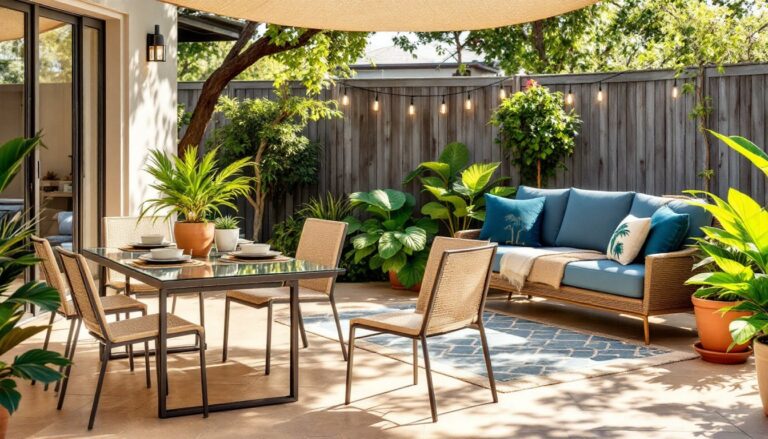
Aluminum is the gold standard for desert furniture. It’s lightweight, rust-proof, and handles temperature extremes without warping. Look for powder-coated finishes rather than paint, powder coating bonds at a molecular level and resists chipping and UV fade far better than wet paint.
Commercial-grade aluminum frames (often 1.5–2mm wall thickness) support adults comfortably and won’t sag. Cheaper aluminum tubing (under 1mm) dents easily and flexes under weight.
Steel can work if it’s hot-dip galvanized or powder-coated, but it’s heavier and retains heat. A steel chair left in the sun can be too hot to touch for hours. Stick with aluminum unless you need the extra weight for wind resistance.
Avoid wrought iron unless you’re prepared to repaint every other year. It rusts quickly in areas with monsoon rains (yes, even the desert gets humidity spikes).
All-Weather Wicker and Resin
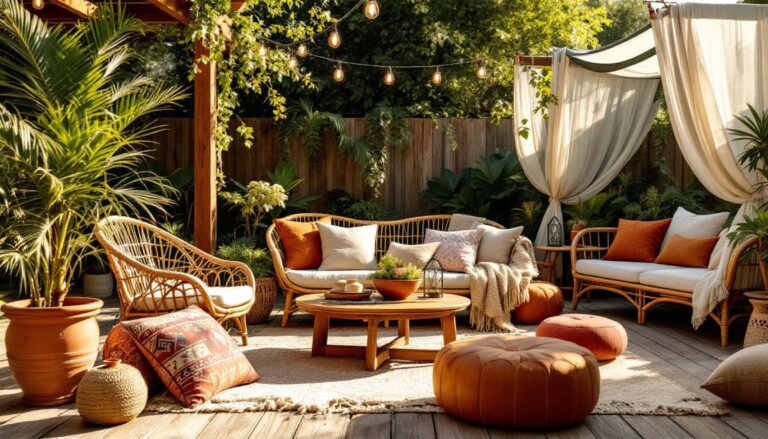
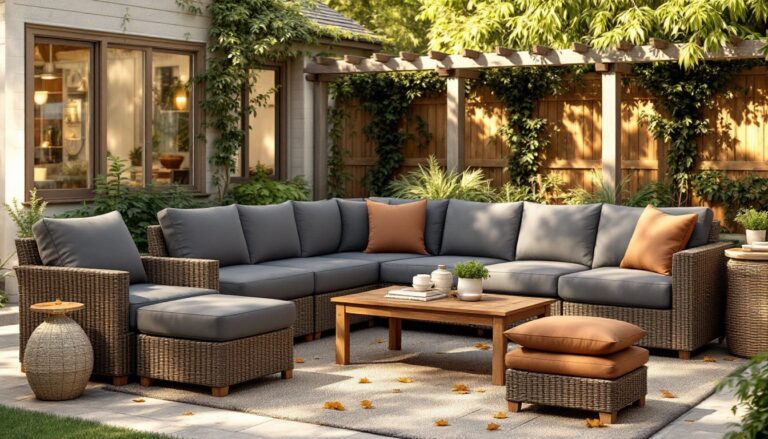
High-density polyethylene (HDPE) wicker, also called resin wicker, mimics natural rattan but is extruded from UV-stabilized plastic. Quality HDPE won’t crack, fade, or unravel even after years in direct sun. Look for wicker with UV stabilizers rated to 2,000+ hours of sun exposure.
Natural wicker, rattan, or cane will dry out and snap. Don’t bother, it’s not worth the maintenance in a desert climate.
Check the weave density. Tighter weaves (smaller gaps) shed dust better and hold their shape longer. Cheaper resin wicker uses thinner strands that stretch and sag.
Recycled plastic lumber (like what’s used in some outdoor furniture designs) is another solid choice, it won’t splinter, fade, or require sealing. It does get hot to the touch, so pair it with cushions.
Essential Features to Look for in Desert Patio Furniture
Material alone isn’t enough. These features separate furniture that lasts from furniture that limps along.
UV-resistant cushions and fabrics are non-negotiable. Look for solution-dyed acrylic (like Sunbrella) with fade warranties of 5+ years. The dye is added during fiber extrusion, not applied after, so it resists fading from the inside out. Cheaper polyester prints fade within one season.
Cushion fill matters too. Closed-cell foam or quick-dry foam cores prevent moisture retention during monsoons and resist breakdown from UV exposure. Open-cell foam absorbs water, mildews, and crumbles.
Adjustable or removable cushions let you store them during the hottest months or when you’re away. Velcro ties or zippers beat sewn-in foam every time.
Sling seating (fabric stretched over a frame) is popular in desert climates because it dries instantly, doesn’t trap heat, and requires no cushions. Look for vinyl-coated polyester mesh rather than basic PVC, it’s more breathable and resists tearing.
Welded joints on metal frames outlast bolted ones. Check corners and stress points, if you see bolts, they’ll loosen over time. TIG or MIG welds are smooth and permanent.
Adjustable glides on chair and table legs compensate for uneven patios and reduce rocking. Many designs used in regional outdoor living spaces prioritize stability on stone or concrete surfaces.
Stackable or foldable designs make off-season storage easier, which extends furniture life. Even desert pieces benefit from garage storage during haboobs (dust storms) or if you’re snowbirding.
Protecting Your Patio Furniture from Desert Elements
Even the best materials need care. Here’s how to extend the life of your investment.
Covers are worth it, especially for cushions and tables. Use breathable, water-resistant covers with UV protection and tie-downs. Waterproof vinyl traps heat and moisture underneath, which can damage finishes. Covers should fit snugly, loose fabric flaps in the wind and wears out faster.
Shade structures cut UV exposure by 50% or more. A pergola, sail shade, or retractable awning keeps furniture cooler and slows fading. Even partial shade (4–6 hours daily) makes a measurable difference.
Regular cleaning prevents dust buildup. Hose down frames and wipe resin wicker monthly with mild soap and water. For metal, use a car wash soap, it’s pH-balanced and won’t strip powder coating. Avoid pressure washers on wicker or fabric: they fray edges and force water into cushion cores.
Inspect joints and fasteners twice a year. Tighten bolts, check welds for cracks, and touch up any chips in powder coating with clear nail polish or matching paint pen to prevent rust from starting.
Store cushions indoors during summer if you’re gone for weeks at a time. A garage or shed keeps them cleaner and cooler. If you leave them out, flip them weekly to ensure even sun exposure and fading.
Reapply protectants to any wood elements (teak, eucalyptus) annually. Use marine-grade sealers or UV-blocking oils designed for high-sun environments. Teak can gray naturally, but sealing slows splitting.
Anchor lightweight pieces during monsoon season. Sudden wind gusts can turn aluminum chairs into projectiles. Sandbags, tie-downs, or simply moving pieces against a wall works.
Many of these maintenance practices also apply to indoor furniture care techniques adapted for outdoor use.
Conclusion
Desert patio furniture isn’t just about looks, it’s about choosing materials that won’t surrender to sun, heat, and dust. Aluminum, powder-coated finishes, HDPE wicker, and solution-dyed fabrics are the workhorses that deliver years of use without constant upkeep. Pair smart material choices with basic maintenance, and your outdoor space stays functional and comfortable season after season.