Table of Contents
ToggleGood patio furniture cushions turn an uncomfortable metal chair into a spot you’ll actually use. They’re the difference between a deck that collects dust and an outdoor room that extends your living space from April through October. But not all cushions are created equal. Cheap foam compresses into pancakes by midsummer. Poorly chosen fabric fades to a sad pastel or grows mold in the first rainstorm. This guide walks through what actually matters when selecting, maintaining, and styling cushions that’ll last more than one season.
Key Takeaways
- Quality patio furniture cushions extend your outdoor living season and protect your furniture investment by resisting UV degradation, moisture, and mildew, with mid-to-high grade options lasting 5–7 years versus 12–18 months for cheap alternatives.
- Solution-dyed acrylic fabrics like Sunbrella are the best choice for outdoor cushions because the color is locked into fibers during manufacturing, resisting fading far better than olefin or untreated materials.
- Always measure your furniture carefully and round down when selecting patio furniture cushion sizes—a slightly undersized cushion stays in place better than one that overhangs or bunches up.
- Weekly vacuuming, spot cleaning with mild soap, and periodic air-drying prevent mold and mildew from cutting cushion lifespan short, making basic maintenance essential for durability.
- Choose cushion colors strategically: neutrals hide dirt and fade less noticeably, while bold colors remain intentional as they age, whereas medium tones may look washed out over time.
- Invest in quick-dry foam with open-cell structure for cushion fill, as standard polyurethane absorbs water and breeds mildew, while quick-dry foam allows water to evaporate within hours.
Why Quality Patio Furniture Cushions Matter for Your Outdoor Space
Outdoor cushions do more than add a pop of color. They protect your investment in patio furniture by reducing direct wear on frames and seating surfaces. Metal furniture in particular benefits, cushions prevent the hot-seat effect on summer afternoons and keep you from freezing on cool spring evenings.
Comfort aside, cushions also bridge the gap between indoor and outdoor aesthetics. A well-cushioned seating area signals that the space is meant for living, not just looking at. Guests will actually sit down instead of hovering awkwardly near the grill.
From a durability standpoint, quality cushions resist UV degradation, moisture penetration, and mildew growth, the three primary killers of outdoor textiles. Cheap cushions might save $50 upfront but often need replacement within 12–18 months. Mid-to-high grade cushions with solution-dyed acrylic fabrics and quick-dry foam cores can last 5–7 years with basic maintenance.
If the furniture itself is an investment, teak, powder-coated aluminum, or resin wicker, skimping on cushions is like putting retreads on a new truck. The whole system needs to match in quality and longevity.
Types of Patio Furniture Cushions: Finding the Right Fit
Cushions come in several standard configurations, each designed for specific furniture styles:
Seat cushions are flat pads, typically 2–4 inches thick, that sit on chair or bench seats. They’re held in place with ties, elastic straps, or non-slip backing. These work well for dining chairs and benches where back support isn’t needed.
Back cushions are vertical pads that lean against chair or sofa backs. They’re often 3–5 inches thick and may attach via ties or Velcro. Pairing these with seat cushions creates a full seating system.
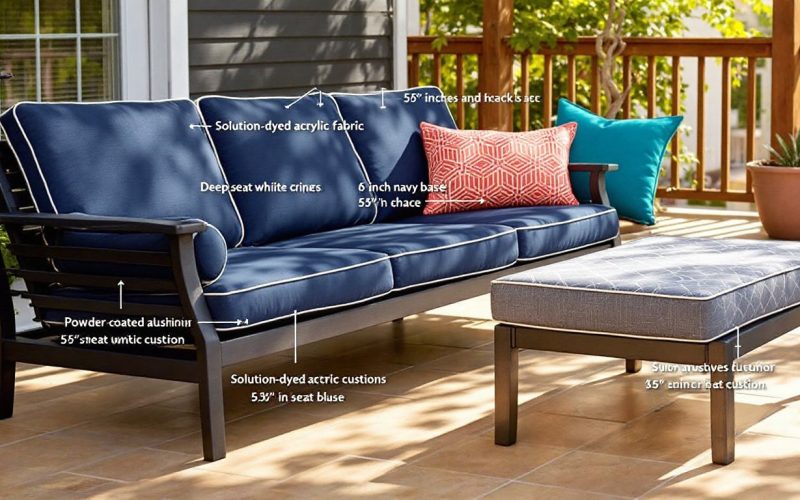
Deep-seat cushions combine seat and back into one L-shaped unit, common on lounge chairs, sectionals, and Adirondack-style seating. These typically feature a 5–6 inch seat base and a thicker back portion (6–8 inches). They’re bulkier to store but provide the most comfort for long sits.
Bench cushions are elongated seat pads, often 4–6 feet long, designed for porch swings, gliders, or outdoor benches. They may come in one continuous piece or as separate sections for flexibility.
Chaise lounge cushions are full-length pads with adjustable or segmented designs to accommodate reclining positions. These are typically 72–78 inches long and 20–24 inches wide.
When selecting a type, match it to how the furniture will be used. Dining areas can get away with thinner seat cushions since meals don’t last hours. Lounge zones need deeper, more supportive cushions for reading, napping, or extended conversation.
Best Fabrics and Materials for Outdoor Cushions
Fabric choice determines how cushions handle sun, rain, and mildew. Not all “outdoor” fabrics perform equally.
Solution-dyed acrylic (brands like Sunbrella are well-known here) is the gold standard. The color is locked into the fiber during manufacturing, not applied as a surface treatment, so it resists fading for years. It sheds water reasonably well, dries faster than cotton, and resists mold. Expect to pay $40–$80 per yard, but the longevity justifies the cost.
Olefin (polypropylene) is a budget-friendly synthetic that resists moisture and mildew but fades faster under intense UV. It’s a solid mid-range option for covered patios or climates with less direct sun. Olefin cushions typically run $20–$40 per yard.
Polyester blends vary widely. Marine-grade polyester holds up well, but standard polyester fades and can feel sticky in humidity. If you go this route, confirm it’s UV-treated and water-resistant.
Avoid untreated cotton or linen outdoors. They absorb water, dry slowly, and are mildew magnets. Even “outdoor” cotton requires frequent washing and quick drying to stay usable.
For cushion fill, quick-dry foam is essential. Standard polyurethane foam soaks up water like a sponge and takes days to dry, creating a mildew breeding ground. Quick-dry foam has an open-cell structure or drainage channels that allow water to pass through and evaporate within hours. Some chicory outdoor furniture designs incorporate ventilated frames that help cushions dry even faster.
Fiber-fill (polyester batting) is another option, especially for back cushions. It’s lightweight, compressible for storage, and dries quickly, but it doesn’t provide the firm support that foam does for seating surfaces.
How to Measure and Choose the Perfect Cushion Size
Ill-fitting cushions slide around, bunch up, or hang over edges. Measure carefully before ordering.
For seat cushions, measure the seat surface width (side to side) and depth (front to back). Round down to the nearest inch, a cushion slightly smaller than the seat stays in place better than one that overhangs. For example, a 19.5-inch seat should get a 19-inch cushion, not 20.
Most dining chair seats are 16–18 inches square. Lounge chairs range from 20–24 inches deep and 22–26 inches wide. Measure your specific furniture: “standard” varies by manufacturer.
Thickness matters for comfort and proportion. Thin cushions (2 inches) work on slatted or contoured seats where the underlying structure provides support. Flat, hard surfaces need 3–4 inches minimum. Deep-seat lounge furniture looks and feels best with 5–6 inch seat cushions.
For back cushions, measure the height from where the cushion will rest (usually the seat surface) to the top of the chair back, and the width at the widest point. Back cushions can be slightly oversized without looking wrong, 2–3 inches of overhang at the top or sides is fine.
Custom vs. standard: Many retailers offer standard sizes in 2-inch increments (18×18, 20×20, 22×24, etc.). If your furniture is close to a standard size, that’s the easiest and most affordable route. Custom cushions cost 30–50% more but are necessary for unusual shapes, curved backs, or furniture with integrated armrests that affect cushion dimensions.
Don’t forget to account for seams and piping. A cushion with thick welt cord or box-edge construction will measure slightly larger than its stated dimensions. If your furniture has tight clearances (like a chair with narrow armrests), confirm actual finished dimensions with the seller.
Cleaning and Maintenance Tips to Extend Cushion Lifespan
Even quality cushions need regular care. Neglect turns a 7-year cushion into a 2-year one.
Weekly maintenance: Shake out or vacuum cushions to remove pollen, dust, and debris. Let them air out in the sun periodically to prevent moisture buildup, especially if they’re under a covered patio where airflow is limited.
Spot cleaning: For spills or bird droppings, act fast. Blot (don’t rub) with a clean cloth and mild soap solution (1 tablespoon dish soap per quart of lukewarm water). Rinse thoroughly with a hose or damp cloth, soap residue attracts dirt. According to home care advice from Better Homes & Gardens, most outdoor fabrics can handle a soft-bristle brush for tougher stains, but avoid harsh scrubbing that damages fibers.
Deep cleaning: Once or twice per season, remove covers (if removable) and wash according to care labels. Most solution-dyed acrylics tolerate machine washing on gentle cycle with mild detergent and cold water. Air dry only, high heat can shrink fabric or degrade waterproof coatings. For non-removable covers, hand-wash with the same soap solution, rinse well, and stand cushions on edge to drain and dry.
Mold and mildew: If you spot mold, mix 1 cup white vinegar with 1 gallon of water and scrub affected areas with a soft brush. For stubborn mold, a solution of 1 cup bleach per gallon of water works on white or colorfast fabrics, but test in an inconspicuous spot first. Rinse thoroughly afterward.
Sun protection: Even UV-resistant fabrics benefit from shade during peak sun hours. If your patio gets 8+ hours of direct sun daily, consider a pergola, umbrella, or retractable awning to reduce cumulative UV exposure.
Storage Solutions for Off-Season Protection
If you live where winter means snow or extended freezing, bring cushions indoors. Freeze-thaw cycles and trapped moisture degrade foam and fabric.
Deck boxes are the go-to for on-site storage. Choose one with ventilation holes or a waterproof liner to prevent condensation. Ensure cushions are completely dry before storing, trapped moisture in a closed box will cause mold regardless of fabric type.
Basement or garage storage: Stack cushions flat or stand them on edge to maintain shape. Don’t compress them tightly for months, foam loses resilience. If possible, store in breathable fabric bags rather than plastic, which traps humidity.
Furniture covers: If you’re leaving cushions outdoors, invest in furniture covers designed for cushioned pieces. Look for covers with vents to prevent condensation and tie-downs or weighted hems to withstand wind. Even with covers, periodically check for moisture buildup during mild winter days.
Regional climates matter. In areas with mild, dry winters, cushions can often stay out year-round with covers. In humid coastal or freeze-thaw regions, indoor storage is the safer bet.
Styling Your Patio with Cushions: Colors, Patterns, and Design Ideas
Cushions set the visual tone for outdoor spaces. Choose deliberately.
Color strategy: Neutrals (gray, beige, navy, white) are forgiving, they hide dirt better than bright colors and pair easily with changing decor. They also fade less noticeably. If you want color, go bold. Sun bleaches everything eventually, so a vibrant coral or teal will look intentional as it softens, while a medium blue might just look washed out.
Pattern scale: Large-scale patterns (oversized florals, bold stripes, geometric blocks) read well from a distance and make a statement. Small, busy patterns can look cluttered, especially on deep-seat cushions with a lot of surface area. For design inspiration that balances pattern and outdoor living, Gardenista offers examples that blend texture and color without overwhelming a space.
Mixing patterns: It’s possible, but stick to a shared color palette. Pair a large-scale pattern on seat cushions with a smaller complementary pattern or solid on back cushions. A common trick: use stripes as a neutral to bridge two different prints.
Texture: Don’t overlook it. Woven textures, basket weaves, and slubby fabrics add depth without pattern. They’re especially effective in monochrome schemes where color isn’t doing the heavy lifting.
Seasonal swaps: If budget allows, keep two sets, durable neutrals as the base and a seasonal accent set in lighter colors or patterns for spring and summer. Coastal design often benefits from this approach, a strategy seen in many Southern Living porch features where layered textiles shift with the calendar.
Throw pillows: Add smaller accent pillows (14×14 or 16×16 inches) in complementary or contrasting colors. These are easier to swap out and store than full cushions, letting you refresh the look without major investment. Use outdoor-rated pillows with water-resistant inserts, indoor pillows will mildew quickly outside.
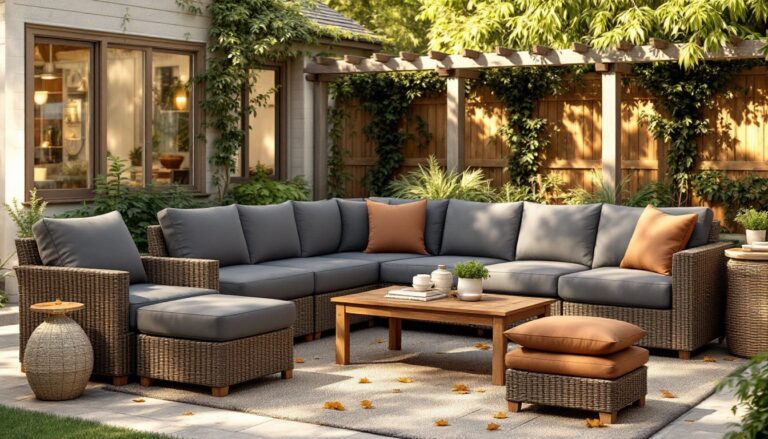
Proportion matters: On a large sectional, undersized cushions look lost. On a bistro set, oversized cushions look cartoonish. Match cushion thickness and visual weight to the furniture’s scale and style. Sleek modern furniture pairs well with thinner, tailored cushions. Chunky farmhouse or rustic pieces can handle thick, plush cushions.