Table of Contents
ToggleA cramped living room doesn’t have to feel like a furniture Tetris game. With the right pieces and strategic placement, even a 10×12 room can feel spacious, functional, and inviting. The key isn’t downsizing your comfort, it’s choosing furniture that works harder and takes up less visual and physical space. This guide covers proven furniture strategies for small living rooms, from multi-functional pieces to layout tricks that make walls feel farther apart. Whether working with a studio apartment or a narrow townhouse living area, these ideas help homeowners balance seating capacity, storage needs, and breathing room.
Key Takeaways
- Small living room furniture ideas work best when each piece serves multiple functions—like storage ottomans that replace coffee tables or sofa beds that add guest sleeping capacity without a separate bedroom.
- Downsizing seating dimensions by 12–18 inches, such as choosing loveseats or apartment-sized sofas with track arms, opens critical floor space for movement and other furnishings.
- Furniture with exposed legs (at least 4–6 inches tall) creates visual lightness and negative space, making small living rooms feel more spacious than pieces sitting flush to the floor.
- Vertical storage through floor-to-ceiling bookcases and floating shelves preserves precious floor space while maximizing storage and display capacity.
- Light colors, reflective surfaces, and mirrors strategically positioned opposite windows expand the perceived space and create an airy feel without changing actual square footage.
- Furniture selection and thoughtful arrangement matter more than total square footage—a well-edited small living room with properly scaled pieces outperforms a larger space cluttered with oversized furniture.
Choose Multi-Functional Furniture to Save Space
Single-purpose furniture is a luxury small living rooms can’t afford. Every piece should earn its footprint by serving two or more roles.
Storage ottomans replace traditional coffee tables while hiding blankets, remotes, and board games inside. Look for models with removable lids rated to support at least 250 pounds, they’ll double as extra seating during gatherings. Cube ottomans (typically 15×15 inches) fit under console tables when not in use.
Sofa beds and sleeper sectionals turn a living room into a guest room without dedicating a separate bedroom. Modern mechanisms like pull-out platforms or fold-down backs are simpler than old-school innerspring mattresses. Memory foam mattresses (4-6 inches thick) pack away more compactly than traditional coil versions.
Nesting tables stack together when not needed, then spread out for drinks or laptop work. A set of three typically ranges from 16 to 20 inches in diameter. They’re easier to move than a single 36-inch coffee table and adapt to different layouts.
Console tables with drop leaves expand from 12 inches deep to 24+ inches for dining or workspace, then fold flat against a wall. Pair with folding chairs stored in a closet.
When selecting pieces, check actual dimensions, not just how they look online. A “compact” sectional can still measure 80 inches long, which overwhelms a 10-foot wall. Measure twice, order once.
Opt for Space-Saving Seating Solutions
Standard 84-90 inch sofas dominate small rooms. Scaling down seating dimensions by even 12-18 inches opens up floor space for traffic flow and other furniture.
Loveseats and Apartment-Sized Sofas
Loveseats run 58-64 inches wide, perfect for walls under 7 feet or as part of an L-shaped arrangement with a chair. Apartment-sized sofas (68-78 inches) split the difference between loveseats and full-size couches, seating three adults without blocking windows or doorways.
Look for models with track arms instead of rolled or English arms. Track arms add zero width beyond the frame, saving 4-6 inches per side compared to bulkier styles. That’s nearly a foot of extra clearance.
Sectionals seem counterintuitive for small spaces, but an apartment-scale L-shaped sectional (under 80 inches per side) can maximize corner seating without requiring separate chairs. Position the chaise end against a wall to avoid a floating piece blocking pathways. Some modular sectionals let owners reconfigure or remove sections as needs change, worth considering for renters.
Armless Chairs and Stools
Removing arms from seating creates a lighter visual footprint and physical flexibility. Armless accent chairs (typically 24-28 inches wide) slide under console tables or tuck into corners more easily than wingbacks or club chairs (30-36 inches wide).
Backless stools serve as coffee table seating, side tables, or plant stands. Look for upholstered models 16-18 inches tall, low enough to slide under a 19-20 inch high coffee table, high enough to sit comfortably. Many creative IKEA furniture hacks turn basic stools into custom storage or seating solutions.
Folding chairs get a bad reputation, but modern designs in metal or molded wood look intentional when leaned against walls or hung on hooks. Keep two on hand for extra guests, then store them in a closet or behind a door-mounted rack.
Select Furniture with Exposed Legs for an Airy Feel
Furniture that sits flush with the floor creates visual weight. Pieces elevated on legs let light and sightlines pass underneath, making rooms feel less crowded.
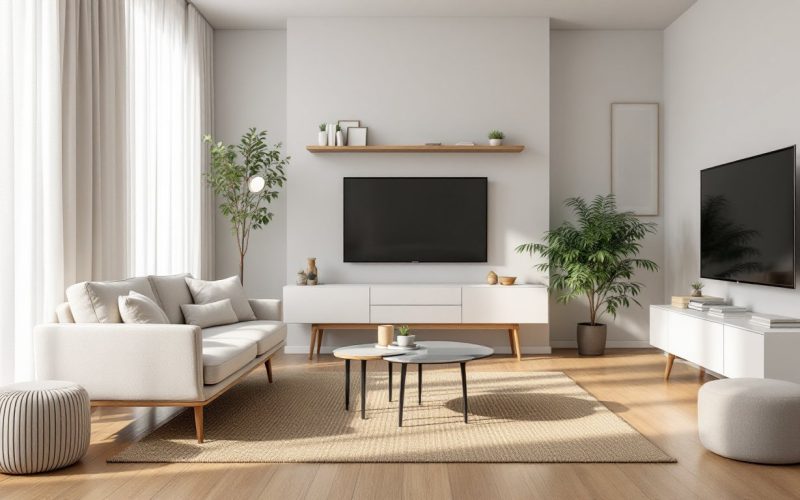
Choose sofas, chairs, and media consoles with legs at least 4-6 inches tall. Mid-century modern and Scandinavian styles naturally feature exposed wood or metal legs. Hairpin legs, tapered wood legs, and angled metal supports all create negative space that tricks the eye into perceiving more room.
This principle applies to storage, too. A media console on 5-inch legs looks lighter than a closed cabinet sitting on the floor, even if both hold the same amount of gear. The gap underneath can also be useful, slide storage baskets or a robotic vacuum under furniture during cleaning.
Avoid skirted sofas, box-frame chairs, and furniture with solid bases that extend to the floor. They create visual barriers and make small living rooms feel more enclosed. If inheriting or keeping a skirted piece, consider removing the skirt or replacing it with furniture legs using retrofit leg kits (available at most hardware stores for $20-40).
Glass or acrylic coffee tables take this concept further by letting sightlines pass through the furniture, not just under it. Tempered glass tables (at least 3/8-inch thick) handle normal use, though they require frequent cleaning to avoid smudges. Acrylic (Lucite) is lighter and doesn’t shatter, but scratches more easily.
Incorporate Vertical Storage and Floating Shelves
Floor space is precious, wall space is underused. Moving storage upward frees room for seating and traffic flow.
Floor-to-ceiling bookcases (typically 72-96 inches tall) hold more than waist-high units while occupying the same footprint. Anchor tall furniture to wall studs using L-brackets or furniture straps rated for the unit’s loaded weight (check manufacturer specs). This isn’t optional, it’s a safety requirement, especially in earthquake-prone regions or homes with kids.
Floating shelves (depths of 8-12 inches) create display and storage space without legs or floor presence. Install them above sofas, flanking windows, or in awkward corners where freestanding furniture doesn’t fit. Use hollow-wall anchors rated for 50+ pounds per shelf if mounting to drywall: toggle bolts work better for heavier loads. When possible, screw directly into studs spaced 16 inches on center (standard in most residential construction).
Wall-mounted media consoles replace traditional TV stands, freeing up floor space and making it easier to clean underneath. Models with cable management cutouts keep cords tidy. Ensure the console is rated to support the TV’s weight, a 55-inch TV typically weighs 30-40 pounds, and some larger models exceed 50 pounds.
Don’t ignore the space above doorways and windows. Shallow shelving (6 inches deep) works for books, baskets, or decor without interfering with doors or curtains. This is also where to declutter unwanted items before adding new storage, less stuff means less furniture needed.
Pegboards and wall grids handle lightweight storage (keys, mail, small plants) and adapt as needs change. Mount them in entryway corners or behind doors for bonus vertical organization.
Use Light Colors and Reflective Surfaces
Color and finish choices don’t change a room’s square footage, but they influence how spacious it feels.
Light-colored upholstery, whites, creams, soft grays, and pastels, reflects more light than dark fabrics, making furniture visually recede. That doesn’t mean avoiding darker tones entirely, but anchoring a small room with a charcoal sofa requires balancing it with lighter walls, rugs, and accents.
Performance fabrics have improved dramatically. Many options resist stains and clean with water and mild soap, making light upholstery practical for real life. Look for fabrics rated for 30,000+ double rubs (Wyzenbeek method) for durability. Crypton, Sunbrella, and similar treatments don’t compromise color while offering protection.
Mirrors are the oldest trick in the small-space playbook, but placement matters. Position a large mirror (36×48 inches or bigger) opposite a window to bounce natural light deeper into the room. Leaning an oversized mirror against a wall instead of hanging it adds casual style and flexibility, easier to reposition than drilling new holes.
Glass table tops and acrylic furniture keep the focus on other room elements rather than adding visual clutter. A glass-top coffee table over a metal or wood frame shows off the base design while maintaining sightlines.
Metallic accents, brass legs, chrome lamp bases, mirrored side tables, catch and reflect light around the room. Keep these as accents rather than dominant features: too much shine feels cold.
Paint walls in light neutrals with high LRV (Light Reflectance Value), ratings above 50 reflect more light than they absorb. White paints with LRV 85+ maximize brightness. Semi-gloss or satin finishes reflect more light than flat paints, though they also show imperfections more readily.
Many home decorating resources showcase how reflective surfaces and light palettes expand perceived space without sacrificing style. Combining these finishes with the right furniture scale keeps small living rooms feeling open rather than cramped.
A lighter palette doesn’t mean sterile. Layer in texture through linen throws, jute rugs, and wood accents to keep the room feeling warm. The goal is visual breathing room, not a doctor’s waiting room.
For renters, removable wallpaper in light patterns or peel-and-stick mirrors offer temporary solutions without losing deposits. Focus on what’s controllable: furniture choices, arrangement, and accessories. Small changes like swapping heavy curtains for sheer panels or replacing a bulky coffee table with nesting tables can make a noticeable difference.
Real estate experts and design communities like Apartment Therapy emphasize that thoughtful furniture selection matters more than square footage. A well-edited 150-square-foot living room with the right pieces feels more livable than a 250-square-foot room crammed with oversized furniture. Choose pieces that fit the space and the lifestyle, not the showroom.