Table of Contents
ToggleBlack and white patio furniture delivers a classic look that works with nearly any architectural style or landscaping design. Unlike trend-driven color palettes that date themselves within a few seasons, monochrome furniture stays relevant. It’s also forgiving, scuffs and fading are less visible on black surfaces, while white brightens shaded spaces and reflects heat in sunny areas. Whether outfitting a new deck, refreshing a worn patio, or creating a cohesive outdoor entertaining zone, black and white pieces offer flexibility without sacrificing style. This guide covers material selection, design strategies, and practical maintenance to help DIYers make smart choices for long-lasting outdoor furniture.
Key Takeaways
- Black and white patio furniture delivers timeless style that resists trend fatigue and pairs seamlessly with any architectural style or landscaping design.
- Powder-coated aluminum is the most durable and lightweight option for black and white outdoor furniture, while synthetic resin wicker offers a modern aesthetic with UV resistance.
- Strategic placement—black furniture in shaded areas and white pieces as focal points—maximizes the visual impact of your monochrome patio setup.
- Regular maintenance including mild soap cleaning, annual hardware inspections, and seasonal cushion storage can extend your patio furniture’s lifespan by years.
- Black surfaces hide dirt and fading better than lighter finishes, while white pieces brighten shaded spaces and reflect heat, making both colors functionally superior to trendy color palettes.
Why Black and White Patio Furniture Never Goes Out of Style
Monochrome outdoor furniture resists the visual fatigue that comes with saturated colors. Bright blues and greens can clash with seasonal plantings or new cushions, but black and white adapt. They work as neutrals, allowing homeowners to swap accent pillows, outdoor rugs, or planters without replacing the entire furniture set.
Black frames and white cushions create contrast that defines seating areas, especially on large patios where furniture can visually disappear against decking or concrete. This contrast also photographs well, which matters if selling a home or documenting a DIY project.
From a practical standpoint, black furniture hides dirt, mildew stains, and UV fading better than lighter metallics or natural wood tones. White surfaces show grime faster but can be cleaned with standard deck cleaners or mild bleach solutions without worrying about color loss. Both colors pair with stainless steel hardware, powder-coated steel, and natural materials like teak or cedar, giving DIYers more flexibility in mixing furniture styles.
The minimalist aesthetic also appeals to buyers across different design preferences, modern, farmhouse, coastal, or industrial. That versatility translates to better resale value if upgrading or moving.
Best Materials for Black and White Outdoor Furniture
Material selection affects durability, maintenance requirements, and upfront cost. Outdoor furniture faces UV exposure, moisture, temperature swings, and mechanical stress from use. Choosing the right material for a specific climate and use case prevents early failure and reduces long-term maintenance.
Metal and Aluminum Options
Powder-coated aluminum is the go-to for lightweight, rust-resistant outdoor furniture. Powder coating bonds to the aluminum surface through an electrostatic process, creating a durable finish that resists chipping and UV fading. Black powder-coated aluminum is common and widely available: white finishes are less common but can be custom-ordered or achieved through a local powder coating service if refinishing existing pieces.
Aluminum frames typically use 1-inch to 1.5-inch diameter tubing with wall thickness around 1.5mm for residential furniture. Thicker tubing (2mm or more) is worth the upgrade for high-traffic areas or if securing furniture is difficult. Expect aluminum dining chairs to weigh 8-12 lbs each, making them easy to move but prone to blowing over in wind, stake or weight them if leaving them uncovered.
Steel offers more weight and stability but rusts if the protective coating fails. Powder-coated steel furniture in black is durable and affordable, but inspect welds and joints annually for rust bleed. If rust appears, sand it down to bare metal with 80-grit sandpaper, apply a rust-inhibiting primer (like Rust-Oleum Clean Metal Primer), and topcoat with exterior enamel. Steel furniture may be harder to find in crisp white since scratches expose dark metal underneath, showing damage more visibly.
Wrought iron delivers a traditional look with substantial weight, ideal for windy locations. It requires the same rust maintenance as steel but with more attention to ornamental details where moisture collects. A quality wrought iron chair can weigh 20-30 lbs, making it nearly immovable without effort.
When shopping for metal furniture, check the warranty. Reputable manufacturers offer 3-5 year coverage on powder coating and frame integrity. Avoid unbranded imports with thin tubing (under 1mm wall thickness) and spot-welded joints, they flex under load and fail at connection points.
Wicker and Rattan Choices
Synthetic resin wicker (also called all-weather wicker or PE rattan) is UV-stabilized polyethylene or PVC woven over aluminum or steel frames. It’s available in black and white, though black dominates the market due to better UV resistance. White synthetic wicker often uses a two-tone weave or painted finish that can yellow over time in direct sun.
Look for high-density polyethylene (HDPE) wicker with a hand-woven appearance rather than injection-molded patterns. HDPE resists cracking in cold weather and won’t become brittle after several seasons of UV exposure. The frame underneath matters, aluminum is preferred over steel to avoid rust stains bleeding through the weave.
Synthetic wicker furniture is lighter than metal but bulkier, making it harder to stack. Full-size sectional pieces typically include modular frames that bolt together. If assembling a sectional, use stainless steel or zinc-plated hardware and apply a thread-locking compound (like Loctite Blue 242) to prevent loosening from vibration and temperature cycling.
Natural rattan is less common for permanent outdoor use since it absorbs moisture and degrades without shelter. If using natural rattan in a covered patio, seal it annually with a clear exterior polyurethane and bring cushions indoors when not in use. It’s more of a three-season material in climates with freezing winters.
Both synthetic and natural wicker pair well with outdoor furniture that benefits from modern design inspiration, where clean lines and neutral tones dominate contemporary spaces.
Design Ideas for Your Black and White Patio Setup
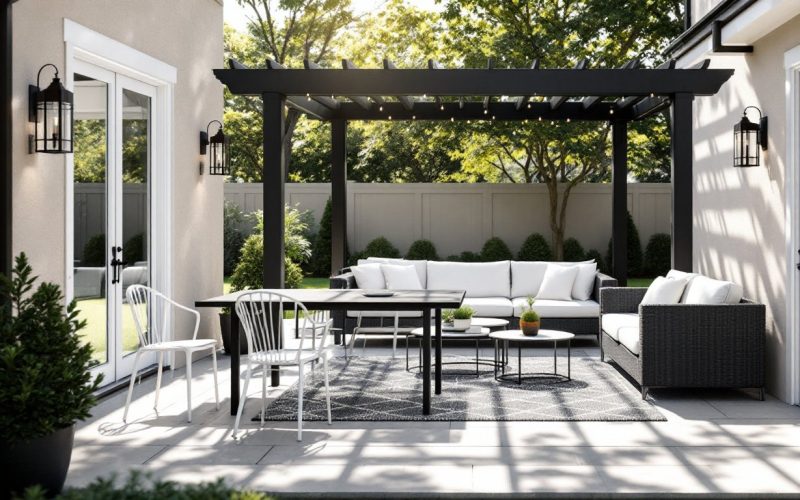
Start by defining functional zones, dining, lounging, and circulation paths. Black furniture tends to visually recede in shaded areas, making it ideal for corner seating or under pergolas. White furniture stands out and works well as a focal point near entryways or poolside.
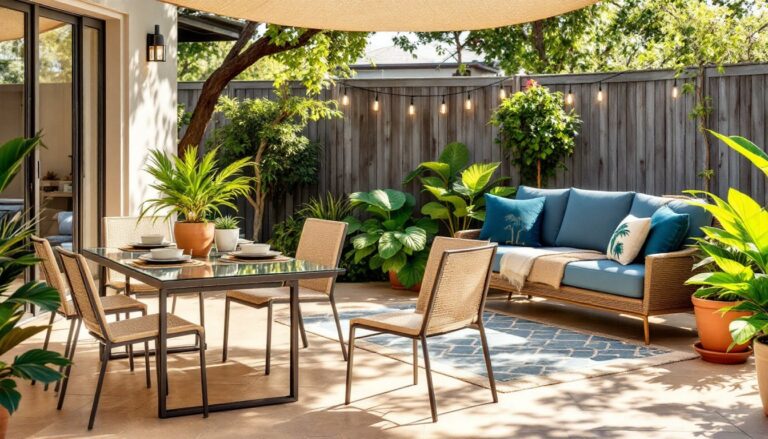
For dining areas, black metal chairs pair with a white table to create contrast without overwhelming a small patio. If going all-black, add white cushions with removable covers (look for solution-dyed acrylic fabric like Sunbrella, which resists fading and mildew). Alternatively, an all-white dining set with black accent pillows keeps the space bright.
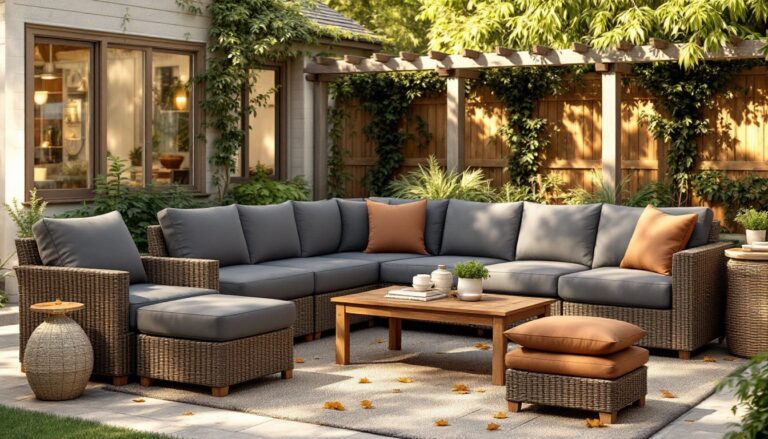
Lounge zones benefit from layering. A black wicker sectional with white cushions anchors the space, while a white side table or black metal coffee table adds functional surface area. Outdoor rugs in geometric black-and-white patterns (stripes, chevrons, or Moroccan tiles) define the seating area on large decks or concrete patios. Choose polypropylene rugs rated for outdoor use, they dry quickly and resist mold.
Integrating greenery softens the monochrome palette. Large planters in the opposite color (white planters for black furniture, black for white furniture) create visual balance. Boxwood, ornamental grasses, or trailing ivy in black planters work well with white seating, while white ceramic pots with colorful annuals pop against black tables.
Lighting extends usability into evening hours. Black metal lanterns with LED candles or string lights with black cording maintain the color scheme. Solar path lights with black finials along walkways tie into the furniture palette without requiring electrical work. Many outdoor spaces featured on sites like Gardenista showcase how strategic lighting and plant choices enhance monochrome furniture layouts.
Shade structures also factor into design. Black pergolas or umbrellas create dramatic overhead contrast, while white fabric canopies or sails brighten the space. If building a pergola, use pressure-treated lumber (actual dimensions: 5.5 x 5.5 inches for 6×6 posts, 1.5 x 5.5 inches for 2×6 beams) and paint or stain it black for a cohesive look. A DIY pergola typically requires digging post holes 36 inches deep (below frost line in cold climates) and setting posts in concrete.
For smaller patios or balconies, a bistro set (two chairs and a round table, typically 28-30 inches in diameter) in contrasting black and white keeps the space functional without crowding. Folding metal bistro chairs store flat when not in use.
How to Maintain and Protect Your Monochrome Patio Furniture
Outdoor furniture longevity depends on regular cleaning and seasonal protection. Neglecting maintenance accelerates UV damage, corrosion, and fabric degradation.
Routine cleaning for metal and synthetic wicker involves wiping down frames with a mixture of mild dish soap and water. Use a soft-bristle brush (like a car wash brush) for textured surfaces and wicker weaves. Rinse with a garden hose and dry with microfiber towels to prevent water spots, especially on white finishes. Avoid pressure washers, they can strip powder coating and force water into frame joints, promoting rust.
For white cushions, remove covers and machine wash in cold water with a mild detergent. Air dry only, heat can shrink fabric and weaken elastic. If covers aren’t removable, spot-clean with a solution of 1 part white vinegar to 4 parts water, then rinse and air dry. For mildew stains, use a mixture of 1 cup bleach per gallon of water (test on a hidden area first). Let sit for 10 minutes, scrub lightly, and rinse thoroughly. Always wear gloves and eye protection when using bleach solutions.
Black cushions hide stains but still collect mildew in humid climates. Pull cushions indoors or store them in a waterproof deck box during extended periods of non-use. Deck boxes made from resin (not wood) resist moisture and don’t require sealing.
Seasonal storage extends furniture life. In regions with harsh winters, store cushions indoors and cover furniture with breathable covers (avoid plastic tarps, which trap condensation). Furniture covers should have tie-down straps and vents to prevent wind lift and moisture buildup. If leaving metal furniture outdoors year-round, elevate it slightly with rubber or plastic furniture pads to prevent direct ground contact, which accelerates corrosion.
Inspect frames annually for loose bolts, rust spots, or cracked welds. Tighten hardware with a socket wrench or hex key (most outdoor furniture uses 10mm or 13mm bolts). If bolts are rusted, replace them with stainless steel hardware from a local hardware store. For surface rust on steel or wrought iron, follow the sanding-priming-painting process mentioned earlier.
Touch-up paint for powder-coated furniture is available in aerosol cans. Clean the area first with rubbing alcohol, then apply light coats 6-8 inches from the surface. Two or three thin coats prevent drips and match the original finish better than one heavy application.
UV protection for synthetic wicker can be maintained by applying a UV protectant spray (like 303 Aerospace Protectant) once per season. Spray onto a microfiber cloth and wipe the wicker surface, don’t spray directly onto the furniture, as overspray can leave residue on nearby surfaces.
If furniture will be placed on a deck, use furniture pads or glides to prevent scratching the deck finish. Felt pads work for covered patios, but rubber or plastic glides hold up better in exposed conditions. Homeowners looking for additional ideas on maintaining outdoor spaces can explore resources on home decor inspiration, which often feature practical tips alongside design trends.
Conclusion
Black and white patio furniture offers a practical, adaptable foundation for outdoor living spaces. Material choice drives durability and maintenance requirements, while thoughtful design balances function with visual appeal. Regular cleaning, seasonal storage, and proactive repairs keep furniture looking sharp for years. Whether assembling a full outdoor dining setup or refreshing a small balcony, monochrome furniture delivers timeless style without the risk of trend fatigue.