Table of Contents
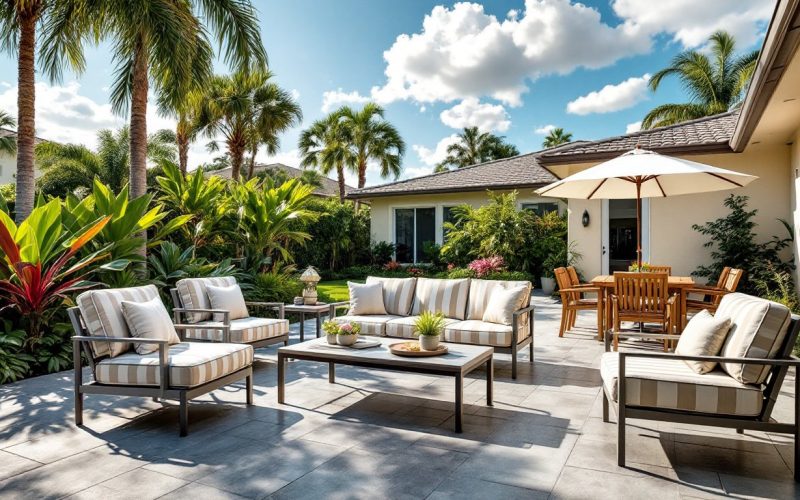
ToggleFort Myers isn’t just paradise for beachgoers, it’s a proving ground for outdoor furniture. Year-round humidity, salt air, afternoon downpours, and UV exposure that rivals a tanning bed make Southwest Florida one of the toughest climates for patio furniture in the continental U.S. What looks showroom-perfect in January can fade, rust, or warp by June if it’s not built for the Gulf Coast. Choosing the right pieces isn’t about style alone: it’s about understanding how materials perform when exposed to 90°F heat indexes, sudden thunderstorms, and salt carried inland on the breeze. This guide walks homeowners through material selection, style considerations, local shopping options, and maintenance strategies tailored specifically to Fort Myers’ demanding outdoor environment.
Key Takeaways
- Fort Myers’ extreme climate—salt air, 266 days of sunshine, and intense humidity—demands patio furniture built specifically for coastal durability, not generic outdoor pieces.
- Powder-coated aluminum frames, marine-grade HDPE wicker, and teak or eucalyptus wood are the best materials for patio furniture in Southwest Florida, while wrought iron, PVC wicker, and untreated wood should be avoided.
- Choose solution-dyed acrylic cushions (like Sunbrella) with quick-dry foam and UV inhibitors to prevent fading and mildew in Fort Myers’ humid environment.
- Specialty outdoor furniture stores offer commercial-grade patio furniture with longer warranties, while big-box retailers and online options work for budget-conscious shoppers willing to prioritize durability over initial cost.
- Monthly rinses to remove salt residue, annual wood sealing, and pre-hurricane storage are non-negotiable maintenance tasks that extend the life of patio furniture in Fort Myers.
Why Fort Myers Climate Demands Specific Patio Furniture
Fort Myers averages 266 days of sunshine annually, with summer heat indexes regularly exceeding 100°F. Add 54 inches of rain per year, most falling in intense afternoon storms from June through September, and you’ve got a climate that accelerates weathering on any outdoor surface.
Salt air is the hidden enemy. Even homes 5–10 miles inland receive salt-laden moisture carried by Gulf breezes, which corrodes untreated metal hardware, fasteners, and frames. Aluminum oxidizes, steel rusts, and even stainless steel can pit if it’s not marine-grade (304 or 316 alloy).
UV degradation happens fast. Untreated plastics become brittle within two seasons. Cushion fabrics without UV inhibitors fade from navy to pale gray in months. Wood furniture lacking proper sealant can crack and splinter as moisture content swings between humid mornings and bone-dry afternoons.
Permit and code requirements don’t typically apply to patio furniture itself, but wind load matters. Tropical storms and hurricanes mean lightweight pieces become projectiles. Anchoring or storing furniture during named storms isn’t optional, it’s part of responsible homeownership in Lee County.
Best Materials for Fort Myers Patio Furniture
Not all materials are created equal when you’re battling salt, sun, and sudden deluges. Here’s what performs, and what fails, in Southwest Florida.
Powder-Coated Aluminum
Aluminum frames with electrostatic powder coating resist rust and stay lightweight enough to move indoors during storms. Look for welded joints rather than bolted, corrosion starts at fasteners. Powder coating thickness matters: commercial-grade finishes (3–5 mils) outlast thin consumer coatings.
Marine-Grade Wicker and Resin
HDPE (high-density polyethylene) wicker woven over aluminum frames mimics natural rattan but won’t mold, crack, or fade. Avoid PVC wicker, it gets brittle under UV exposure. Check the weave density: loose weaves sag faster in humidity.
Teak and Eucalyptus
Teak contains natural oils that repel moisture and resist rot, but it’s pricey ($800–$2,000 for a dining set). Eucalyptus offers similar durability at half the cost but requires annual sealing with a marine-grade spar varnish or teak oil. Both woods gray naturally unless treated, a patina some homeowners love, others hate.
Skip pine, cedar, or pressure-treated lumber for furniture frames. They’re fine for decks but won’t hold up to direct moisture and salt exposure without constant maintenance.
Outdoor Fabrics
Solution-dyed acrylic (Sunbrella is the common brand, but generics exist) resists UV and mildew better than polyester blends. Fabric weight matters, look for 9 oz per square yard or heavier. Cheaper cushions use foam that absorbs water like a sponge: quick-dry foam with drainage channels sheds rain in hours, not days.
What to Avoid
Wrought iron rusts unless you’re committed to annual rust-inhibiting primer and topcoat touch-ups. Untreated rattan or wicker disintegrates. Glass tabletops can shatter in high winds (tempered glass is safer but still a risk during hurricanes).
Top Patio Furniture Styles for Fort Myers Homes
Style choices in Fort Myers tend to reflect coastal living, but practical considerations often trump aesthetics.
Coastal Contemporary
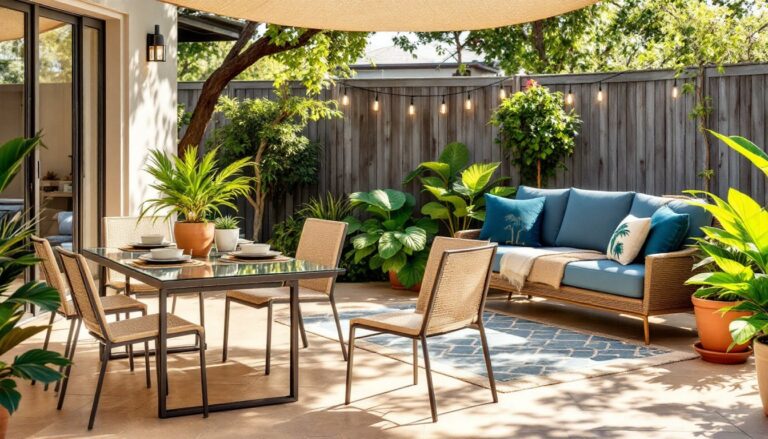
Clean lines, neutral tones (white, sand, seafoam), and mixed materials, aluminum frames with teak accents or resin wicker with stainless hardware. Pairs well with modern tile patios and minimalist landscaping. According to design resources like Homedit, coastal contemporary emphasizes durable, low-maintenance materials that blur indoor-outdoor boundaries.
Tropical Resort
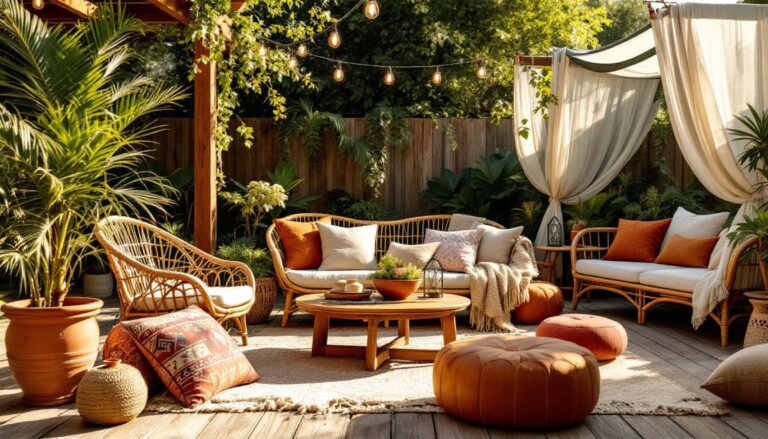
Deep seating with oversized cushions, bold prints (palm leaves, florals), and layered textures. Think daybeds, hanging egg chairs, and sectionals. Requires serious cushion storage during the rainy season unless you invest in waterproof covers and quick-dry foam.
Classic Plantation
Teak or eucalyptus dining sets, slatted benches, and Adirondack chairs. Timeless and sturdy, but wood furniture demands maintenance. Plan on sanding and resealing annually to prevent cracking.
Poolside Lounge
Chaise lounges, adjustable recliners, and low-profile side tables. Aluminum or resin construction is standard. Cushions are minimal (often just a removable pad). This style prioritizes quick-drying materials and easy cleanup after pool splashes or rainstorms.
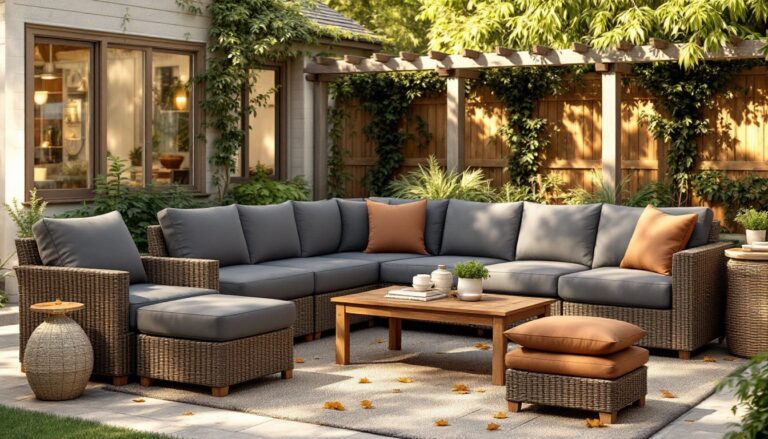
Choose furniture proportions based on your patio slab size. A typical 12×12-foot patio comfortably fits a four-seat dining set or a sectional sofa with a coffee table, not both. Measure twice, order once.
Where to Buy Patio Furniture in Fort Myers
Fort Myers has a mix of big-box retailers, regional chains, and specialty shops. Each has pros and cons.
Big-Box Retailers
Home Depot, Lowe’s, and Walmart carry budget-friendly sets ($300–$1,200 for a four-piece conversation set). Quality is hit-or-miss, check frame welds, cushion zippers, and fabric weight before buying. Assembly required: expect 1–2 hours with a drill and basic hand tools.
Specialty Outdoor Stores
Local shops like Patio Furniture Superstore and Patios USA stock higher-end brands (Tropitone, Brown Jordan, Kingsley Bate). Prices run $1,500–$5,000+ for dining sets, but you’re buying commercial-grade construction and longer warranties (5–10 years on frames). Sales staff can advise on hurricane prep and replacement cushions.
Online Retailers
Wayfair, Overstock, and Amazon offer broad selection and competitive pricing. Shipping costs add up fast (furniture is heavy and bulky). Returns are a hassle, measure your space carefully and read reviews focusing on durability, not just aesthetics. Look for verified purchases mentioning Florida, coastal, or high-humidity climates.
Estate Sales and Consignment
Fort Myers has a robust resale market thanks to seasonal residents. High-quality teak and aluminum sets often surface at estate sales or shops like Encore Consignment for 40–60% off retail. Inspect frames for rust, cracks, or loose joints. Replacement cushions run $200–$600 depending on size and fabric.
If you’re exploring other regional options, shoppers in Texas sometimes browse furniture stores in Fort Worth for similar outdoor pieces, though Florida’s salt-air demands are more extreme.
Maintaining Your Patio Furniture in the Florida Sun
Even marine-grade furniture won’t last without routine care. Fort Myers’ climate punishes neglect.
Monthly Tasks
- Rinse frames and cushions with a garden hose to remove salt residue and pollen. Use a soft brush on wicker weaves.
- Check hardware, tighten loose bolts and screws. Corrosion starts at joints.
- Inspect cushions for mildew (black or green spots). Catch it early with a 1:4 bleach-to-water solution (wear gloves and eye protection). Rinse thoroughly.
Seasonal Deep Cleaning
Before hurricane season (May): Wash all surfaces with mild dish soap and water. Dry completely, then apply 303 Aerospace Protectant or similar UV inhibitor to plastics and fabrics. Store lightweight pieces in a garage or shed if possible.
After hurricane season (November): Inspect for storm damage, cracked welds, torn fabric, or bent frames. Touch up powder coating chips with matching paint to prevent rust from spreading.
Wood Furniture Maintenance
Teak and eucalyptus need annual sanding and sealing. Use 120-grit sandpaper to smooth rough spots, then apply marine-grade spar varnish or teak oil (two coats, 24 hours apart). Work in shade, direct sun causes finishes to bubble.
Cushion Storage
Investing in a deck box ($150–$400) protects cushions from mildew during the rainy season. Ventilated storage is better than airtight plastic bins, which trap moisture. Alternatively, bring cushions indoors during extended wet periods.
For inspiration on integrating outdoor furniture with landscaping, resources like Gardenista offer design ideas tailored to humid climates.
Budget-Friendly Patio Furniture Options for Fort Myers Residents
Quality outdoor furniture isn’t cheap, but smart shopping stretches budgets without sacrificing durability.
Off-Season Buying
September through November sees clearance sales as retailers make room for holiday inventory. Discounts range from 30–60% on current-year stock. You’ll miss peak patio season, but pieces are ready for winter entertaining (Fort Myers winters are prime outdoor weather).
DIY Builds
Building simple pieces from pressure-treated 2×4s and 2×6s costs $100–$200 in materials for a bench or side table. Seal with exterior-grade polyurethane or spar varnish. Plans are free online, and construction requires only a miter saw, drill, and deck screws. It won’t match the longevity of teak, but with annual maintenance, PT lumber lasts 5–7 years.
Mix and Match
Buy frames from big-box stores and upgrade to custom cushions from local upholsterers or online fabric shops. A $400 Walmart sectional with $300 in Sunbrella cushions outperforms a $1,000 set with cheap fabric.
Refurbishing Secondhand Finds
Aluminum frames clean up easily. Strip old cushions, sand rust spots with 80-grit sandpaper, prime with rust-inhibiting spray primer, and topcoat with Rust-Oleum Hammered finish (hides imperfections). Order replacement cushions online, many suppliers offer custom sizing.
Renting for Events
If you’re furnishing a patio for a one-time gathering, event rental companies in Fort Myers offer outdoor furniture by the day or weekend. Costs run $50–$150 for a set, far cheaper than buying pieces you’ll rarely use. Southern lifestyle publications like Southern Living often feature outdoor entertaining setups that can be recreated with rentals.
Conclusion
Fort Myers outdoor living comes with trade-offs, spectacular weather year-round, but a climate that tests every material choice. Prioritize UV-resistant fabrics, corrosion-proof frames, and realistic maintenance commitments over showroom aesthetics. Whether it’s a $300 starter set or a $5,000 custom sectional, the pieces that last are the ones chosen with salt air, sudden storms, and relentless sun in mind. Measure your space, budget for quality where it counts, and don’t skip the seasonal care. Your patio furniture will reward you with years of Gulf Coast sunsets and storm-free entertaining.