Table of Contents
ToggleLiving room corners are real estate most people ignore. They collect dust bunnies, house a sad houseplant, or just sit there, empty and awkward. But corners represent usable square footage, and in rooms where every inch counts, that’s space you can’t afford to waste. Corner furniture isn’t about cramming stuff into weird angles: it’s about intentional design that makes a room feel bigger, more functional, and better organized. Whether you’re working with a compact apartment or a spacious family room, the right corner pieces can transform dead zones into focal points that actually earn their keep.
Key Takeaways
- Corner furniture maximizes usable square footage in living rooms, adding 15–25% more functionality in smaller spaces (under 200 sq ft) without crowding the center of the room.
- L-shaped sectionals and corner sofas are the most effective corner furniture options, offering seating efficiency while softening hard angles and improving traffic flow.
- Accurate measurements and sightline planning are essential before purchasing corner furniture—account for door swings (24–30 inches), drawer clearance (30–36 inches), and HVAC vents to avoid functionality issues.
- Quality materials like hardwood frames, ¾-inch plywood shelving, and performance fabrics for families with pets ensure corner furniture lasts decades and maintains its appearance.
- Layered lighting, area rugs, and thoughtful styling prevent dark corners and make corner furniture look intentional rather than like an afterthought to your living room design.
- Corner furniture should occupy no more than one-third of total wall length per side, ensuring balanced proportions that don’t overwhelm smaller rooms or disappoint in large spaces.
Why Corner Furniture Is a Game-Changer for Living Rooms
Corners are where walls meet at 90 degrees, structurally necessary but functionally tricky. Standard furniture is designed for flat walls, so corners get ignored or filled with afterthoughts. That’s a missed opportunity.
Corner furniture does three things well: it maximizes seating or storage in minimal floor space, it softens the hard angles that can make a room feel boxy, and it creates natural traffic flow by keeping pathways open. In smaller living rooms (under 200 square feet), corner pieces can add 15–25% more usable function without crowding the center of the room.
From a design perspective, corners also anchor a room’s layout. A well-placed sectional or shelving unit draws the eye outward, making walls feel farther apart than they actually are. This is especially useful in narrow or oddly shaped spaces where traditional furniture arrangements fall flat.
And unlike modular furniture that requires constant rearranging, purpose-built corner pieces stay put, they’re designed for that exact footprint. Less fussing, more living.
Best Types of Corner Furniture for Your Living Room
Not all corner furniture is created equal. Here’s what actually works.
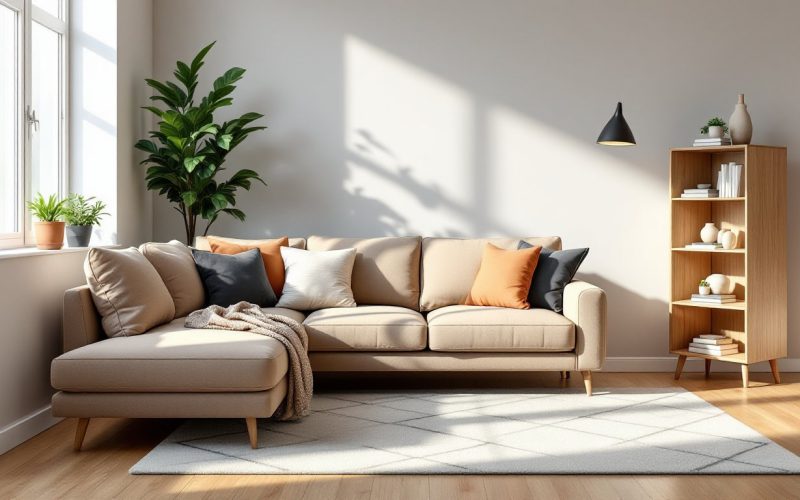
Corner Sofas and Sectionals
L-shaped sectionals are the workhorses of corner furniture. They offer more seating than a traditional sofa without hogging the middle of the room. Standard sectionals range from 90 to 120 inches per leg, with corner units adding 36 to 48 inches of depth, measure carefully before ordering.
Look for sectionals with removable or reversible chaise sections if you’re not sure which corner works best. Some models include built-in storage under the chaise, which is handy for throw blankets or board games. Modular sectionals let you reconfigure pieces, but they cost 20–40% more than fixed-frame designs.
Corner sofas with rounded profiles (sometimes called “wedge” or “curved” sectionals) work well in living rooms with angled walls or open floor plans. They soften sightlines and allow for flexible seating arrangements. These are harder to find off-the-shelf, expect to order custom or semi-custom if you go this route.
When selecting upholstery, consider how much natural light hits that corner. Dark fabrics in low-light corners can feel like a black hole: lighter tones or textured weaves (like linen or bouclé) bounce light around. For homes with kids or pets, performance fabrics with stain resistance are worth the upcharge.
Many homeowners find that pairing corner seating with affordable, stylish furniture options creates a balanced and functional layout without breaking the budget.
Corner Shelving Units and Display Cabinets
Tall corner shelves (60 to 84 inches high) are ideal for rooms with vaulted or standard 8-foot ceilings. They pull the eye upward, which makes the room feel taller. Use them for books, decor, or media equipment, just keep heavier items on lower shelves for stability.
Most corner shelving is freestanding, but wall-mounted floating shelves work if you’re drilling into studs. Locate studs with a stud finder (typically 16 inches on center in modern construction) and use #10 wood screws or heavy-duty wall anchors rated for at least 50 pounds per shelf. Drywall alone won’t hold weight.
Corner display cabinets with glass doors keep dust off collectibles while maintaining an open feel. Measure door swing clearance, most cabinets need 24 to 30 inches of clearance to fully open. If space is tight, consider units with sliding or bi-fold doors.
For a cohesive look, match the finish of corner shelving to other wood tones in the room (or go contrast for a statement piece). Espresso, walnut, and natural oak are common finishes: lighter woods like ash or whitewashed pine suit modern or Scandinavian styles.
Corner TV stands are a subcategory worth mentioning. They’re practical for rooms where the TV needs to be visible from multiple seating areas, but they can look dated if oversized. Stick to low-profile units (under 24 inches tall) and avoid bulky entertainment centers unless you’re actively using all that storage.
How to Choose the Right Corner Furniture for Your Space
Choosing corner furniture isn’t about picking what looks good online, it’s about what fits your room’s dimensions, traffic patterns, and how you actually use the space.
Start with accurate measurements. Measure wall-to-wall along both sides of the corner, then measure diagonally from corner to opposite corner. Note the location of outlets, vents, windows, and doors, furniture can’t block egress or HVAC airflow. Sketch a simple floor plan (graph paper works fine) and mark the corner footprint at scale.
Consider sightlines. Will the furniture block views to windows, a fireplace, or a TV? Will it create awkward “dead” spaces behind it that you can’t access or clean? A sectional that forces you to walk around the long way every time you enter the room isn’t worth the seating.
Account for door and drawer clearances. If a corner cabinet has doors, they need room to swing. Measure at least 24 inches of clearance in front. Drawers require even more, typically 30 to 36 inches so you can stand while pulling them out.
Match scale to room size. In rooms under 150 square feet, oversized sectionals overwhelm the space. In large, open-plan living rooms, a dinky corner shelf looks like an afterthought. As a rule of thumb, corner furniture should occupy no more than one-third of the total wall length along either side of the corner.
Think about future flexibility. If you move frequently or like to rearrange furniture, modular or lightweight pieces make more sense than heavy built-ins. Conversely, if this is a long-term home, investing in quality hardwood or custom-fitted pieces pays off over time.
Some designers recommend reviewing guides on room furniture selection and layout to understand how corner pieces interact with the rest of your space.
Material and build quality matter. For sectionals, hardwood or engineered wood frames outlast particleboard by decades. Check joint construction, corner blocks, dowels, and screws beat staples. For shelving, look for ¾-inch plywood or solid wood: anything thinner sags under load. Adjustable shelves are more versatile than fixed ones.
Budget reality check. Decent corner sectionals start around $800 and climb to $3,000+ for quality upholstery and frames. Corner shelving runs $100–$600 depending on size and material. Custom built-ins or high-end cabinetry can easily hit $1,500–$5,000. Factor in delivery fees (often $100–$200) and any assembly costs if you’re not doing it yourself.
Styling Tips to Make Corner Furniture Work in Any Living Room
Once the furniture is in place, styling determines whether it looks intentional or just shoved into a corner.
Layer lighting to avoid dark corners. Overhead lighting alone creates shadows behind furniture. Add a floor lamp beside a sectional or LED strip lighting on corner shelves. Aim for 2,000 to 3,000 lumens total in a living room for comfortable ambient light. Dimmer switches give flexibility for movie nights or reading.
Use area rugs to define zones. A rug anchors corner seating and ties it into the rest of the room. The rug should extend at least 12 inches beyond the front edge of the sofa on all sides. For sectionals, an 8×10 or 9×12 rug usually works: measure before you buy.
Balance with furniture on opposite walls. If a sectional dominates one corner, balance it with a media console, bookshelf, or accent chairs on the opposite side. Asymmetry is fine, but the room should feel weighted evenly, not lopsided.
Avoid clutter on open shelving. Corner shelves are magnets for junk. Stick to a curated mix of books, plants, and a few decorative objects. Group items in odd numbers (three or five) for visual interest. Leave some shelves partially empty, negative space prevents the “stuffed” look.
Add texture and color thoughtfully. If the corner furniture is neutral, layer in color with throw pillows, blankets, or art. If the furniture is bold (think a jewel-tone velvet sectional), keep surrounding decor understated. Resources like Design Milk showcase how modern interiors balance texture and color without overdoing it.
Incorporate plants for softness. A tall floor plant (fiddle leaf fig, snake plant, or dracaena) in the corner behind a sectional adds life and fills vertical space. Use a 12- to 14-inch diameter pot to keep it proportional. Make sure the corner gets adequate light, most houseplants need indirect sunlight.
Hang art or mirrors above corner furniture. A large piece of wall art or an oversized mirror draws the eye up and makes the ceiling feel higher. Hang artwork so the center is at 57 to 60 inches from the floor (standard gallery height). For mirrors, angle them to reflect light from windows, not blank walls.
Style sectionals with throw pillows and blankets. Use a mix of pillow sizes: two 22×22-inch pillows on each end, plus a few 18×18-inch or lumbar pillows in the middle. Stick to two or three coordinating colors. Fold a textured throw over one arm, don’t drape it evenly, which looks staged.
Keep traffic flow in mind. Leave at least 30 to 36 inches of clearance between the edge of corner furniture and any opposite seating or tables. This allows people to walk through comfortably. In tight spaces, consider armless or low-profile sectionals that don’t protrude as far.
For those seeking more inspiration, platforms like Elle Decor feature upscale living room layouts that emphasize corner furniture as a design anchor. Also, examples of small living room styling demonstrate how compact spaces benefit from strategic corner use.
Finally, don’t forget to explore broader furniture design ideas or consider options from brands like Snyder Furniture that offer comfortable, stylish pieces designed to fit various room layouts.
Conclusion
Corner furniture isn’t a design gimmick, it’s a practical solution for making the most of every square foot. Whether it’s a sectional that seats six or a shelving unit that finally gives your book collection a home, the right corner piece transforms overlooked space into something functional and intentional. Measure carefully, choose quality materials, and style with purpose. Your living room corners will thank you.