Table of Contents
ToggleOff-the-shelf bedroom furniture rarely fits perfectly. That dresser’s too wide for the wall, the nightstand blocks the heating vent, and the wardrobe leaves a weird 8-inch gap you can’t use. Bespoke bedroom furniture solves these problems by building pieces around your room’s exact dimensions, your storage needs, and your style preferences. Whether you’re dealing with sloped ceilings, awkward alcoves, or just want a bed frame that matches your vision down to the wood grain, custom furniture turns limitations into design opportunities.
Key Takeaways
- Bespoke bedroom furniture solves space constraints and storage challenges by fitting your room’s exact dimensions and architectural features rather than forcing compromises with off-the-shelf pieces.
- Built-in wardrobes and custom bed frames represent the most popular bespoke bedroom furniture investments, offering features like floor-to-ceiling storage, integrated lighting, and specialized compartments that standard furniture cannot provide.
- Quality bespoke bedroom furniture built with solid hardwoods and mortise-and-tenon joinery lasts 20-30+ years—double or triple the lifespan of mass-produced furniture—and can recoup 50-70% of its cost in home resale value.
- Successful custom furniture projects require thorough planning: measure your space precisely, define storage needs in detail, set a realistic budget ($800-25,000+ depending on scope), and choose between DIY, local craftspeople, or cabinetry companies.
- Material selection significantly impacts durability and appearance—use solid hardwoods like oak or maple for frames, Baltic birch plywood for cabinet boxes, and quality finishes like polyurethane or cabinet enamel to ensure your investment lasts decades.
- Bespoke bedroom furniture supports accessibility adaptations, environmental sustainability, and refinishing flexibility that disposable furniture cannot match, making it a worthwhile long-term investment for most homeowners.
What Is Bespoke Bedroom Furniture and Why Choose It?
Bespoke bedroom furniture refers to pieces designed and built specifically for your space, requirements, and aesthetic preferences. Unlike mass-produced furniture that comes in standard sizes, bespoke work is measured, designed, and constructed to fit your room’s unique dimensions and your functional needs.
The main reasons homeowners choose custom furniture:
- Space optimization: Custom pieces fill awkward corners, use sloped ceilings, or work around architectural features like radiators, windows, or support columns.
- Storage solutions: You decide exactly how many shelves, drawers, hanging rails, and compartments you need, not what a manufacturer thought was average.
- Material control: Choose solid hardwoods over particleboard, select specific finishes, and ensure quality construction methods.
- Design coherence: Match existing trim work, coordinate with architectural details, or create a unified look across multiple pieces.
The investment typically runs higher than ready-made furniture, expect to pay 30-50% more for comparable pieces, but the result fits your space like nothing off a showroom floor ever could. For rooms with unusual layouts or specific storage challenges, bespoke furniture often represents better value because it actually solves problems rather than forcing compromises.
Types of Custom Bedroom Furniture to Consider
Built-In Wardrobes and Closet Systems
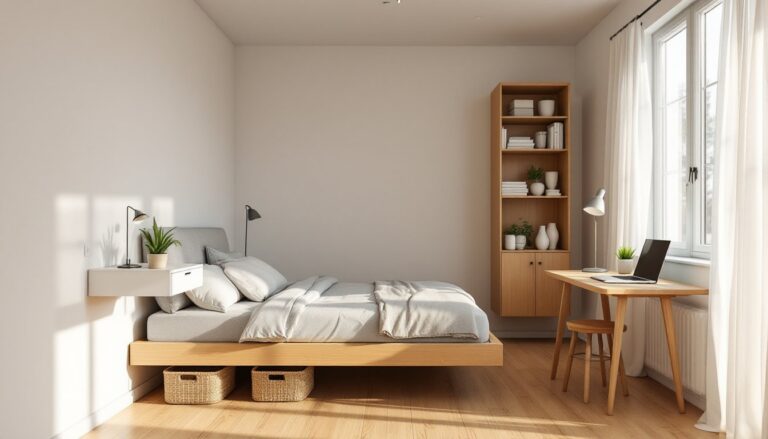
Built-in wardrobes represent the most popular bespoke bedroom investment, especially in older homes with limited closet space or awkward room layouts. These floor-to-ceiling units maximize vertical storage and can incorporate features mass-market furniture can’t offer.
Key design elements to specify:
- Internal configuration: Hanging space (single or double height), adjustable shelving, pull-out drawers, shoe racks, tie/belt organizers, and jewelry trays.
- Door styles: Hinged doors work in spacious rooms: sliding doors save 24+ inches of clearance space but limit access to half the wardrobe at a time.
- Integration: Built-ins can wrap around windows, follow wall angles, or include a desk/vanity section within the same cabinetry run.
- Lighting: LED strip lighting or puck lights wired during construction (requires planning for electrical rough-in).
Construction typically involves face-framing or European-style frameless cabinetry. Face-frame construction uses a 1×2 hardwood frame around each cabinet opening, providing traditional looks and easier hardware mounting. Frameless (or “full-access”) construction maximizes interior space and suits contemporary designs.
For DIYers considering this project: built-in wardrobes require solid carpentry skills, particularly for scribing to uneven walls and floors, cutting precise dados for adjustable shelf pins, and installing drawer slides level and parallel. The project benefits greatly from a cabinet saw or track saw for breaking down sheet goods, and pocket-hole joinery speeds construction significantly. Similar fitted bathroom furniture projects demonstrate how custom cabinetry transforms difficult spaces.
Custom Bed Frames and Headboards
Bespoke bed frames range from simple platform designs to elaborate pieces with integrated nightstands, storage drawers, or upholstered headboards. Standard mattress dimensions (Twin: 38×75″, Full: 54×75″, Queen: 60×80″, King: 76×80″, Cal King: 72×84″) dictate the frame’s interior dimensions, but everything else is negotiable.
Popular custom features:
- Storage integration: Drawers built into the platform base (requires 6-8″ of clearance height), hydraulic-lift mattress platforms for underbed storage access, or bookcase-style headboards.
- Material combinations: Wood frames with upholstered headboard panels, metal pipe frames with reclaimed wood, live-edge slabs as headboards.
- Electrical integration: USB charging ports, reading lights, or outlets built into the headboard (requires running Romex through wall or surface-mounted cord management).
- Height customization: Standard bed height sits 24-26″ from floor to mattress top, but taller individuals often prefer 28-30″ for easier getting in/out.
For structural integrity, bed frames need proper support. Platform beds should use 1×4 or 1×6 slats spaced no more than 3″ apart for foam mattresses, 2-3″ for spring mattresses. Frame joinery benefits from bed rail fasteners rather than just screws, these specialized hardware pieces allow for disassembly without loosening over time.
Key Benefits of Investing in Custom-Made Bedroom Pieces
Beyond the obvious fit-and-function advantages, bespoke fitted bedroom furniture delivers several long-term benefits that generic furniture can’t match.
Longevity and durability: Custom furniture builders typically use solid hardwoods (oak, maple, walnut, cherry) or quality plywood (Baltic birch, ApplePly) rather than the MDF and particleboard common in mass-market furniture. Joinery methods like mortise-and-tenon, dovetails, or domino joints create stronger connections than cam-lock fasteners. Expect a well-built custom piece to last 20-30+ years versus 5-10 for most ready-made furniture.
Property value considerations: High-quality built-in furniture often appeals to buyers, particularly fitted wardrobes in homes lacking adequate closet space. Real estate agents note that custom closet systems and bedroom storage typically recoup 50-70% of their cost in home value, though this varies significantly by market. Portable custom pieces (beds, dressers) obviously move with you.
Accessibility adaptations: Custom furniture accommodates specific needs that standard pieces ignore, lower hanging rails for wheelchair users, pull-down closet rods for limited reach, drawer pulls sized for arthritic hands, or nightstands at precise heights for medical equipment. Many talented bespoke furniture designers specialize in creating accessible, beautiful pieces.
Repair and refinishing: Solid wood furniture can be sanded and refinished multiple times. That oak dresser can go from honey stain to painted white to stripped natural over its lifetime. Particleboard pieces with laminate or veneer surfaces don’t offer this flexibility.
Environmental considerations: While the initial material cost is higher, a single piece lasting 30 years beats buying three disposable pieces over the same period. Working with local craftspeople reduces shipping impacts, and you can specify sustainably harvested woods or reclaimed materials.
How to Plan Your Bespoke Bedroom Furniture Project
Successful custom furniture starts with thorough planning, not with choosing wood species. Follow this sequence to avoid expensive mistakes.
1. Assess the space and identify problems
Measure the room carefully, noting:
- Wall lengths (measure at floor level and again at waist height, old houses have variations)
- Ceiling height and any slopes or soffits
- Window and door locations, plus their swing radius
- Electrical outlets, switches, heating vents, and returns
- Baseboard and crown molding profiles (custom furniture often needs to scribe to these)
Document problems: “The corner by the window is wasted space,” “Not enough hanging room for long coats,” “Dresser drawers hit the door trim.”
2. Define functional requirements
Create a detailed list:
- How many linear feet of hanging space for shirts, pants, and dresses?
- Drawer count and sizes (measure your folded clothes, not guesses)
- Shelf space needed for shoes, bags, folded sweaters
- Specialty storage: jewelry, watches, ties, belts, scarves
- Surface space for dressing, grooming, or device charging
3. Set a realistic budget
Custom bedroom furniture pricing varies widely:
- DIY materials only: $800-2,000 for a modest wardrobe using quality plywood and hardware
- Local cabinetmaker: $3,000-8,000 for a full wall of fitted wardrobes (8-12 linear feet)
- High-end custom furniture maker: $10,000-25,000+ for elaborate built-ins with premium materials and finishes
Get multiple quotes. Cabinetmakers calculate costs differently, some price per linear foot, others by cabinet box count, some by estimated labor hours plus materials.
4. Choose between DIY, local craftsperson, or cabinetry company
DIY approach: Suitable if you have intermediate woodworking skills, necessary tools (table saw or track saw, drill/driver, clamps, measuring tools), and patience. Plan 40-80 hours for a substantial wardrobe project. Many custom furniture pieces start as DIY projects.
Local furniture maker/cabinetmaker: Offers custom design, quality construction, and reasonable pricing. Expect 6-12 week lead times. Ask for references and inspect previous work in person.
Cabinetry companies: Larger operations with showrooms, design software, and installation teams. Higher prices but more predictable timelines and often warranties.
5. Create detailed plans
Whether you’re building or hiring out, create scaled drawings with:
- Overall dimensions and wall locations
- Individual cabinet/furniture dimensions
- Internal layouts (shelf spacing, drawer heights)
- Hardware locations
- Finish specifications
SketchUp (free version available) works well for 3D visualization. Graph paper and a ruler suffice for simpler projects.
Choosing Materials, Finishes, and Styles for Your Custom Furniture
Material selection affects durability, appearance, cost, and construction methods. Here’s what works for bedroom furniture.
Wood species for solid construction
- Oak (red or white): Hard, durable, pronounced grain. Takes stain well but can look heavy. Good for frames and face-frames. Expect $6-10/board foot.
- Maple: Very hard, fine grain, light color. Excellent for drawer boxes and painted finishes. $7-11/board foot.
- Walnut: Premium hardwood with rich brown color and beautiful grain. Often used for accent pieces or high-end work. $12-18/board foot.
- Poplar: Softer hardwood, great for painted furniture. Affordable at $4-7/board foot. Not suitable for high-stress applications.
- Pine: Softwood that dents easily but works well for rustic or painted designs. Budget-friendly at $3-6/board foot.
Sheet goods for cabinet boxes
- Plywood (hardwood veneer): 3/4″ birch or oak plywood works for most cabinet applications. Stronger than MDF, holds screws better. $50-85 per 4×8 sheet.
- Baltic birch plywood: Premium multi-ply construction with void-free edges. Excellent for exposed edges. $65-95 per 5×5 sheet.
- MDF (Medium-Density Fiberboard): Heavy, smooth surface, takes paint beautifully. Not suitable for structural elements or screw-holding applications. $35-50 per 4×8 sheet.
Finishes and protection
- Stain + polyurethane: Traditional approach. Apply stain, let dry 24 hours, then 2-3 coats of water-based poly (dries clear) or oil-based poly (amber tone). Sand with 220-grit between coats.
- Paint: Prime with shellac-based primer (blocks tannins), then two coats of quality furniture paint or cabinet enamel. Light sanding between coats.
- Oil finishes: Danish oil or Rubio Monocoat penetrate wood, enhancing grain while providing moderate protection. Easier to apply than poly but requires periodic reapplication.
- Lacquer: Professional spray finish providing hard, clear protection. Requires spray equipment and proper ventilation.
Hardware considerations
Budget $200-600 for hardware on a typical wardrobe project:
- Drawer slides: Undermount soft-close slides ($12-25/pair) provide smooth operation and hidden installation. Side-mount slides ($4-8/pair) cost less but show from the side.
- Hinges: European-style concealed hinges ($3-8 each) allow adjustment after installation. Traditional butt hinges ($2-5/pair) suit face-frame construction.
- Handles and knobs: Budget $4-15 each depending on style and finish.
- Closet rods: Use 1-5/16″ diameter rods, not the 1″ rods common in cheap closets. Support every 36-48″ to prevent sagging.
Style decisions
Custom furniture should complement the room’s architecture. Traditional homes with detailed trim work pair well with face-frame cabinetry and raised-panel doors. Modern spaces suit frameless construction with slab doors or simple Shaker styles. Check design resources like Homedit for current trends and timeless options that won’t feel dated in five years.
Consider finish texture and color temperature. Glossy finishes show every fingerprint: satin or matte sheens hide daily wear better. Cool-toned grays and whites brighten north-facing rooms, while warm woods add coziness to spaces with ample natural light.
Safety and code notes
Tall furniture (over 30″ high) should be anchored to wall studs using furniture straps or L-brackets, especially in homes with children. While bedroom furniture typically doesn’t trigger building permits, any electrical work (adding outlets or lighting) requires permits in most jurisdictions and should be done by a licensed electrician or inspected if DIY’d in areas where homeowner electrical work is permitted.
This approach to planning and executing bespoke bedroom furniture ensures results that look professional, function perfectly, and last for decades.