Table of Contents
ToggleWhite patio furniture has long been a go-to for homeowners looking to create a clean, inviting outdoor area. It’s not just about aesthetics, white reflects heat better than darker colors, keeping seating surfaces cooler under direct sun. Whether you’re furnishing a small apartment balcony or a sprawling backyard deck, white pieces adapt to almost any design direction, from coastal to modern farmhouse. But durability matters just as much as looks. The wrong material will yellow, crack, or stain within a season or two, turning that crisp white finish into a maintenance headache. This guide breaks down the best materials, styling approaches, and care strategies to keep white outdoor furniture looking sharp year after year.
Key Takeaways
- White patio furniture reflects sunlight effectively, reducing surface temperatures by 10–15°F and keeping seating cooler during hot weather.
- Powder-coated aluminum and UV-stabilized synthetic wicker are the most durable materials for white patio furniture, lasting 7–10 years with proper maintenance.
- White patio furniture works across multiple design styles—from coastal and modern farmhouse to minimalist and eclectic boho—by serving as a neutral foundation for other design elements.
- Regular cleaning with a soft brush and mild soap prevents stains from setting in, while white vinegar solutions effectively remove mildew and algae buildup.
- Invest in breathable furniture covers and store cushions indoors when not in use to prevent moisture damage and extend the life of your outdoor furniture.
Why White Patio Furniture Is a Timeless Choice for Outdoor Living
White outdoor furniture works because it’s visually neutral, which means it won’t compete with plantings, hardscape materials, or architectural details. It creates a blank canvas that lets other elements, colorful cushions, potted plants, or a patterned outdoor rug, take center stage.
From a practical standpoint, white surfaces reflect more sunlight than dark finishes, which can reduce surface temperatures by 10–15°F on a hot day. That makes a real difference when you’re sitting on a metal or resin chair in July. It’s also easier to spot dirt, pollen, and mildew on white finishes, which sounds like a drawback but actually encourages regular cleaning before stains set in.
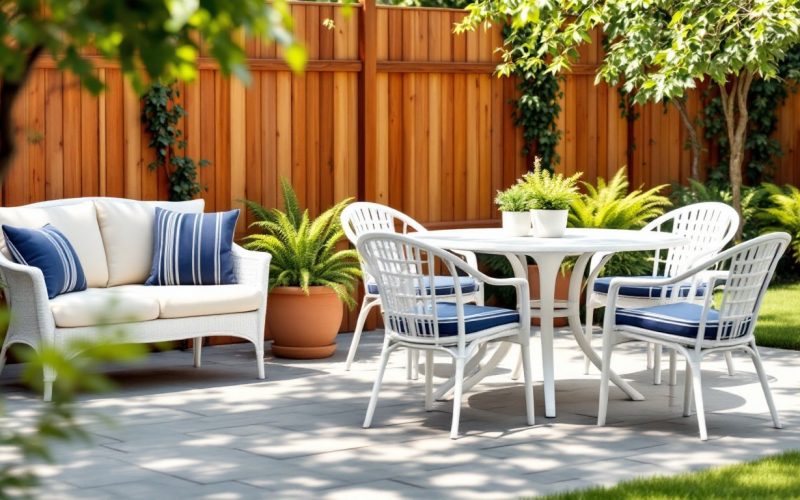
White patio furniture sets are versatile across design styles. Pair them with navy or gray cushions for a nautical look, add natural jute or rattan accents for a coastal vibe, or go monochrome with white-on-white layering for a minimalist aesthetic. The flexibility is hard to beat, and it’s one reason white remains a top seller in outdoor furniture year after year.
One consideration: not all whites are the same. Bright white can look stark in some settings, while off-white or cream tones soften the overall effect. If you’re working with warm-toned wood decking or brick pavers, a slightly warmer white often looks more cohesive than a cool, blue-toned white.
Best Materials for White Patio Furniture That Last
Wicker and Rattan
Natural wicker and rattan offer a classic look, but they’re not ideal for white finishes in wet climates. Natural fibers absorb moisture, which leads to mildew, rot, and discoloration. If you’re set on a woven texture, go with synthetic resin wicker (also called all-weather wicker or PE rattan). It’s made from polyethylene strands woven over a powder-coated aluminum or steel frame.
Synthetic wicker holds color well, resists UV fading, and sheds water instead of soaking it up. Look for furniture with UV-stabilized resin, manufacturers usually note this in product specs. Without UV stabilizers, white resin can yellow or become brittle after a couple of seasons in direct sun.
Maintenance is straightforward: hose it down, scrub with a soft brush and mild detergent, and rinse. No sealing or refinishing required. Expect quality synthetic wicker to last 7–10 years outdoors with minimal care.
One thing to watch: cheaper sets use thin-gauge frames and loosely woven resin. Inspect the weave density and frame thickness before buying. A wobbly frame won’t hold up, no matter how good the resin looks.
Metal and Aluminum
Powder-coated aluminum is the workhorse of white outdoor furniture. Aluminum doesn’t rust, it’s lightweight enough to move around easily, and powder coating creates a durable, uniform finish that resists chipping better than spray paint.
The powder-coating process involves electrostatically applying dry powder, then curing it in an oven at around 400°F. This creates a tough shell that’s more resistant to scratches and UV damage than liquid paint. A good powder coat should last 5–8 years before needing touch-ups, depending on exposure.
For best results, look for furniture with a thick powder coat (at least 2–3 mils) and welded joints rather than bolted connections. Welds eliminate gaps where moisture can creep in and cause corrosion on the fasteners.
Wrought iron is heavier and more traditional-looking, but it’s prone to rust if the finish is compromised. If you go with painted wrought iron in white, plan to inspect it annually for chips and touch up bare spots with a rust-inhibiting primer and topcoat. It’s more maintenance than aluminum, but some homeowners prefer the heft and classic detailing.
Stainless steel is another option, though it’s less common in white finishes. It’s corrosion-resistant and extremely durable, but also pricier. If you’re in a coastal area with salt air, stainless is worth considering for longevity.
Regardless of metal type, store cushions and pillows when not in use. Metal frames dry quickly, but fabric doesn’t, and mildew stains on white cushions are harder to remove than dirt on the frame.
How to Style White Patio Furniture for Different Outdoor Aesthetics
White works across a wide range of outdoor styles, but the surrounding elements make all the difference. Here’s how to anchor your setup for a few popular looks.
Coastal and nautical: Pair white furniture with navy, aqua, or coral cushions. Add striped outdoor pillows, a jute rug, and natural fiber accessories like woven baskets or driftwood accents. If you’re near the coast, Southern Living often features porch and patio ideas that lean into this aesthetic. Keep the palette light and airy, think sand, sky, and sea.
Modern farmhouse: Combine white metal or wood furniture with black accents, black planters, black lanterns, or a black-framed pergola. Use neutral cushions in linen or canvas, and add greenery with galvanized metal containers. A weathered wood coffee table or side table adds warmth without breaking the clean-lined look.
Minimalist: Go all-white or white-and-gray. Use geometric planters, simple topiaries, and furniture with clean lines. Avoid busy patterns. A concrete or stone patio works well here, and lighting should be understated, think recessed deck lights or simple pendant fixtures. Designers often highlight this approach when showcasing white outdoor furniture for modern gardens and patios.
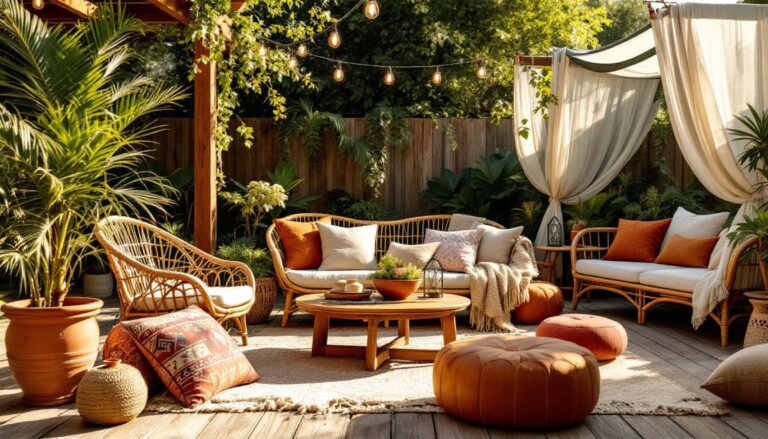
Eclectic boho: Layer textures and colors. White furniture acts as the foundation, but pile on patterned cushions in warm tones, terracotta, mustard, burnt orange. Add macramé plant hangers, a colorful outdoor rug, and mismatched pottery. String lights or lanterns complete the casual, collected vibe.
Traditional: Stick with classic shapes, scrolled arms, slatted backs, Adirondack-style chairs. Use solid-color cushions in muted tones like sage, taupe, or soft blue. Add symmetry with matching planters or topiaries flanking a seating area. A brick or stone patio reinforces the timeless look.
No matter the style, scale matters. Oversized furniture can overwhelm a small patio, while undersized pieces get lost on a large deck. Measure your space and leave at least 24–30 inches of clearance around seating for comfortable movement.
Maintaining and Cleaning White Patio Furniture: Practical Tips
White shows dirt, but that’s actually an advantage, it forces you to clean before grime becomes permanent. Here’s how to keep it looking new.
Routine cleaning: Hose down furniture weekly during heavy-use months. For deeper cleaning, mix 1/4 cup of dish soap or a dedicated outdoor furniture cleaner in a gallon of warm water. Scrub with a soft-bristle brush or sponge, paying attention to crevices and joints where dirt accumulates. Rinse thoroughly. Don’t use abrasive pads or scouring powders, they’ll dull or scratch the finish.
Stain removal: For mildew or algae, use a solution of 1 part white vinegar to 3 parts water, or a diluted oxygen bleach (not chlorine bleach, which can yellow white finishes). Let it sit for 10–15 minutes, scrub, and rinse. For tougher stains on resin or plastic, a Magic Eraser-style melamine sponge works surprisingly well, just test a small spot first to make sure it doesn’t dull the surface.
Protecting finishes: If your furniture has a powder-coated or painted finish, inspect it at the start and end of each season. Touch up any chips or scratches with a matching outdoor paint or clear topcoat to prevent rust or further damage. For natural or painted wood (like teak or pine), reapply a UV-protective sealant annually to prevent yellowing and weathering.
Off-season storage: If you live in a region with harsh winters, store furniture in a shed, garage, or basement. If that’s not possible, invest in breathable furniture covers, not plastic tarps, which trap condensation and encourage mold. Elevate furniture slightly off the ground with pavers or wood blocks to prevent pooling water from staining the legs.
Cushion care: Remove and store cushions when not in use. Most outdoor fabrics are water-resistant, not waterproof. If cushions do get wet, stand them on edge to dry completely before storing. Wash removable covers according to the manufacturer’s instructions, usually a cold-water machine wash with mild detergent, air-dried. Don’t put them in the dryer unless the tag says it’s safe.
Safety note: Always wear gloves when working with cleaning solutions, especially those containing bleach or strong detergents. If you’re pressure-washing furniture, use a wide fan tip and keep the nozzle at least 12 inches away to avoid damaging finishes or resin weaves.
For additional ideas on maintaining outdoor furniture and integrating pieces that suit various climates, resources like Homedit provide design inspiration alongside practical care tips. Regular upkeep is the key to keeping white furniture crisp, not dingy.
Conclusion
White patio furniture delivers flexibility, heat resistance, and a clean aesthetic that works across design styles. Choose durable materials like powder-coated aluminum or UV-stabilized synthetic wicker, and commit to regular cleaning to prevent stains from setting in. With the right care and a thoughtful approach to styling, white outdoor furniture will stay bright and functional for years.