Table of Contents
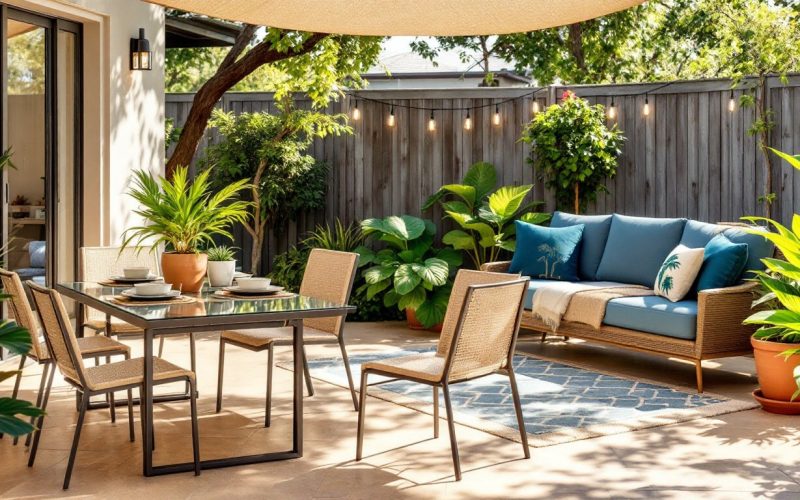
TogglePalm patio furniture brings the laid-back elegance of the tropics straight to your backyard. Whether it’s woven palm leaf textures, bold botanical prints, or natural rattan frames accented with palm motifs, this style transforms patios and decks into vacation-worthy retreats. The look works across climates and fits everything from coastal cottages to suburban ranches. Unlike fussy outdoor furniture that demands constant upkeep, palm-inspired pieces often use weather-resistant materials that hold up to sun, rain, and humidity. This guide walks through what defines palm patio furniture, why it’s a smart choice, and how to pick and style the right pieces for your space.
Key Takeaways
- Palm patio furniture combines tropical aesthetics with weather-resistant materials like synthetic wicker and powder-coated aluminum, making it ideal for transforming any backyard into a vacation-worthy retreat.
- Choose natural palm for dry climates or synthetic palm resin for humid and coastal regions to ensure your furniture withstands environmental challenges without excessive maintenance.
- Verify frame construction (welded aluminum beats bolted joints) and weight capacity before purchasing, since genuine palm leaf alone won’t support the same load as solid hardwood or steel frames.
- Invest in solution-dyed acrylic cushions with 1,000+ hour fade ratings and water-resistant foam to maximize comfort and durability while keeping replacement costs low.
- Layer textures, limit your color palette to three main hues, and incorporate real or UV-resistant greenery to create a cohesive tropical oasis without overwhelming the space.
What Is Palm Patio Furniture?
Palm patio furniture refers to outdoor seating, dining sets, and accessories inspired by tropical palm aesthetics. It includes actual materials derived from palm, like woven palm leaves (usually buri or raffia) applied to chair backs, cushion covers, or table insets, as well as synthetic furniture featuring palm leaf prints, silhouettes, or textures.
Common materials include:
- Natural palm weave: Dried palm fronds woven into panels or seats. Durable in dry climates but require covered storage or sealant in wet regions.
- Synthetic wicker or resin: Molded to mimic palm texture. UV-stabilized and weather-resistant.
- Powder-coated aluminum or steel frames: Lightweight, rust-resistant, and often paired with palm-printed cushions or canopies.
- Teak or eucalyptus wood: Naturally rot-resistant hardwoods that complement palm motifs without direct palm material.
The style borrows from mid-century tropical design and modern coastal trends. You’ll see curved lines, open weaves, and airy silhouettes that promote ventilation and suit hot-weather lounging. Unlike heavy wrought iron or bulky timber sets, palm furniture tends toward lighter construction for easy rearranging.
Note: Genuine palm leaf furniture isn’t structural. It won’t support the same load as solid hardwood or welded steel. If a piece advertises “100% palm,” confirm the frame material, most use a metal or wood skeleton with palm as decorative infill.
Benefits of Choosing Palm Patio Furniture for Your Outdoor Space
Lightweight and portable. Most palm-style sets weigh 30–40% less than comparable cast iron or solid teak. That makes seasonal moves, deck reconfigurations, or quick shade adjustments simpler without a second person.
Weather tolerance (when properly treated). Synthetic palm resin resists UV fade, won’t crack in freezing temps, and sheds water. Natural palm requires annual application of water-based polyurethane or tung oil to prevent mold and brittleness, but holds up well in covered patios or mild climates.
Stylistic versatility. Palm motifs pair with nautical stripes, solid neutrals, bold florals, or minimalist monochrome. The tropical vibe doesn’t lock you into tiki-bar kitsch, you can lean modern, boho, or classic coastal depending on fabric and accessory choices.
Sustainability angle. Palm grows fast, regenerates quickly, and requires less water than hardwood timber. If sourcing natural palm furniture, look for suppliers certified by the Forest Stewardship Council (FSC) or equivalent to ensure responsible harvesting.
Comfort in heat. Open-weave palm backs and seats promote airflow, reducing the sweat-soaked cushion problem common with solid plastic or vinyl. Pair with quick-dry foam cushions (closed-cell polyurethane or outdoor-rated memory foam) for maximum comfort.
One trade-off: natural palm isn’t as long-lasting as teak or aluminum. Expect 5–8 years outdoors with annual maintenance, versus 15+ for premium synthetics or hardwoods. Budget accordingly and plan for refinishing or replacement.
Popular Types of Palm Patio Furniture
Palm Leaf Dining Sets
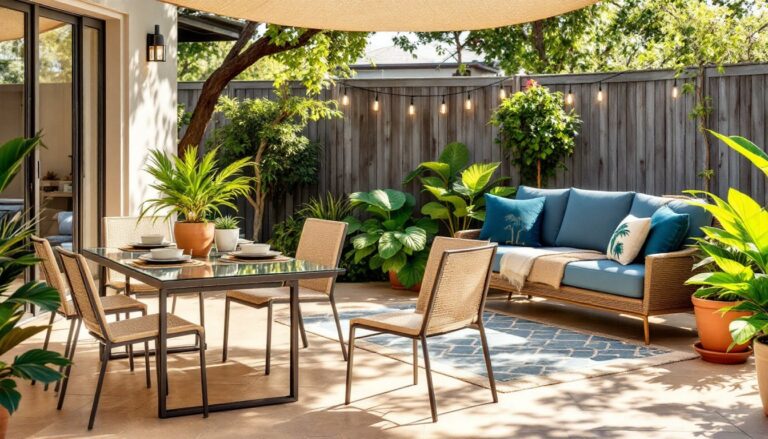
Palm dining sets typically feature powder-coated aluminum or steel frames with woven palm leaf chair backs or tabletop inlays. Standard configurations include a round or rectangular table (48–72 inches) and four to six side chairs.
Key specs:
- Table height: 28–30 inches (standard dining height).
- Chair seat width: 18–20 inches. Armless designs save space: armchairs add comfort for longer meals.
- Weight capacity: Verify chairs support at least 250 lbs per seat. Natural palm weave alone won’t hit that, look for reinforced frames.
Material combos: Glass or tempered safety glass tops pair well with palm bases and resist heat from hot dishes. Avoid unsealed wood tabletops in high-humidity zones: they’ll warp or mildew.
Maintenance: Wipe down frames monthly with mild soap and water. For natural palm, vacuum dust from weave crevices and reapply sealant every spring. Synthetic versions need only occasional hosing.
Optional add-ons: Matching palm leaf umbrellas (8–9 foot canopy) or pergola-mounted shade sails extend usability during midday sun. Make sure umbrella pole diameter matches table hole (typically 1.5 or 2 inches).
Palm-Inspired Lounge Chairs and Sofas
Lounge furniture leans into comfort: deep seats, plush cushions, and recline-friendly angles. Palm styling appears in printed cushion covers, carved palm motifs on wooden arms, or woven palm panel inserts along backrests. Popular palm motif outdoor furniture blends classic silhouettes with bold botanical graphics for standout appeal.
Common formats:
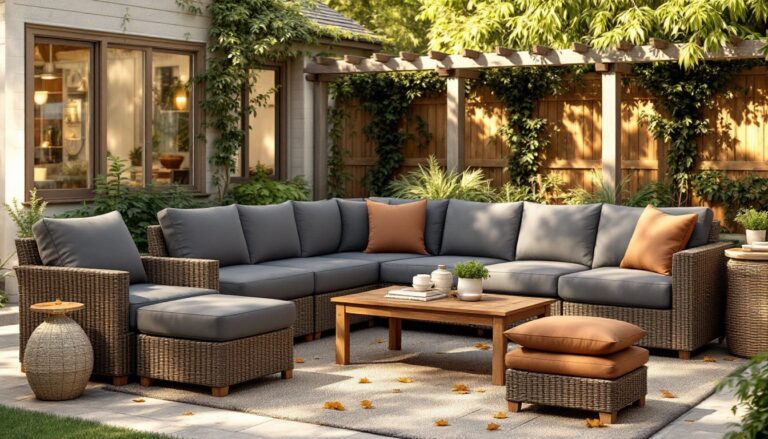
- Sectionals: Modular pieces (corner, armless, chaise) configured to fit L-shapes or U-shapes. Frames typically aluminum or resin wicker: cushions 4–6 inches thick.
- Chaise lounges: Adjustable backrests (three to five positions). Look for rust-proof rivets and marine-grade stainless steel hardware if near saltwater.
- Gliders and rockers: Smooth motion without loud squeaks. Powder-coated steel glide mechanisms last longer than plastic bushings.
Cushion care: Use solution-dyed acrylic fabric (Sunbrella is the benchmark) for fade resistance and mildew prevention. Removable covers with YKK or similar corrosion-resistant zippers simplify washing. Store cushions indoors or in a ventilated deck box during winter to extend life.
Pro tip: Lounge sets often ship with throw pillows in palm prints. These add style but aren’t always outdoor-rated. Swap for UV-stable, water-resistant versions to avoid constant replacement.
How to Choose the Right Palm Patio Furniture for Your Home
Measure your space first. Sketch the patio or deck to scale (graph paper works: 1 square = 1 foot). Leave 36 inches of clearance around dining tables for chair pull-out and foot traffic. Lounge zones need 24 inches between seats and side tables.
Match material to climate. Coastal or high-humidity areas: prioritize aluminum, synthetic resin, or treated teak. Avoid uncoated natural palm, it’ll mold. Dry, arid climates: natural palm thrives with minimal upkeep. Cold-winter regions: stackable or foldable sets simplify off-season storage.
Check weight limits and frame construction. Inspect joints. Welded aluminum beats bolted: bolts loosen over time. For wicker or woven pieces, tug on the weave, if it shifts or gaps, it’s poorly anchored. Quality natural palm should feel taut, not saggy.
Evaluate cushion specs. Outdoor cushions need water-resistant foam (not standard polyfoam, which absorbs moisture). Covers should have fade ratings of 1,000+ hours under ASTM testing. Ties or Velcro keep cushions secure in wind.
Consider storage and maintenance. If you lack a shed or garage, look for furniture covers (heavy-duty polyester with reinforced grommets) or pieces designed for year-round exposure. Synthetic materials handle neglect better than natural fibers.
Think resale and modularity. Sectionals that break into individual seats adapt as needs change. Neutral frame colors (black, bronze, gray) pair with more decor styles than bright turquoise or lime.
Safety note: Any furniture on a deck must comply with local load-bearing limits. A typical residential deck supports 50 lbs per square foot (live load), but verify with your jurisdiction’s building code. Heavy stone-top tables or large groups may require structural evaluation.
Styling Tips: Creating a Tropical Oasis with Palm Furniture
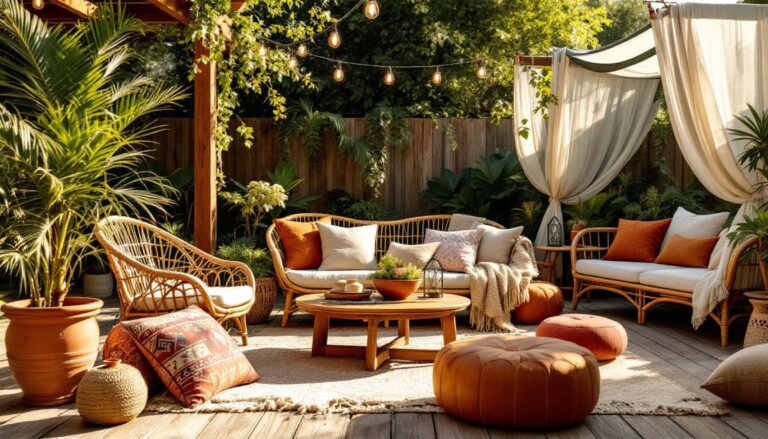
Layer textures. Pair smooth resin wicker with nubby jute rugs (use outdoor-rated polypropylene jute to resist rot). Add macramé plant hangers or woven lanterns to echo the palm weave without overdoing a single motif.
Anchor with greenery. Real palms (areca, kentia, or sago in large planters) reinforce the theme. If climate doesn’t support palms, substitute bird of paradise, elephant ear, or fiddle-leaf fig. Fake plants work, choose UV-resistant faux foliage so colors don’t bleach.
Control color palette. Stick to three main hues: sandy neutrals, ocean blues, and a pop of coral or lime. Too many competing patterns (palm print cushions + tropical throw pillows + floral rug) reads chaotic. Let one bold element lead, then support with solids.
Light it right. String Edison bulbs or solar lanterns overhead. Avoid harsh spotlights: aim for warm white (2700–3000K) to mimic sunset. Low-voltage LED path lights (12V systems) highlight plant beds and meet NEC Article 411 for outdoor lighting safety.
Add functional shade. Retractable awnings, cantilever umbrellas (offset base for unobstructed seating), or shade sails (tensioned fabric triangles) keep furniture and people cool. For design inspiration and plant pairings that complement palm furniture, explore garden design resources focused on outdoor living.
Incorporate water or sound. A small tabletop fountain or outdoor Bluetooth speaker tucked in planters enhances ambiance without major install. If adding electrical, hire a licensed electrician for GFCI-protected outlets (NEC 210.8 requires them within 6 feet of water sources).
Don’t forget underfoot. Outdoor rugs define zones and soften hard surfaces. Measure to ensure rugs extend 18–24 inches beyond furniture edges. Secure with rug pads or outdoor double-sided tape to prevent tripping hazards.
Rotate and refresh. Swap cushion covers seasonally to prevent uneven fade. Reposition furniture every few months so sun exposure spreads evenly. For more DIY outdoor living upgrades and seasonal refresh ideas, look to home improvement platforms that focus on practical styling.
Final check: Walk your space at different times of day. Morning glare, midday heat, and evening breezes all affect comfort. Adjust furniture angles, add umbrellas, or plant tall grasses to block sight lines and wind as needed. Tropical style works best when it’s as functional as it is photogenic.