Table of Contents
ToggleCreating a backyard retreat doesn’t require a designer budget or months of planning, it just needs the right approach. Boho patio furniture brings together natural materials, relaxed silhouettes, and eclectic layering to turn any outdoor space into a cozy escape. Whether someone’s working with a sprawling deck or a compact balcony, the bohemian aesthetic adapts easily. This guide walks through what defines the style, which pieces deliver the most impact, and how to pull it all together without hiring a decorator.
Key Takeaways
- Boho patio furniture prioritizes natural materials like rattan, teak, and jute with earthy tones and a mix-and-match aesthetic that creates a relaxed, collected-over-time vibe rather than rigid matching sets.
- Low-slung furniture, floor cushions, and lounging pieces define the boho style—aim for seat heights around 12–14 inches to create a grounded, casual outdoor retreat.
- Layering textiles, rugs, plants, and lighting transforms any patio into a bohemian escape; outdoor rugs should be at least 8×10 feet to anchor seating zones effectively.
- DIY boho furniture projects like pallet sofas, macramé hanging chairs, and floor cushions from drop cloths offer budget-friendly ways to customize your space without hiring a designer.
- All-weather wicker and outdoor-rated fabrics (solution-dyed acrylic or Sunbrella) resist fading and mildew better than natural materials, making them practical choices for long-lasting boho patio furniture.
- Regular maintenance including weekly vacuuming of rattan, oxygen-bleach cleaning of wood, and proper storage of cushions during off-season ensures your boho patio furniture stays beautiful and durable year-round.
What Defines Boho Patio Furniture?
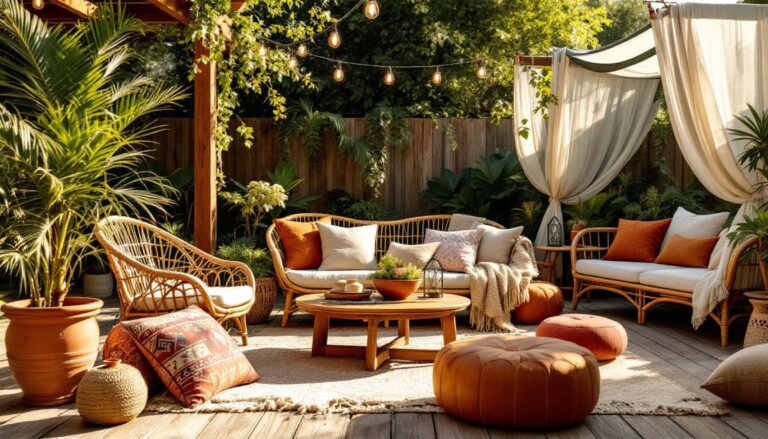
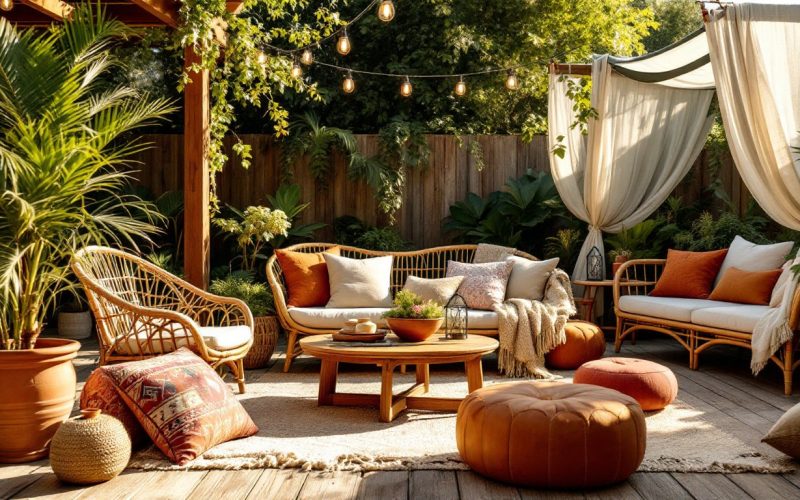
Boho outdoor furniture centers on natural materials, earthy tones, and a lived-in, collected-over-time vibe. Think rattan, teak, jute, and macramé rather than powder-coated steel or sleek resin. The palette leans toward warm neutrals, tan, terracotta, cream, olive, with pops of burnt orange, dusty rose, or deep indigo in textiles.
Unlike modern patio sets with rigid matching pieces, boho setups thrive on mix-and-match elements. A weathered wood bench sits next to a low rattan chair. Cushions come in varied patterns, tribal prints, block prints, ikats, but share a common color thread. Layering is key: rugs over concrete, throws over cushions, plants in mismatched pots.
Texture does heavy lifting here. Woven surfaces, fringe details, nubby fabrics, and carved wood all add visual interest without bright colors. The overall effect should feel like a global flea market find, not a showroom floor.
Boho style also favors low, lounging furniture over formal dining height. Floor cushions, poufs, and daybed-style seating encourage people to kick off their shoes and settle in. It’s inherently casual, which suits outdoor living.
Best Boho Furniture Pieces for Your Patio
Choosing the right anchor pieces sets the tone. Focus on a few statement items rather than filling every corner.
Rattan and Wicker Seating
Rattan and wicker are boho staples. Natural rattan (the solid core material) and wicker (woven from rattan, willow, or synthetic fibers) both deliver that airy, handcrafted look. For outdoor use, all-weather wicker (typically resin-based) holds up better against UV and moisture than natural materials.
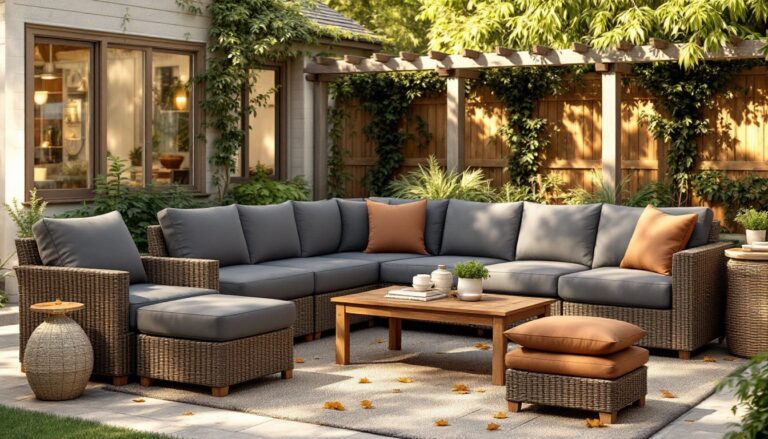
Look for peacock chairs, papasan chairs, or egg chairs for sculptural impact. A wicker loveseat or sectional works as a foundation piece. Pair with low-profile side tables in teak or bamboo.
When buying rattan or wicker, check the weave tightness, loose weaves sag faster. Aluminum or steel frames outlast wood frames in humid climates. If going with natural rattan, plan to store it under cover or bring it inside during heavy rain. Many homeowners opt for durable outdoor furniture that balances aesthetics with weather resistance.
Low-Slung Lounge Chairs and Poufs
Boho patios feel grounded, literally. Low lounge chairs (seat height around 12–14 inches instead of the standard 16–18 inches) create a relaxed, floor-level vibe. Canvas sling chairs, Acapulco-style cord chairs, and wooden deck chairs all fit the bill.
Poufs and floor cushions add flexible seating without the bulk of traditional furniture. Moroccan leather poufs, jute-covered ottomans, and oversized floor pillows (24-inch square or larger) work well. Look for solution-dyed acrylic fabric or Sunbrella-type materials for outdoor cushions, they resist fading and mildew better than cotton or untreated canvas.
A daybed or chaise with a canopy adds a dramatic focal point. Metal or wood frames with linen or canvas drapes create instant ambiance, though they’ll need anchoring in windy areas. If building a DIY version, use pressure-treated 4×4 posts sunk into concrete footings or heavy-duty deck anchors.
How to Style Your Boho Patio
Styling is where the magic happens. Start with layers, then edit back.
Rugs anchor zones. Outdoor rugs in natural fiber (jute, sisal) or flat-weave polypropylene define seating areas and soften hard surfaces. Aim for rugs large enough to fit all furniture legs on top, at least 8×10 feet for a full seating group. Polypropylene rugs handle moisture better than natural fibers, which can mildew if they stay wet.
Textiles add warmth. Layer cushions in varied sizes: 20-inch, 18-inch, and lumbar pillows mix well. Use a base of solid neutrals, then add 2–3 patterned pieces. Throws draped over chair backs introduce softness. Macramé wall hangings or plant hangers contribute vertical texture.
Lighting sets the mood. String lights (Edison bulbs or globe styles) provide ambient glow. Lanterns, metal, wood, or woven, work on tables or hung from shepherd’s hooks. Solar-powered options eliminate wiring but need full sun exposure to charge. For hardwired lighting, outdoor-rated cable and weatherproof junction boxes are non-negotiable: hire an electrician if running new circuits (this typically requires a permit and must meet NEC Article 410 for outdoor fixtures).
Plants complete the look. Potted palms, ferns, succulents, and trailing vines bring life. Vary pot heights and materials, terracotta, ceramic, woven baskets (with plastic liners). Hanging plants in macramé holders or wall-mounted planters use vertical space. Many designers draw inspiration from outdoor dining setups that layer greenery with textiles and natural furniture.
Accessories tie it together. Vintage finds, old wooden crates as side tables, ceramic bowls for candles, framed mirrors, add character. Keep it curated, not cluttered. Group items in odd numbers (3 or 5) for visual balance.
DIY Boho Patio Furniture Ideas on a Budget
Building or repurposing furniture saves money and adds unique touches.
Pallet seating is a classic DIY move. Stack and secure heat-treated pallets (look for the HT stamp, chemically treated pallets can off-gas) with 3-inch deck screws and L-brackets. Sand rough spots with 80-grit then 120-grit sandpaper. Seal with exterior wood stain or paint. Add outdoor cushions on top. A two-pallet sofa takes about 2 hours to assemble.
Cinder block and wood benches require zero carpentry skills. Stack cinder blocks (8×8×16-inch standard size) as supports, slide 2×10 or 2×12 boards (actual dimensions: 1.5×9.25 or 1.5×11.25 inches) through the block openings. Stain or paint the wood. Use construction adhesive between blocks for stability if kids or pets will climb on it.
Macramé furniture adds serious boho flair. Hanging chairs made from cotton cord and metal rings take 4–6 hours for beginners. Mount with a ceiling joist hook rated for at least 300 pounds if indoors: outdoor pergolas or beams need lag bolts (3/8-inch diameter minimum) into solid wood, not just fascia boards. Verify beam dimensions and load capacity, most 2×6 or larger joists handle the load, but span and spacing matter. When in doubt, consult a structural engineer.
Floor cushions from drop cloths cost a fraction of store-bought versions. Canvas drop cloths (6×9-foot size runs about $12) sewn into 26-inch square covers and stuffed with poly-fill or shredded foam make durable outdoor cushions. Treat with fabric waterproofing spray for moisture resistance. A basic sewing machine handles canvas if using a size 16 or 18 needle and heavy-duty thread.
Upcycled wood spools (ask at electrical supply yards) become side tables with a quick sand and seal. Large spools (30+ inches tall) work as-is: smaller ones stack for height.
Resources like Homedit showcase creative furniture builds and decor hacks that translate well to outdoor boho projects.
Maintaining Your Boho Outdoor Furniture
Natural materials and textiles need regular care to survive the elements.
Rattan and wicker: Vacuum or brush loose dirt weekly. Wipe with a damp cloth and mild soap (dish soap works). Avoid soaking natural rattan, it swells and weakens. For all-weather wicker, hose it down and let air-dry. Apply paste wax or teak oil to natural rattan annually to prevent brittleness.
Wood furniture: Teak and acacia weather to silver-gray unless treated. Clean with oxygen bleach (not chlorine bleach, which damages fibers) and a stiff brush. Seal with teak oil or exterior polyurethane twice a year. Pressure-treated pine needs sealing after it dries out (wait 3–6 months post-purchase). Check for splinters and sand as needed.
Textiles: Shake out cushions and rugs weekly. Spot-clean spills immediately with water and mild detergent. Most outdoor fabrics tolerate machine washing on gentle cycle, air-dry only, as heat shrinks and weakens fibers. Store cushions in deck boxes or bring indoors during prolonged rain. Mildew forms fast on damp fabric in warm weather: spray with mildew-resistant fabric treatment as prevention.
Metal accents: Wipe down powder-coated frames monthly. Touch up chips with matching spray paint to prevent rust. For raw steel or iron, apply rust-inhibiting primer and topcoat if corrosion starts.
Off-season storage: In freezing climates, bring natural rattan, fabric cushions, and rugs inside. Cover remaining furniture with breathable outdoor covers (not plastic tarps, which trap moisture). Elevate furniture on concrete blocks or pressure-treated 2×4s to prevent ground contact and rot. Inspiration for seasonal styling and long-term durability can come from sites like Southern Living, which often highlights outdoor spaces built for year-round use.
Safety note: Always wear work gloves when handling rough wood or wire brushes, and use safety glasses when applying spray treatments outdoors.