Table of Contents
ToggleSmall bedrooms don’t need to feel cramped or cluttered. With the right furniture choices and placement, even a 10×10 room can feel open and functional. The key isn’t buying miniature furniture or stripping the room bare, it’s selecting pieces that do more with less footprint. This means prioritizing multi-functional designs, vertical storage, and strategic placement over decorative filler. Whether dealing with a studio apartment, a spare room, or a tight primary bedroom, the following furniture ideas will help maximize usable space without sacrificing comfort or style.
Key Takeaways
- Multi-functional furniture like storage ottomans, Murphy beds, and daybeds eliminate the need for duplicate pieces and maximize usable space in small bedroom furniture arrangements.
- Low-profile bed frames with exposed legs or platform designs create visual openness and free up storage space underneath for bins, luggage, or cleaning equipment.
- Vertical storage solutions including tall bookcases, floating shelves, and loft beds draw the eye upward and make efficient use of wall space rather than precious floor area.
- Wall-mounted nightstands and narrow console tables save 12–16 inches of floor width compared to traditional bedroom furniture, improving circulation and movement flow.
- Smart furniture placement—floating beds away from walls, keeping pathways clear, and testing layouts before purchasing—transforms how a small bedroom functions regardless of the pieces selected.
Multi-Functional Furniture That Works Double Duty
Multi-functional furniture is the workhorse of small bedroom design. These pieces serve two or more purposes without taking up extra square footage.
Storage ottomans placed at the foot of the bed provide a spot for folded blankets, extra pillows, or off-season clothes while doubling as seating. Look for models with hinged lids or removable tops, avoid styles with flimsy fabric that sags under weight.
Murphy beds (wall beds) remain one of the most space-efficient solutions for studio apartments or guest rooms. Modern versions include built-in shelving, fold-down desks, or attached sofas. When closed, the bed disappears entirely, freeing the room for other uses. Most Murphy bed kits require wall anchoring into studs and weigh 200–300 pounds, so installation typically needs two people and a drill with masonry bits for concrete walls.
Fold-out desks mounted to the wall or attached to a dresser give small bedrooms a work-from-home zone without sacrificing a permanent footprint. Some models integrate directly into closet systems, with drop-down surfaces that tuck away when not in use. Ensure the desk surface is at least 28–30 inches high for comfortable seated work.
Daybeds with trundles work well in multipurpose rooms. The daybed functions as a sofa during the day, while the trundle slides out for overnight guests. Choose solid wood or metal frames over particleboard, trundles put stress on the frame rails, and cheap construction won’t hold up.
Many creative hacks turn standard furniture into space-saving solutions through simple modifications like adding casters, stacking modules, or removing bulky legs.
Strategic Bed Frame Choices for Space Efficiency
The bed is the largest piece of furniture in any bedroom, so choosing the right frame directly impacts how much usable space remains.
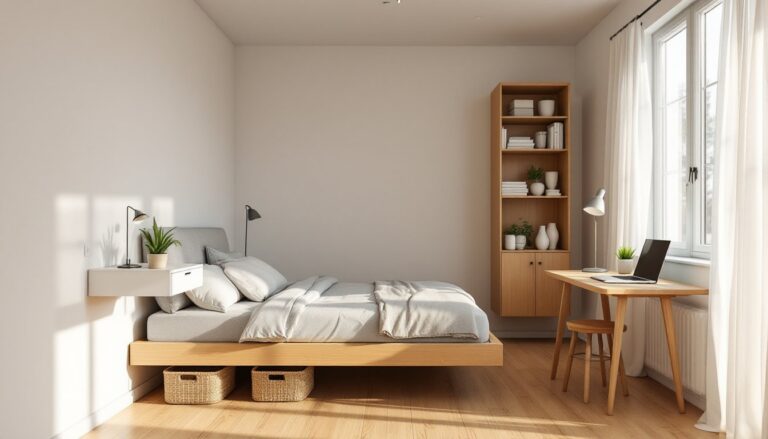
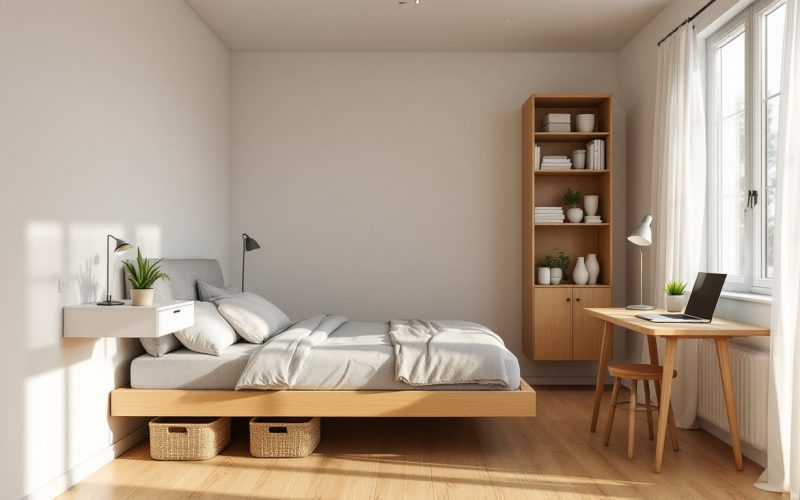
Low-profile beds with frames closer to the floor visually open up the room by creating more vertical space above. Japanese-style platform beds or simple frames with legs under 6 inches high work well in rooms with standard 8-foot ceilings. Avoid bulky headboards or tall footboards that chop up sightlines.
Beds with exposed legs (rather than solid base-to-floor designs) create visual breathing room. The visible floor underneath tricks the eye into perceiving more space. Metal hairpin legs or tapered wood legs at least 6–8 inches tall allow for under-bed storage bins or a robotic vacuum.
Platform Beds and Storage Beds
Platform beds eliminate the need for a box spring, saving 7–9 inches of vertical height. Most platform frames include slatted bases spaced 2–3 inches apart to allow airflow under the mattress. Check the slat spacing, gaps wider than 3 inches can cause memory foam or hybrid mattresses to sag between slats.
Storage beds are the MVPs of small bedrooms. These frames include built-in drawers, hydraulic lift platforms, or cubbies in the headboard. Drawer storage beds typically offer 4–6 drawers flanking the mattress, ideal for clothes, linens, or shoes. Hydraulic lift beds raise the entire mattress on hinges, revealing a massive storage cavity underneath, perfect for bulky items like luggage or seasonal bedding. The gas lift mechanism does the heavy lifting, but you’ll need at least 24 inches of clearance behind the bed for the mattress to tilt up fully.
Avoid captain’s beds with undersized drawers (less than 18 inches deep). They look substantial but hold less than you’d expect and often have flimsy drawer glides that bind or fall off track.
Vertical Storage Solutions to Free Up Floor Space
When floor space is tight, the walls and vertical volume become prime real estate.
Tall bookcases and shelving units (72–84 inches high) draw the eye upward and make the most of ceiling height. Anchor any unit taller than 60 inches to wall studs with L-brackets or furniture straps, tipping hazards are real, especially in earthquake zones or homes with kids. Adjustable shelving allows for flexibility as storage needs change.
Wall-mounted floating shelves above the bed, around doorways, or in corners add storage without eating floor space. Use these for books, plants, or decorative items. Install shelves into studs whenever possible: drywall anchors rated for 50 pounds or more work for lighter loads on hollow walls. Keep shelf depth at 8–10 inches to avoid a cluttered overhang.
Pegboards or slatwall systems turn awkward wall sections into functional storage. Mount pegboards near the closet for accessories, bags, or hats. Slatwall panels (commonly used in retail) accept adjustable hooks, baskets, and small shelves, great for renters who can’t install permanent built-ins.
Over-the-door organizers add instant storage to closet doors or bedroom entry doors. These fabric or metal racks hold shoes, scarves, jewelry, or toiletries. Choose models with reinforced steel hooks rather than plastic, which crack under repeated use.
Loft beds maximize vertical space by elevating the mattress 5–6 feet off the floor, creating usable area underneath for a desk, dresser, or seating. Adult loft beds (rated for 400+ pounds) require more robust framing than kids’ versions, look for solid wood or welded steel construction. Ceiling height is critical: You’ll need at least 8.5 feet to sit up comfortably in bed. Small space enthusiasts often share apartment makeovers featuring loft bed installations that triple usable square footage.
Smart Nightstand and Dresser Alternatives
Traditional nightstands and dressers hog floor space. Swapping them for slimmer or wall-mounted alternatives opens up circulation paths.
Wall-mounted nightstands (floating shelves with a single drawer or open cubby) attach directly to the wall beside the bed. These save 12–16 inches of floor width compared to standard nightstands. Mount them 24–28 inches above the mattress top for easy reach. Some models include built-in USB charging ports or wireless charging pads.
Narrow console tables (10–14 inches deep) work as nightstands or dressers in tight quarters. Look for designs with one or two slim drawers plus a lower shelf. A 36-inch console can replace a traditional 6-drawer dresser if paired with under-bed storage or a closet organizer.
Ladder shelves lean against the wall at an angle, providing tiered storage without requiring mounting hardware. These work well for folded clothes, baskets, or display items. Choose models at least 18 inches wide at the base for stability.
Armoires and wardrobes consolidate hanging clothes and folded items into a single vertical footprint. Modern armoires often include adjustable interior configurations, hanging rods, shelves, and drawers, that adapt to changing needs. A 36-inch-wide armoire provides as much storage as a standard 6-foot closet rod plus a 3-drawer dresser.
Cart-style organizers on casters serve as mobile nightstands or dressers. Rolling carts tuck into closets or corners when not needed and pull out for access. Metal mesh or wire carts (common in bath and kitchen sections) work surprisingly well for folded clothes, accessories, or bedside essentials. Locking casters prevent unwanted rolling on uneven floors.
Simple projects like repurposing existing furniture with budget-friendly DIY techniques can transform a dated nightstand into a custom piece that fits tight dimensions.
Furniture Placement Strategies for Better Flow
Smart placement matters as much as the furniture itself. Poor layout creates bottlenecks and wasted space even in larger rooms.
Float the bed away from walls when possible. Centering the bed with 18–24 inches of clearance on both sides creates symmetry and makes the room feel intentional rather than cramped. This works best in rooms at least 10 feet wide.
Push larger pieces against the longest wall. Placing the bed or dresser along the longest uninterrupted wall maximizes open floor space in the center. Avoid blocking windows or radiators, building codes (IRC) require egress windows in bedrooms to remain accessible.
Use corners efficiently. Corner desks, triangular shelves, or diagonal furniture placement put dead space to work. A dresser angled across a corner can feel less boxy than one flat against the wall, though it sacrifices some storage access.
Maintain clear pathways. Leave at least 24–30 inches between furniture pieces for comfortable movement. Narrower clearances (down to 18 inches) work in low-traffic zones like between a nightstand and wall, but main walking paths need elbow room.
Avoid placing furniture in front of outlets or light switches. You’ll end up moving it later. Plan furniture layout around electrical access, especially near the bed (for lamps and chargers) and desk areas.
Test the layout before committing. Use painter’s tape on the floor to outline furniture footprints, or move existing pieces around before buying new ones. A layout that looks fine on graph paper might block door swing or create awkward reaching angles in practice. Considering the broader context of furniture selection and placement helps create a cohesive design that works with the room’s architecture.
Keep the door swing clear. Bedroom doors typically need a 90-degree swing arc. Furniture blocking the door creates a frustrating daily obstacle and can be a safety issue in emergencies. Measure the door’s swing radius (usually 32–36 inches for standard doors) and keep that zone empty.
Conclusion
Small bedrooms reward intentional furniture choices. Multi-functional pieces, vertical storage, and thoughtful placement turn tight quarters into efficient, comfortable spaces. Focus on what the room actually needs, most bedrooms require a bed, some storage, and a clear path to the door. Everything else is negotiable. Measure twice, buy once, and don’t be afraid to leave some floor space empty. Open floor reads as spacious: clutter reads as cramped, no matter how clever the furniture.