Table of Contents
ToggleOutdoor sectionals don’t have to cost four figures to deliver comfort and style. With material costs stabilizing in 2026 and more direct-to-consumer options hitting the market, building an inviting patio setup on a tight budget is entirely doable, if you know what to look for. Cheap patio sectional furniture gets a bad rap for sagging cushions and rust spots, but modern manufacturing has closed the gap between budget and durability. The trick is understanding which materials hold up, where to hunt for deals, and how to protect your investment from UV rays and summer storms. This guide walks through the practical decisions that turn a $400 sectional into a five-season workhorse.
Key Takeaways
- Cheap patio sectional furniture offers 30–40% better value per seat than individual chairs and modular designs allow you to replace single damaged sections instead of replacing the entire set.
- High-density polyethylene (HDPE) resin wicker with powder-coated steel frames (14–16 gauge minimum) provides the best durability-to-cost ratio in the affordable sectional market.
- End-of-season clearance sales (late August–September) and direct-to-consumer brands deliver 40–60% discounts, while estate sales and liquidation warehouses offer hidden gems when you inspect carefully before purchase.
- UV protection sprayed every 60 days during peak sun season and proper cushion storage indoors dramatically extend the lifespan of budget sectionals by preventing material degradation and mold growth.
- Upgrading cushions to 4-inch high-density foam, adding layered throw pillows, and installing warm-white string lighting instantly elevate a cheap patio sectional to look designer-quality without breaking the budget.
What Makes Patio Sectional Furniture a Smart Budget Choice
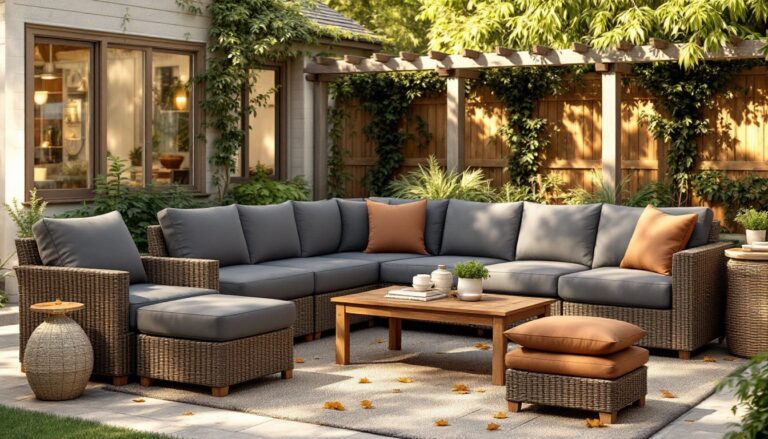
Sectionals deliver more usable seating per dollar than individual chairs or loveseats. A typical five-piece sectional, two corner pieces, two armless middle seats, and an ottoman, seats six comfortably and costs 30-40% less than buying equivalent standalone pieces. The modular design also means replacing a single damaged section instead of junking the whole set.
From a construction standpoint, budget sectionals use simpler joinery and lighter frames, which sounds like a downside but actually reduces shipping weight and assembly complexity. Most affordable models ship flat-packed, cutting freight costs that would otherwise inflate the retail price. You’ll spend 20-30 minutes per piece with an Allen wrench, but the trade-off is keeping more cash in your pocket.
Another practical angle: sectionals define space better than scattered seating. On a small patio or deck, an L-shaped configuration creates a natural conversation zone without requiring a separate coffee table or side tables. For renters or anyone who moves frequently, modular pieces reconfigure to fit new layouts, a corner unit on one patio becomes a middle seat on the next.
Best Materials for Affordable Patio Sectionals
Resin Wicker and Plastic Options
Resin wicker (also called PE or polyethylene wicker) dominates the budget outdoor market for good reason. It’s UV-stabilized, won’t splinter, and handles moisture without rotting. Quality varies wildly, though. Look for high-density polyethylene (HDPE) rather than standard PE, HDPE resists fading and cracking better in direct sun. Expect to pay $350-$600 for a basic five-piece HDPE sectional with cushions included.
The frames underneath matter more than the wicker itself. Powder-coated steel frames (14-16 gauge minimum) provide better rigidity than aluminum at this price point. Aluminum frames are lighter and rust-proof but often use thinner tubing in budget models, leading to flex and wobble over time. Check the weight capacity per seat, anything under 250 lbs suggests a frame that won’t hold up to regular use.
Injection-molded plastic sectionals (often marketed as resin or polypropylene) represent the true bottom of the price range, $200-$350 for a full set. They’re lightweight, stackable, and nearly indestructible, but comfort depends entirely on cushion quality since the molded seats offer zero give. These work well for poolside setups or secondary seating areas where you’re prioritizing function over lounging comfort. Many DIYers have turned affordable modular storage units into surprisingly sturdy outdoor seating with some weatherproof cushions and creativity.
Metal and Wood Alternatives
Powder-coated steel sectionals without wicker wrapping run $300-$500 and suit industrial or modern aesthetics. The powder coating is the critical spec, look for a minimum 2-mil thickness and a finish rated for outdoor use (AAMA 2604 is the standard). Cheaper coatings chip within a season, exposing bare metal to rust. Store these under cover or expect to touch up chips annually with a rust converter and spray paint.
Acacia and eucalyptus hardwood sectionals occasionally pop up in the $400-$600 range during end-of-season sales. Both species resist rot better than pine but require more maintenance than synthetic materials. Plan on applying penetrating oil or outdoor wood sealant twice a year to prevent graying and splitting. Acacia is denser and heavier: eucalyptus weighs less but dents more easily. Neither is a true set-and-forget option, but the natural look appeals to buyers who want to avoid plastic aesthetics.
Skip untreated softwoods like pine or cedar at this price point unless you’re comfortable with frequent refinishing. Budget cedar sectionals often use thin 3/4-inch slats that warp within two wet seasons. If wood matters for your design scheme, better to buy a steel frame sectional and add DIY wood accents than to gamble on structural wood pieces under $500.
Where to Find the Best Deals on Patio Sectionals
Big-box clearance events (typically late August through September) knock 40-60% off floor models and overstock. Home Depot, Lowe’s, and Walmart cycle out summer inventory aggressively to make room for fall merchandise. Floor models show wear, but most damage is cosmetic, scuffed feet, sun-faded cushions, missing hardware. Bring a tape measure and check frame welds and joint integrity before buying. Missing cushions aren’t a dealbreaker: generic replacements cost $20-$40 per seat from online fabric suppliers.
Direct-to-consumer brands ship flat-packed sectionals at prices 20-30% below traditional retail. Wayfair, Overstock, and Amazon house hundreds of budget lines, but reviews matter more than star ratings. Look for photos in reviews showing the product after 6-12 months of use, not just unboxing shots. Watch for complaints about uneven cushion fill or frame flex, those issues won’t improve with age.
Estate sales and Facebook Marketplace turn up surprising finds, especially in retirement communities where downsizing homeowners unload barely-used patio sets. Negotiate hard: most sellers just want the stuff gone. Bring a pickup truck or trailer, sectionals don’t disassemble as neatly as you’d think, and professional hauling eats into your savings. Clean and disinfect thoroughly: a pump sprayer with diluted bleach solution (1:10 ratio) kills mold and mildew on synthetic wicker and plastic.
Regional liquidation warehouses and habitat ReStores sometimes stock returned or slightly damaged outdoor furniture at steep discounts. Inventory is hit-or-miss, but when they have sectionals, prices often land 50-70% below retail. Bring cash, many don’t accept cards, and inspect carefully since most sales are final.
How to Maximize the Lifespan of Budget Patio Furniture
UV protection is the biggest factor in outdoor furniture longevity. Even UV-stabilized materials degrade under constant sun exposure. Apply a 303 Aerospace Protectant or similar UV inhibitor spray every 60 days during peak sun season (May through August in most of the US). It takes 10 minutes and costs about $12 per bottle, which covers a full sectional three times.
Cushions are the weak point on budget sectionals. Store them indoors or in a deck box when not in use for more than a day or two. Moisture trapped in cushion fill breeds mold and breaks down foam faster than sun exposure. If indoor storage isn’t an option, prop cushions on their edges after rain to promote airflow, laying them flat keeps the bottom surface damp for days.
Furniture covers work only if you use them correctly. Covers trap condensation unless they’re breathable fabric (not vinyl) with vented panels and tie-downs to prevent wind lift. A $40 cover that stays on properly protects better than a $100 cover that blows off every storm. In high-wind areas, better to move sectionals against a wall or under an overhome than fight with covers.
Level your sectional on the ground surface using plastic shims or composite deck blocks. Uneven surfaces stress frame joints and cause premature failure at connection points. On wood decks, use rubber or felt pads under each foot to prevent moisture wicking and staining, especially important with steel frames that can leave rust marks on deck boards.
Check and retighten all fasteners every spring. Budget sectionals use basic bolts and brackets that loosen from thermal expansion and contraction over winter. A quick once-over with an Allen key or socket wrench prevents wobbly joints from becoming broken joints. Apply a dab of blue threadlocker (not red, you want to be able to disassemble later) on bolts that repeatedly loosen.
Styling Your Cheap Sectional to Look Expensive
Upgrade the cushions first. Factory cushions on budget sectionals are typically 2-inch polyester fill that compresses flat within a season. Swap them for 4-inch high-density foam wrapped in outdoor fabric (Sunbrella or comparable solution-dyed acrylic). A local upholstery shop can make custom cushions for $40-$60 per seat, or DIY with foam from a fabric supplier and a staple gun. The transformation is dramatic, suddenly that $400 sectional feels like an $1,200 set.
Layer in outdoor throw pillows with varied textures and patterns. Mix solid colors with one or two patterned pillows to add visual interest without looking chaotic. Budget-friendly sources include HomeGoods, TJ Maxx, and end-of-season clearance racks at Target. Stick to a consistent color palette (three colors max) but vary the sizes, combine 18-inch and 12-inch square pillows for a designer look. Some of the best budget-friendly outdoor furniture ideas come from DIY enthusiasts who prioritize styling over initial price tags.
Define the seating area with an outdoor rug. A 6×9-foot or 8×10-foot polypropylene rug under the sectional anchors the space and hides concrete or worn decking. These rugs run $60-$150, resist mold and fading, and hose clean. Choose a rug that extends at least 12 inches beyond the sectional footprint on all sides for proper proportions.
Add integrated lighting to draw the eye away from budget construction details. String lights overhead or stake low-voltage LED uplights around the sectional perimeter. Warm white (2700-3000K) creates ambiance: avoid the blue-white tint of cheap LEDs that makes everything look washed out. Lighting costs $30-$80 to set up but shifts focus to the overall environment rather than individual furniture pieces.
Finally, keep it clean. Budget materials show dirt and water spots more readily than premium finishes. A weekly wipedown with mild dish soap and water prevents buildup that embeds in textured surfaces. For resin wicker, a soft brush (an old toothbrush works) gets into crevices without damaging the weave. Clean furniture always reads as higher quality, regardless of what you paid for it.