Table of Contents
ToggleGothic bedroom furniture isn’t about cobwebs and Halloween props. It’s a design style rooted in medieval European architecture, think cathedral arches, carved wood details, and richly layered textiles. Done right, a gothic bedroom combines dramatic elegance with unexpected comfort. This style works for anyone willing to embrace deeper color palettes, ornate detailing, and furniture with presence. Whether you’re furnishing a master suite or a guest bedroom, the right pieces and finishes create a space that feels both historic and lived-in.
Key Takeaways
- Gothic bedroom furniture combines medieval architectural elements like pointed arches, carved wood details, and tall vertical proportions to create dramatic, historically-inspired spaces that remain comfortable and livable.
- Essential pieces include four-poster beds with carved finials, armoires with wrought-iron hardware, matching nightstands, and storage trunks—all featuring solid hardwoods like oak or mahogany in near-black or deep walnut stains.
- Material quality and authentic hardware matter more than excessive ornamentation; choose solid hardwood frames with quality drawer glides and oil-rubbed bronze or wrought-iron pulls over shiny chrome finishes.
- Layer textiles in jewel tones—burgundy, emerald, and deep plum—using velvet, damask, and linen to add richness and comfort to gothic bedroom furniture without overwhelming the space.
- Balance dark gothic furniture and walls by incorporating lighter elements like cream linens, metallic accents, and natural textures, plus warm-toned lighting and strategic window treatments to prevent the room from feeling cave-like.
- Modern reproduction gothic bedroom furniture captures authentic period details through CNC carving and distressing techniques, offering the historic aesthetic at accessible price points without the structural issues of genuine antiques.
What Defines Gothic Bedroom Furniture?
Gothic furniture borrows heavily from medieval church architecture and Victorian-era revivals. The style peaked in Europe between the 12th and 16th centuries, then resurfaced during the Gothic Revival movement of the 1800s.
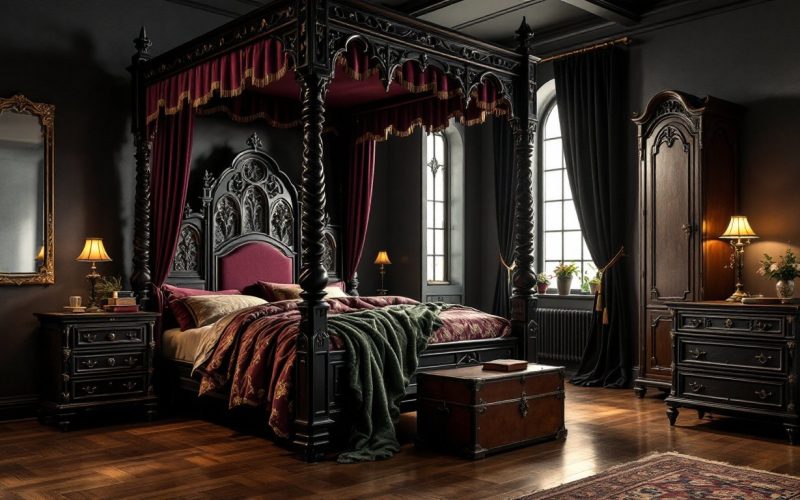
Key characteristics include pointed arch motifs (borrowed from cathedral windows), carved tracery (interlaced stonework patterns adapted to wood), and dark, heavy finishes. Woods like oak, mahogany, and walnut dominate, often stained near-black or left with a deep natural patina. Ironwork, wrought or cast, appears in bed frames, drawer pulls, and decorative brackets.
Height matters. Gothic furniture tends to be tall and vertical, mimicking the soaring lines of Gothic cathedrals. Bed frames often feature high headboards with carved panels or upholstered inserts in velvet or damask. Posts may rise six to eight feet, sometimes topped with finials shaped like fleur-de-lis or trefoils.
Texture and pattern play supporting roles. Expect to see quatrefoils (four-lobed shapes), rosettes, and linenfold carvings, a decorative technique that mimics folded fabric in wood. Upholstery fabrics lean toward rich jewel tones: burgundy, emerald, deep plum, or black. Brocade, velvet, and heavy cotton damask are period-appropriate choices.
While authentic Gothic antiques exist, most modern gothic bedroom furniture is reproduction or gothic-inspired. Manufacturers replicate period details using CNC carving, stains, and distressing techniques. The result is furniture that captures the look without the five-figure price tag or structural quirks of 19th-century originals.
Essential Gothic Furniture Pieces for Your Bedroom
Gothic Bed Frames and Headboards
The bed is the anchor. A four-poster bed with carved or turned posts immediately signals gothic style. Look for posts with gothic arches, pointed finials, or spiral turnings. Canopy frames, whether draped with fabric or left bare, add verticality without overwhelming a room with standard 8-foot ceilings.
Panel beds offer a simpler alternative. These feature solid or upholstered headboards framed by carved molding, often incorporating pointed arch shapes or gothic tracery cutouts. Heights typically range from 60 to 72 inches from the floor to the top of the headboard.
For tight budgets or smaller rooms, a standalone headboard can anchor the look. Mount it directly to the wall or attach it to a basic metal bed frame. Choose designs with carved wood details, upholstered panels in dark velvet, or wrought-iron scrollwork. A king-size headboard with a pointed arch centerpiece makes a statement without requiring a complete furniture overhaul.
Material quality matters more than ornate detail. Solid hardwood frames (oak, maple, or rubberwood) outlast particleboard or MDF, especially at joints and connection points. Check drawer glides if the bed includes storage, dovetail joints and ball-bearing slides hold up better than stapled particleboard.
Dressers, Armoires, and Storage Solutions
Gothic storage pieces double as architectural elements. Armoires with carved door panels, wrought-iron hinges, and interior shelving replace generic closets. Dimensions vary, but expect depths of 22 to 24 inches and heights of 72 to 84 inches. These work well in homes with limited closet space or as media cabinets, just confirm interior dimensions accommodate your TV or equipment.
Dressers in gothic style feature deep drawers with carved fronts, metal corner brackets, and decorative hardware. Look for pieces with plinth bases (solid, carved bases rather than exposed legs) and finished backs if you’re floating them in the room rather than pushing them against a wall. Standard dresser heights run 30 to 36 inches: tallboys or chests-on-chests reach 50 to 60 inches and work in narrow spaces.
Nightstands should match the bed’s visual weight. Gothic nightstands often include a single drawer over an open shelf or cabinet door, carved apron details, and wrought-iron pulls. Heights of 24 to 28 inches align with most mattress-and-box-spring setups. If you’ve gone with a platform bed or low-profile frame, adjust nightstand height accordingly, bedside surfaces should sit within a few inches of your mattress top.
For authenticity, integrate a gothic-style trunk or blanket chest at the foot of the bed. Cedar-lined chests provide moth-proof storage for woolens and linens while reinforcing the medieval aesthetic. Reproduction trunks with metal strapping, heavy hardware, and dark finishes are widely available and functional.
Choosing the Right Materials and Finishes
Wood selection impacts both durability and appearance. Solid oak is the most historically accurate choice, it’s strong, takes stain well, and develops a beautiful patina over decades. Red oak has a more prominent grain: white oak offers a smoother, tighter grain that some prefer. Mahogany and cherry provide rich reddness and accept dark stains without going muddy. Budget-conscious buyers can opt for rubberwood or acacia, both are hardwoods that stain well and cost significantly less than oak or mahogany.
Avoid veneered particleboard or MDF for primary furniture pieces. Veneer over solid wood or plywood is acceptable if construction quality is high, but particleboard cores fail at stress points, drawer slides, bed frame joints, and hinge mounts.
Finish color defines the mood. Near-black ebony stains or espresso finishes create maximum drama and pair well with lighter walls and textiles. Medium to dark walnut stains offer warmth while staying in the gothic palette. Hand-rubbed finishes with wax topcoats look more authentic than high-gloss polyurethane, which skews modern.
Distressing and antiquing techniques add character but can look cheap if overdone. Light distressing, worn edges, subtle dings, and color variation, mimics natural aging. Heavy distressing with gouges and artificial wormholes often reads as faux-rustic rather than gothic.
Hardware and metalwork shouldn’t be afterthoughts. Wrought-iron or oil-rubbed bronze pulls, strap hinges, and decorative nailhead trim reinforce period authenticity. Avoid shiny chrome, brushed nickel, or anything that skews contemporary. If replacing hardware on existing furniture, measure hole spacing (center-to-center distance) before ordering. Standard dresser pulls use 3-inch or 3.75-inch spacing: drawer knobs mount with a single screw.
Upholstery fabrics should be durable and appropriate to the style. Velvet is the classic choice, cotton velvet breathes better than synthetic but shows wear faster. Linen blends and heavyweight cotton damask work for headboards and seating. In homes with pets or kids, consider performance fabrics treated for stain resistance. Many manufacturers now offer dark-toned performance velvets that maintain the gothic look while standing up to daily use.
Styling Tips to Complete Your Gothic Bedroom
Furniture is only part of the equation. Gothic style relies on layering textures, controlling light, and balancing dark elements with strategic contrast.
Wall treatments set the stage. Deep paint colors, charcoal gray, navy, burgundy, or true black, work if the room has ample natural light. In smaller or darker rooms, consider an accent wall behind the bed rather than painting all four walls. Wallpaper with damask patterns, flocked textures, or gothic motifs adds dimension without additional furniture cost. Peel-and-stick options simplify installation and removal for renters.
Window treatments control light and reinforce the aesthetic. Heavy drapes in velvet or brocade, mounted on wrought-iron or wooden rods, frame windows and block light when needed. Layering blackout liners behind decorative panels provides sleep-friendly darkness without sacrificing style. For a softer look, use sheer panels underneath heavier drapes, this combination allows filtered daylight while maintaining privacy.
Lighting should be warm and layered. Overhead fixtures with wrought-iron or antiqued metal frames, candelabra-style bulbs, and dimmer switches provide ambient light. Table lamps on nightstands and dressers add task lighting, look for bases in dark metal, carved wood, or ceramic with gothic detailing. LED filament bulbs in 2700K color temperature mimic the warm glow of incandescent bulbs without the energy draw. Avoid cool-white LEDs, which wash out the warm tones in wood and fabric.
Textiles add comfort and visual weight. Layer bedding with a mix of textures: a duvet or coverlet in velvet or jacquard, cotton or linen sheets in deep colors, and throw pillows in varied fabrics. A faux-fur or chunky knit throw at the foot of the bed softens the look. Area rugs in dark tones or traditional patterns (Persian, oriental, or damask motifs) anchor furniture groupings and absorb sound.
Accessories should be intentional, not cluttered. Wrought-iron candle holders, antique-style mirrors with ornate frames, and framed art with gothic themes (medieval manuscripts, architectural prints, or moody landscapes) personalize the space. For those who appreciate interior design inspiration, incorporating touches from various style movements creates a bedroom that feels curated rather than themed. Wall-mounted sconces flanking the bed or a mirror add architectural interest. A standing full-length mirror with a carved wood or iron frame serves a practical purpose while reinforcing the style.
Balance dark furniture and walls with lighter elements to prevent the room from feeling cave-like. Crisp white or cream linens, metallic accents in brass or bronze, and natural textures (jute, sisal, or unfinished wood) provide visual breathing room. Incorporating ideas from room styling guides can help refine the balance between drama and livability. If the room feels too heavy, lighten the walls or swap one large dark furniture piece for something in a lighter finish or upholstered in a neutral fabric.
Conclusion
Gothic bedroom furniture transforms a standard sleeping space into something with character and history. Focus on quality materials, authentic details, and a balanced approach to color and texture. Whether working with reproduction pieces or hunting down antiques, the goal is a room that feels dramatic without being theatrical, livable, comfortable, and unmistakably gothic.