Table of Contents
ToggleMartha Stewart has built a reputation for delivering accessible yet sophisticated home solutions, and her patio furniture lines are no exception. Whether you’re furnishing a compact balcony or a sprawling deck, these collections combine practical durability with the design polish you’d expect from a lifestyle brand that’s been around for decades. In 2026, homeowners can choose from several collections that address real outdoor challenges, weather resistance, easy maintenance, and flexible configurations, without sacrificing style. This guide walks through what sets Martha Stewart patio furniture apart, where to buy it, and how to choose and care for pieces that will last.
Key Takeaways
- Martha Stewart patio furniture combines mid-range pricing ($200–$2,000) with premium design details, available primarily through The Home Depot with competitive pricing and consistent distribution.
- Durable materials like powder-coated steel frames, all-weather wicker, and solution-dyed acrylic cushions resist rust, fading, and moisture while maintaining style for years.
- Modular designs allow you to rearrange sectional pieces, corner units, and ottomans as your layout changes without mismatched appearance or complete replacement costs.
- Proper maintenance—including 4–6 week frame cleaning, immediate cushion spot-cleaning, and annual sealer applications for wood—ensures your patio furniture investment lasts 5–7+ years.
- Choose materials based on your climate: all-weather wicker for humid areas, eucalyptus wood for sustainable durability, or sling fabrics for low-maintenance poolside setups.
- Plan your layout with 24 inches of clearance around seating and at least 36 inches for dining chairs to pull out, ensuring comfort and traffic flow in your outdoor space.
What Makes Martha Stewart Patio Furniture Stand Out
Martha Stewart patio furniture occupies a specific niche: mid-range pricing with design details usually reserved for premium brands. Most collections retail through The Home Depot, which keeps distribution consistent and pricing competitive. Expect to pay $200–$800 for dining chairs and $600–$2,000 for sectionals, depending on materials and size.
Materials are where these pieces earn their keep. Steel frames with powder-coated finishes resist rust better than bare aluminum, while all-weather wicker (high-density polyethylene resin) won’t crack or fade like natural rattan. Cushions typically use solution-dyed acrylic fabric (Sunbrella or equivalent), which means the color goes all the way through the fiber, spills wipe off, and UV exposure won’t bleach them out.
The modular design is a practical advantage. Many collections offer sectional pieces that can be rearranged as your layout changes. Corner units, armless chairs, and ottomans can be swapped around without looking mismatched, which beats buying an entirely new set when you move or redesign.
One limitation: assembly required. These aren’t heirloom pieces that arrive fully built. Plan for 1–2 hours per major item, and you’ll need a drill, an adjustable wrench, and a second person for larger sectionals.
Popular Martha Stewart Patio Furniture Collections
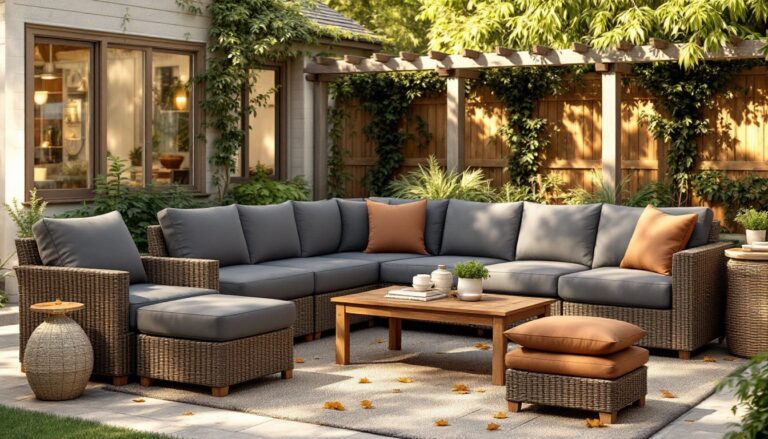
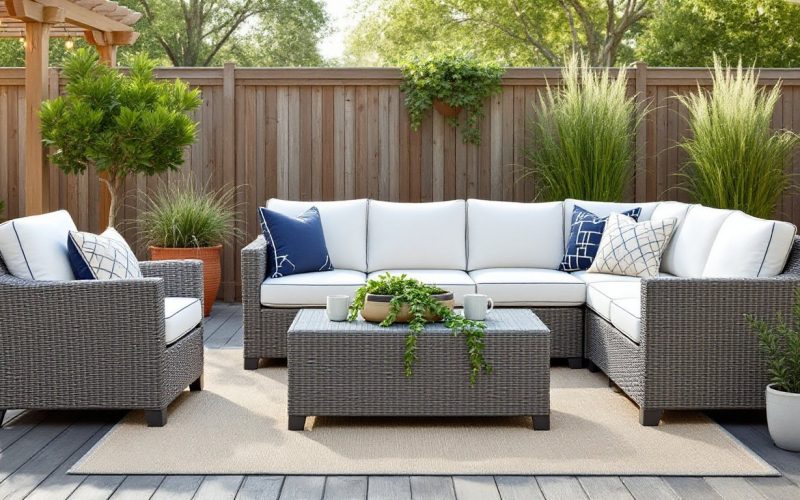
The Living Charlottetown collection is the best-known line, featuring all-weather wicker in brown or gray tones over steel frames. It includes deep-seating sectionals, dining sets, and conversation sets. Cushions are 5 inches thick with high-resiliency foam cores, enough support for adults to sit comfortably for a few hours. Wicker is tightly woven, which prevents sagging and keeps dirt from settling into crevices.
Living Lake Adela leans more contemporary, with sling-style seating and clean-lined aluminum frames. The textilene fabric (PVC-coated polyester) dries quickly and requires almost no maintenance. It’s a good match for poolside setups where cushions are a nuisance. Chairs stack for winter storage, a plus if you’re short on garage or shed space.
The Living Solana Bay collection uses eucalyptus wood, which is naturally rot- and insect-resistant thanks to its high oil content. It’s harvested from managed plantations, so it’s a more sustainable pick than teak. The wood will weather to a silvery-gray patina unless you apply a UV-protective sealer annually. Cushions are sold separately, giving you flexibility to choose colors or skip them entirely.
Living Cedar Island is the budget-friendly option, with simpler frames and thinner cushions. It’s fine for occasional use or a rental property, but don’t expect the same longevity as Charlottetown.
Where to Buy Martha Stewart Patio Furniture
The Home Depot is the primary retailer, both in-store and online. Inventory peaks in March and April, so shop early for the best selection. By late summer, stock thins out, and discontinued colors or configurations may not restock until the following year.
Online ordering offers free shipping on orders over $45, and most items ship within 1–2 weeks. In-store pickup is faster if your local store has stock. Check the website for real-time inventory at nearby locations before making the trip.
Overstock and clearance deals appear in late August through October as retailers make room for seasonal merchandise. Discounts can hit 30–50%, but you’ll have limited choices in color and configuration. If you’re flexible, this is when to buy.
Secondhand options show up on Facebook Marketplace and Craigslist, especially in suburban areas after homeowners downsize or move. Inspect frames carefully for rust or cracks, and replace cushions if they’re faded or moldy. Replacement cushions are sold separately by The Home Depot and fit standard frame sizes.
Choosing the Right Martha Stewart Patio Set for Your Space
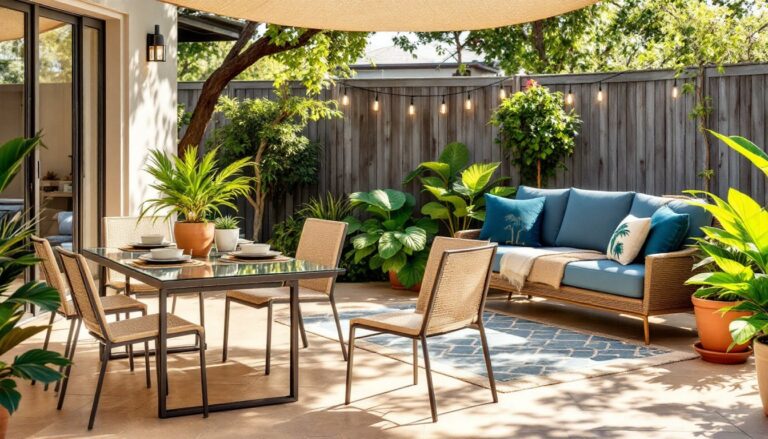
Start by measuring your actual usable space, not the total deck or patio footage. Leave at least 24 inches of clearance around seating so people can walk behind chairs without turning sideways. For dining sets, measure from the table edge to any railings or walls: you need 36 inches minimum for chairs to pull out comfortably.
Material choice depends on your climate and maintenance tolerance. All-weather wicker handles humidity and occasional rain but will show dirt faster than sling fabrics. Eucalyptus wood requires annual sealing if you want to maintain its honey-brown color: if you’re fine with gray weathering, skip the sealer but still clean it twice a year.
Seating depth matters more than most people realize. Deep-seating sets (cushions 24–26 inches deep) are great for lounging but awkward for dining. Standard dining chairs sit at 16–18 inches deep and pair with tables 28–30 inches high. Don’t mix the two unless you want sore backs.
Consider storage before you buy. Wicker and aluminum can stay outside year-round in mild climates (USDA zones 8–11), but cushions should come inside during extended rain or winter. If you live in snow country, stack furniture under a covered area or use waterproof covers rated for your local temperature extremes. Cheaper vinyl covers crack in freezing temps: look for polyester with PVC backing.
For shaded patios, darker cushion colors work fine. Full-sun exposure will fade any fabric over time, but lighter tones (grays, tans) show less contrast as they age. Many homeowners choose cushions based on style and accept that they’ll replace them every 5–7 years.
Maintenance and Care Tips for Long-Lasting Outdoor Furniture
Clean frames every 4–6 weeks during use season. For wicker and metal, use mild dish soap and warm water with a soft-bristle brush. Avoid pressure washers, they can strip powder coating or loosen wicker weave. Rinse thoroughly and let air-dry.
Cushions should be spot-cleaned immediately after spills. Solution-dyed acrylic fabrics can handle diluted bleach (1 part bleach to 10 parts water) for mildew or stubborn stains. Let the solution sit for 15 minutes, scrub gently, then rinse until the water runs clear. Never put cushions in a washing machine: the foam cores will break down.
Store cushions indoors when not in use for more than a few days. Even waterproof fabrics will develop mildew if they stay damp. A deck box or garage shelf keeps them dry and out of the way. If indoor storage isn’t an option, use breathable covers rather than plastic tarps, which trap moisture.
For eucalyptus wood, apply a UV-protective wood sealer (like Thompson’s WaterSeal or similar) once a year in early spring. Sand lightly with 120-grit sandpaper to remove any surface grime, wipe clean, and apply two coats. This keeps the wood from graying and prevents surface cracking. If you prefer the weathered look, skip the sealer but scrub the wood annually with a deck cleaner to remove algae and dirt buildup.
Metal frames with powder coating rarely need more than soap and water, but check joints and welds annually for rust spots. If you find any, sand to bare metal with 80-grit sandpaper, apply a rust-inhibiting primer, and touch up with matching spray paint. Untreated rust will spread and weaken the frame.
Inspect hardware (bolts, screws, brackets) every spring. Outdoor furniture shifts with temperature and humidity, which can loosen fasteners. Retighten with a socket wrench, and replace any corroded bolts with stainless steel replacements from a hardware store.
Styling Your Outdoor Space with Martha Stewart Furniture
Martha Stewart patio furniture leans transitional, not too modern, not too traditional, which makes it easy to layer with other decor. For a cohesive look, stick to two or three accent colors across cushions, planters, and accessories. Neutrals (gray, beige, navy) pair well with bold throw pillows or outdoor rugs.
Outdoor rugs define seating areas and add comfort underfoot. Polypropylene rugs resist moisture and mildew better than natural fibers. Choose a size that extends at least 12 inches beyond the furniture footprint on all sides. A rug that’s too small makes the space feel cramped.
Lighting extends usability into the evening. String lights on a dimmer create ambiance without glare. Solar stake lights along pathways are practical but don’t provide enough light for dining or reading, add battery-powered LED lanterns or a plug-in floor lamp rated for damp locations.
Consider how different arrangements maximize traffic flow. In tight spaces, skip the coffee table and use side tables instead. They’re easier to move and don’t block pathways. For larger patios, create zones, a dining area near the grill, a conversation cluster by the fire pit, and a lounging corner with chaises.
Planters and greenery soften hard edges. Use large pots (16–20 inches diameter) for small trees or tall grasses, and cluster smaller pots at different heights. Self-watering planters reduce maintenance during summer heat.
For homeowners exploring complementary outdoor furniture styles, mixing materials can add visual interest. Pair wicker seating with a metal side table, or combine wood dining chairs with a concrete-top table. Keep finishes within the same color family to avoid a cluttered look.
Avoid overcrowding. Outdoor spaces feel best when there’s room to move. If you’re constantly squeezing past furniture, edit down to fewer, more comfortable pieces. Quality beats quantity, especially when it comes to selecting pieces that suit your lifestyle.
Conclusion
Martha Stewart patio furniture offers a practical middle ground between big-box basics and high-end custom pieces. The combination of durable materials, modular flexibility, and accessible pricing makes these collections a solid choice for homeowners who want style without the headaches. Prioritize proper maintenance, especially cushion storage and annual cleaning, and your investment will hold up for years.