Table of Contents
ToggleShopping for bedroom furniture isn’t what it used to be. The modern aesthetic, clean lines, minimal ornamentation, and functional design, has moved from niche showrooms to mainstream availability. Whether someone’s furnishing a new build or updating a tired master suite, knowing where to look (and what to look for) makes the difference between a room that works and one that just fills space. This guide breaks down what modern bedroom furniture actually entails, where to find it, and how to shop smart without blowing the budget or settling for particle board that won’t survive the first move.
Key Takeaways
- Modern bedroom furniture is defined by clean lines, minimal hardware, neutral palettes, and functional design—distinguishing true modern pieces from transitional or contemporary styles.
- Quality bed frames and mattresses deserve 40–50% of your bedroom budget, as they see the most use; specialty retailers offer solid hardwood options ($1,200–$2,500) with superior durability compared to engineered wood from big-box stores ($400–$800).
- Modern bedroom furniture stores range from specialty retailers like Room & Board and Article (curated, made-to-order, higher cost) to accessible big-box options like West Elm, Target’s Project 62, and IKEA (trend-responsive, immediate availability, lower cost).
- Strategic shopping combines high-quality investment pieces with budget finds—buy a solid wood bed frame and pair it with vintage or budget nightstands and dressers for significant savings without sacrificing the modern aesthetic.
- Always measure room dimensions, check drawer glides and joinery quality, visit showrooms when possible, and review return policies and warranties before purchasing to ensure your modern bedroom furniture is both functional and durable.
What Makes Modern Bedroom Furniture Different?
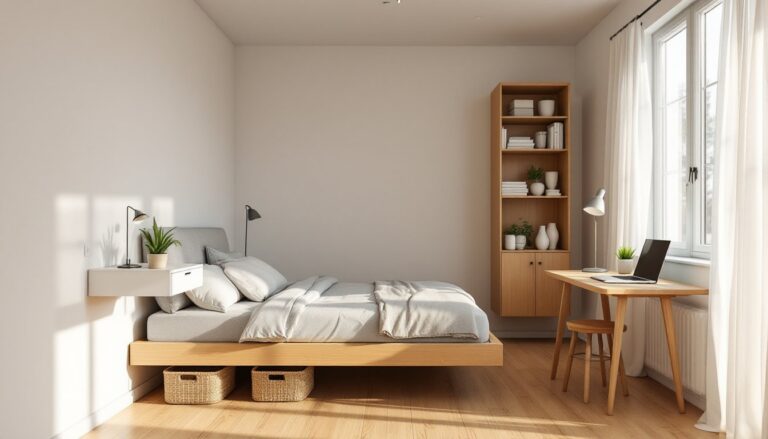
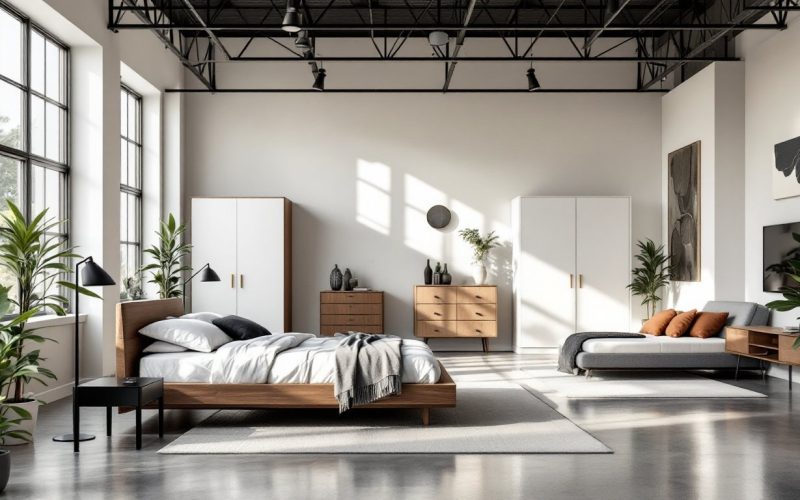
Modern bedroom furniture isn’t just a marketing term, it refers to a design philosophy rooted in mid-century modernism and updated for contemporary living. Key characteristics include:
- Clean, geometric lines: No ornate carvings, turned legs, or excessive trim. Think straight edges, tapered legs, and angular or rounded forms.
- Minimal hardware: Drawer pulls and handles are often recessed, integrated, or entirely absent in favor of push-to-open mechanisms.
- Neutral palettes with strategic color: Walnut, oak, white lacquer, matte black, and gray dominate. Accent colors appear in upholstery or textiles, not the furniture frame.
- Functional design: Built-in storage, platform beds that eliminate the need for a box spring, and modular pieces that adapt to different room layouts.
- Mixed materials: Wood paired with metal, glass, or leather. A walnut dresser with steel hairpin legs, for example, or a bed frame combining upholstered panels with solid hardwood.
Understanding these traits helps shoppers distinguish true modern pieces from transitional or contemporary styles, which often blend traditional and modern elements. When evaluating a piece, look at joinery quality. Dovetail or mortise-and-tenon joints in solid wood furniture outlast stapled or glued particle board. Check drawer glides, full-extension, soft-close undermount glides are standard in quality modern furniture and worth the investment for longevity.
Top Types of Modern Bedroom Furniture Stores
Specialty Modern Furniture Retailers
These stores focus exclusively on modern and contemporary designs. Examples include Room & Board, Design Within Reach, and Article. They typically offer:
- Curated selection: Every piece fits a cohesive aesthetic, making it easier to mix and match without clashing styles.
- Higher quality materials: Solid hardwoods (oak, walnut, ash), top-grain leather, and responsibly sourced veneers are common.
- Made-to-order options: Custom upholstery, finish choices, and sizing variations. Expect lead times of 6–12 weeks for custom pieces.
- Design services: Many specialty retailers offer complimentary or low-cost design consultations, either in-store or virtual.
The tradeoff? Price. A solid walnut platform bed from a specialty retailer starts around $1,200–$2,500, compared to $400–$800 for a similar-looking piece in engineered wood at a big-box store. For primary furniture that sees daily use, beds, dressers, nightstands, the investment in durability and timeless design often pays off. Those interested in Scandinavian-inspired minimalism will find specialty stores particularly well-stocked.
Big-Box Stores With Modern Collections
West Elm, CB2, IKEA, Target’s Project 62 line, and even Wayfair’s house brands now offer modern bedroom furniture at accessible price points. These retailers provide:
- Immediate or fast availability: Many pieces ship within days or are available for same-day pickup.
- Budget-friendly pricing: Engineered wood (MDF, particleboard with veneer) keeps costs down. A full bedroom set can run $800–$1,500.
- Trend-responsive designs: Big-box stores update collections seasonally, incorporating current design trends like boucle upholstery, cane detailing, or brass accents.
Quality varies significantly. IKEA’s solid pine beds (like the TARVA) can be refinished and last decades with care, while particleboard dressers might sag or delaminate after a few years. Always check weight limits for beds, engineered wood platforms typically support 500–600 lbs, whereas solid hardwood frames handle 800+ lbs. Shoppers exploring furniture options across different cities often find that big-box chains maintain consistent inventory nationwide, simplifying multi-location searches.
How to Choose the Right Store for Your Bedroom Project
Selecting a store depends on budget, timeline, and how long the furniture needs to last. Here’s a practical framework:
Assess the room’s permanence. Is this a starter apartment or a long-term home? Rental or short-term situations often justify lower-cost, lighter-weight furniture. A forever home warrants investment pieces.
Prioritize the bed frame and mattress. These see the most use. A quality platform bed in solid wood or steel will outlast ten cheap frames. Allocate 40–50% of the bedroom budget here. Nightstands and dressers can be mixed vintage or budget finds.
Check return policies and warranties. Specialty retailers often offer 30-day returns and 1–5 year warranties on construction defects. Big-box stores vary, IKEA’s 365-day return policy is generous, but assembly voids some protections. Read the fine print on particleboard furniture: moisture damage and normal wear often aren’t covered.
Measure before shopping. Bring room dimensions, ceiling height, door widths, and stairwell measurements. A king bed frame is typically 76″ x 80″: add clearance for bedding overhang and walking space (minimum 24″ on each side for comfortable access). Dressers range from 30″–60″ wide and 18″–20″ deep. Use painter’s tape on the floor to map furniture footprints before committing to a purchase.
Evaluate lead times. Custom pieces from specialty stores take weeks. If furnishing a room quickly, prioritize in-stock items or retailers with expedited shipping. Some design enthusiasts supplement their modern bedroom with entryway pieces that share similar lines, creating cohesion throughout the home.
Visit showrooms when possible. Photos don’t convey scale, finish texture, or how drawer glides feel. Sit on upholstered beds, open drawers, and inspect joinery. Many design-focused publications showcase room settings that help visualize how pieces work together in real spaces.
Budget-Friendly Modern Bedroom Furniture Options
Modern style doesn’t require a luxury budget. Strategic shopping yields quality pieces without the premium price:
Shop direct-to-consumer brands. Companies like Floyd, Burrow, and Thuma cut out middlemen, offering solid wood beds and modular storage at 20–40% less than traditional retail. A Thuma bed frame (solid wood, tool-free assembly) runs around $895–$1,495 depending on size, competitive with mid-range stores but higher quality.
Mix high and low. Invest in a solid wood bed frame, then pair it with budget nightstands and a vintage dresser refinished in a modern finish. A $50 mid-century dresser from Facebook Marketplace, stripped and finished with water-based polyurethane or Danish oil, looks like a $600 retail piece. Wear gloves and a respirator when sanding old finishes: pre-1978 furniture may have lead paint.
Consider unfinished furniture. Retailers like IKEA’s TARVA line or local unfinished furniture shops sell solid pine pieces ready for stain or paint. A basic TARVA dresser costs ~$150: add $30 in stain and drawer pulls for a custom look. Use a pre-stain wood conditioner on softwoods to prevent blotching, and apply 2–3 coats of water-based poly for durability.
Shop floor models and discontinued lines. Stores discount floor samples 30–60%. Inspect for damage, test all drawers and mechanisms, and confirm all hardware is included. Discontinued pieces from affordable retailers are often deeply discounted as stores make room for new inventory.
Watch for sales cycles. Presidents Day, Memorial Day, and Labor Day bring 20–30% off at most furniture retailers. End-of-year clearance (late January) offers the steepest discounts. Sign up for email lists: many brands send 10–15% off first-purchase codes.
Explore architectural salvage and vintage. Mid-century modern originals (1950s–1970s) often cost less than new reproductions. A vintage teak dresser might run $300–$700 depending on condition, compared to $1,200+ for a new teak piece. Check joinery and veneer condition: repairs require wood glue, clamps, and veneer patches (available at woodworking suppliers). Design resources frequently feature modern furniture at various price points, helping shoppers identify good value.
Shopping Tips: Online vs. In-Store for Modern Bedroom Furniture
Both channels offer advantages. The key is knowing when to use each.
Shop online for:
- Price comparison: Aggregate sites and direct brand websites make it easy to compare identical or similar pieces across retailers.
- Broader selection: Niche styles and smaller brands often sell exclusively online. Filters for material, dimension, and price narrow options quickly.
- Reviews: Customer photos and detailed reviews reveal real-world durability and assembly challenges. Look for reviews mentioning delivery damage, assembly difficulty, and long-term use (1+ years).
- Convenience: No driving, no sales pressure, and delivery straight to the door. White-glove delivery (typically $100–$300 extra) includes room placement and assembly.
Shop in-store for:
- Tactile evaluation: Feeling finish quality, testing drawer glides, and sitting on beds can’t be replicated online. A “walnut veneer” finish varies dramatically in quality, some are paper-thin photo prints, others are real wood veneer over plywood.
- Immediate availability: Many stores stock popular items for same-day pickup. Useful when furnishing quickly or avoiding long shipping windows.
- Design consultation: In-person staff can suggest complementary pieces and spot sizing issues. Bring room measurements and photos on your phone.
- Avoiding shipping damage: Large, heavy furniture ships via freight, which has higher damage rates than parcel shipping. In-store pickup eliminates this risk.
Hybrid approach: Research online, visit showrooms to evaluate quality, then purchase where the best deal exists. Many retailers price-match competitors, so bring screenshots. Some shoppers browse home design platforms to gather inspiration before heading to stores with a clear vision.
Delivery logistics: For online purchases, measure doorways, stairwells, and elevator dimensions. Most retailers list package dimensions: ensure they’ll fit through tight spaces. Platform beds and dressers often arrive in multiple boxes. Keep all packaging until assembly is complete and the piece is inspected for defects.
Assembly considerations: Most modern furniture requires assembly. Budget 1–3 hours for a bed frame, 30–60 minutes per nightstand or dresser. Use a power drill with adjustable torque settings (6–8 setting for cam locks and dowels) to avoid stripping hardware. A rubber mallet helps seat dowels without marring wood. If assembly isn’t feasible, TaskRabbit or Handy typically charge $60–$150 per piece depending on complexity. Shoppers working on multiple rooms often apply similar strategies to other furniture categories, building familiarity with assembly and quality markers.
Returns and damage claims: Photograph all boxes upon delivery before opening. If damage is visible, note it on the delivery receipt and photograph it. Most retailers require damage claims within 48–72 hours. For returns, keep all original packaging, returned furniture often must be in original boxes. Restocking fees (10–25%) are common for change-of-mind returns, though defects typically qualify for free returns.
Modern bedroom furniture shopping in 2026 offers more options than ever, but quality still requires scrutiny. Whether buying from established stores or direct brands, the same fundamentals apply: solid construction, durable materials, and timeless design outlast trends and justify the investment.