Table of Contents
ToggleTransforming a bedroom into a luxury retreat doesn’t require a celebrity budget, just smart furniture choices and an eye for quality. Modern luxury bedroom furniture blends clean lines, premium materials, and functional design to create spaces that feel both sophisticated and livable. Whether someone’s starting from scratch or upgrading a tired setup, understanding what separates true luxury pieces from showroom filler makes all the difference. This guide walks through the essentials: what defines modern luxury, which pieces matter most, and how to choose furniture that’ll elevate a bedroom without looking like a furniture store exploded.
Key Takeaways
- Modern luxury bedroom furniture prioritizes clean lines, premium materials, and quality joinery over ornate decoration, creating timeless spaces that feel sophisticated and livable.
- A solid walnut platform bed with soft-close hardware and integrated storage serves as the anchor piece in modern luxury bedroom design, eliminating the need for a box spring while maximizing function.
- Inspect construction details like dovetail drawers, full-extension slides, and solid wood frames rather than particle board—quality furniture is heavier and built to last decades, not years.
- Invest in fewer, better pieces with neutral palettes and timeless profiles; one quality dresser ($1,200–$2,500) outweighs multiple budget options that fail within a decade.
- Layer textures through bedding and accessories while maintaining monochromatic colors, limiting nightstand items to three pieces maximum, and using integrated storage to preserve the visual calm that defines modern luxury spaces.
- Choose materials strategically—top-grain leather, linen, walnut, oak, and brushed brass create sophistication, while bonded leather, MDF, and photo-printed finishes signal lower quality.
What Defines Modern Luxury Bedroom Furniture?
Modern luxury isn’t about gilded carvings or ornate detailing, it’s the opposite. Think clean geometry, quality craftsmanship, and materials that age well. The modern aesthetic strips away excess, leaving only what’s essential and beautifully made.
Key characteristics include:
• Minimal ornamentation: No carved flowers or decorative molding. Profiles are straight or subtly curved.
• Premium materials: Solid hardwoods (walnut, oak, teak), top-grain leather, brushed metals, natural stone, and high-grade veneers.
• Neutral or monochromatic palettes: Grays, blacks, whites, warm taupes, and natural wood tones dominate. Bold color comes from textiles, not furniture.
• Quality joinery: Dovetail drawers, mortise-and-tenon joints, soft-close hardware. Budget pieces use staples and particle board: luxury furniture is built to last decades.
• Functional design: Integrated storage, hidden compartments, and thoughtful proportions. Form follows function, but both are executed flawlessly.
According to design experts featured in luxury bedroom transformations, the hallmark of modern luxury is restraint paired with investment in fewer, better pieces. A single walnut platform bed with precision joinery outweighs a room full of trendy particle board any day.
Essential Pieces for a Modern Luxury Bedroom
Statement Beds and Headboards
The bed anchors the room, literally and visually. In modern luxury spaces, it’s often the only “wow” piece, so it needs to earn that spotlight.
Platform beds are the go-to. They sit low to the ground, eliminating the need for a box spring and creating sleek, horizontal lines. Look for:
• Solid hardwood frames: Walnut, oak, or ash. Check for actual vs. veneer. Solid wood will have grain variations and weight: veneered particle board feels hollow when tapped.
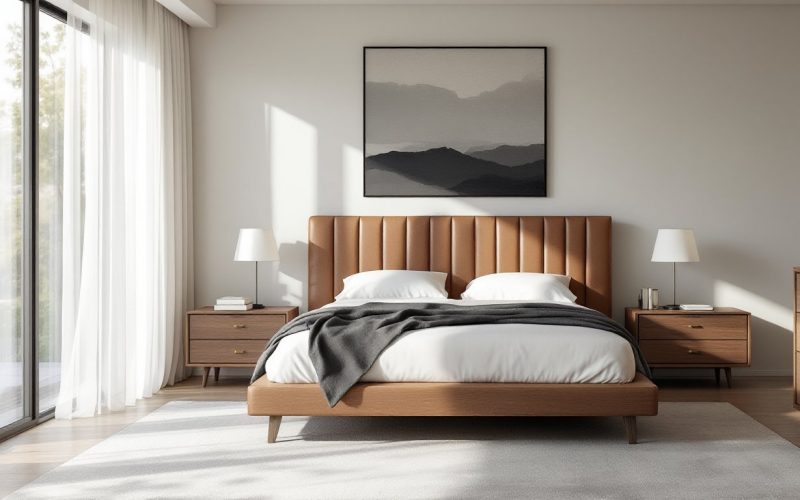
• Upholstered headboards: Leather (top-grain or full-grain, not bonded scraps), linen, or bouclé. Channel tufting adds texture without fussiness. Avoid over-tufted, high-gloss options that skew traditional.
• Integrated storage: Drawers built into the platform base maximize space in smaller rooms without adding visual clutter. Ensure they’re on ball-bearing slides, cheaper roller slides snag and fail.
• Dimensions: King beds measure 76″ x 80″: California kings are 72″ x 84″. Measure the room first. Leave at least 30 inches on each side for nightstands and walking space. A king in a 10′ x 10′ room feels cramped.
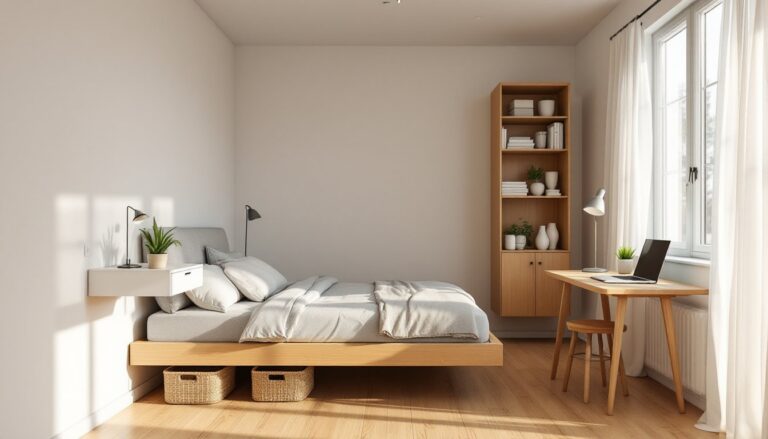
Floating beds (wall-mounted platforms or beds with recessed bases and LED underlighting) push the modern envelope but require solid wall anchoring. Not for renters or those who rearrange often.
Premium Nightstands and Dressers
Nightstands and dressers shouldn’t match the bed exactly, that’s catalog thinking. Instead, they should share a material palette or finish tone.
Nightstands:
• Two or three drawers max: Keeps the silhouette clean. Soft-close drawer glides are non-negotiable at this tier.
• Open shelf or single drawer: For minimalists. Pair with wall-mounted reading lights to free up surface space.
• Materials: Walnut with brushed brass pulls, matte black steel frames with marble tops, or lacquered wood in charcoal or taupe. Avoid high-gloss finishes, they show every fingerprint.
• Height: Top should sit level with or slightly below the mattress surface (typically 24″–28″ tall).
Dressers:
• Wide and low (6–9 drawers) vs. tall chests. Low profiles reinforce the horizontal modern aesthetic and work well under wall-mounted TVs.
• Dovetail joinery on drawers. Pull one out and look at the corners. Dovetails (interlocking wood “fingers”) are a sign of quality construction.
• Undermount slides: These hide the hardware and allow full drawer extension. Side-mounted slides are cheaper and leave dead space in the back.
• Finish consistency: If the bed is oiled walnut, choose case goods in the same finish. Mixing wood species works (walnut + oak) as long as undertones align, warm with warm, cool with cool.
Many designers featured on contemporary furniture showcases emphasize that cohesive finishes matter more than matching sets.
Materials and Finishes That Elevate Your Space
Materials make or break the luxury label. Here’s what to look for, and what to avoid.
Woods:
• Walnut: Dark, rich grain. Naturally luxe. Expensive but timeless.
• White oak: Light, subtle grain. Works in Scandinavian-modern or minimalist spaces.
• Teak: Dense, oily, water-resistant. Great for integrated benches or accent pieces.
• Avoid: Particle board, MDF with photo-printed “wood grain,” or pine stained to look like walnut. Tap it, solid wood sounds dense and dull: composites sound hollow.
Metals:
• Brushed brass or bronze: Warm, soft sheen. Pairs well with walnut and warm grays.
• Matte black steel: Cool, industrial edge. Works with concrete, glass, or light woods.
• Stainless steel or polished chrome: Clinical unless used sparingly (drawer pulls, bed legs). Best for ultra-modern or industrial themes.
Upholstery:
• Leather: Top-grain (sanded surface, uniform) or full-grain (natural surface, shows character). Bonded leather is scraps glued together, it peels within a few years.
• Linen or bouclé: Breathable, textured, sophisticated. Requires spot-cleaning or professional upholstery care.
• Performance fabrics: Not just for kids’ rooms. High-end versions (Crypton, Sunbrella) resist stains without sacrificing hand-feel.
Stone and Glass:
• Marble or quartz tops: Stunning on nightstands or dresser tops. Marble stains (seal it): quartz doesn’t but costs more.
• Tempered glass: Clean, light, breakage-resistant. Works as tabletops or shelf insets but shows dust.
Finishes:
• Matte or satin: Modern luxury leans matte. It hides fingerprints and feels sophisticated.
• Oiled or waxed wood: Brings out natural grain. Requires occasional re-oiling (once or twice a year with tung or Danish oil).
• Lacquered: High-gloss or matte lacquer seals and protects. Matte lacquer is ideal, durable and understated.
Skip anything described as “distressed,” “antiqued,” or “shabby chic.” Those aesthetics conflict with modern luxury’s crisp, intentional look, much like the streamlined approach seen in modern furniture design.
How to Choose Modern Luxury Furniture for Your Bedroom
Choosing well means measuring twice, checking construction, and resisting impulse buys.
1. Measure the room and map traffic flow.
Sketch the floor plan to scale or use painter’s tape on the floor to outline furniture footprints. Leave at least 30 inches of clearance around the bed and 36 inches in front of dressers for drawer access.
2. Inspect joinery and hardware.
Pull out drawers. Look for:
• Dovetail or box joints (not staples)
• Full-extension, soft-close slides
• Solid wood drawer boxes (not thin plywood or cardboard bottoms)
Check how the bed frame connects. Bolted steel brackets > wood screws into pre-drilled holes.
3. Test weight and stability.
Quality furniture is heavy. A solid walnut nightstand will weigh 40–60 lbs: a particle board equivalent might be 15 lbs. Gently shake or press down on corners, no wobble.
4. Verify materials.
Ask for specs. “Walnut veneer over MDF” is honest: “walnut finish” usually means printed laminate. If shopping online, read the fine print. “Wood-look” or “wood-inspired” = not wood.
5. Consider modularity and longevity.
Will this piece work if they move or redecorate in five years? Neutral palettes and timeless profiles age better than trendy shapes or colors. Modular systems (beds with swappable headboards, dressers that stack) offer flexibility.
6. Budget for quality, not quantity.
One solid walnut dresser with dovetail drawers ($1,200–$2,500) beats three particleboard dressers ($300 each) that’ll sag and fail within a decade. Luxury furniture is an investment, similar to how stylish furniture selections prioritize long-term value.
7. Check return policies and warranties.
Reputable makers warranty joinery and hardware for at least 1–5 years. If there’s no warranty, that’s a red flag.
Styling Tips to Maximize the Luxury Look
Great furniture is the foundation, but styling pulls the room together.
Layer textures, not patterns.
Modern luxury thrives on tactile variety: linen duvet, velvet throw pillows, a wool or sheepskin rug, a chunky knit blanket. Keep colors monochromatic or tonal (grays, taupes, creams, blacks).
Limit accessories.
Three items per nightstand max: a lamp, a small tray or dish, and one personal object (book, candle, small plant). Luxury is about negative space, let the furniture breathe.
Invest in lighting.
A sculptural floor lamp or pendant beats a builder-grade ceiling fan with lights. Dimmable LEDs (2700K–3000K color temperature) create warmth. Wall-mounted reading lights free up nightstand space and look hotel-chic.
Use symmetry, or intentional asymmetry.
Matching nightstands and lamps create calm, balanced energy. If going asymmetrical, commit fully: one nightstand, one floor lamp, one large piece of art off-center.
Anchor with a rug.
A rug should extend at least 18–24 inches beyond each side of the bed. For a king bed, that’s typically an 8′ x 10′ or 9′ x 12′ rug. Wool, jute, or low-pile synthetics work best (high-pile shag feels dated).
Frame the bed with art.
One large-scale piece (48″+ wide) centered above the headboard, or a gallery wall with simple black or natural wood frames. Keep framing consistent and matting minimal.
Control clutter.
Integrated storage in the bed platform, inside nightstands, or within dressers keeps surfaces clear. Modern luxury depends on visual calm, a principle also reflected in fitted storage solutions that maximize space.
Prioritize quality bedding.
Percale or sateen cotton (300–600 thread count), linen, or Tencel. Crisp hotel corners and a tailored duvet make even a budget bed look expensive. Avoid busy prints, stick to solids or subtle texture.
Consider scale and proportion.
Oversized furniture in a small room feels oppressive: petite pieces in a large room look lost. As a rule, nightstands should be about two-thirds the width of the headboard section on each side. Dressers shouldn’t be wider than the bed unless they’re the room’s focal point.
For those working from the bedroom, integrating a compact workspace with sleek, modern office furniture can maintain the luxury aesthetic without crowding the space.
Finally, trust the edit. If a piece doesn’t serve a clear function or bring visual joy, it doesn’t belong. Modern luxury is as much about what’s left out as what’s included. Interior design authorities at Architectural Digest consistently emphasize that restraint, quality materials, and thoughtful curation define truly luxurious spaces.