Table of Contents
ToggleTeal furniture has made a serious comeback, and it’s not just a passing trend. This blue-green hybrid brings depth, personality, and versatility to living rooms without the risk of looking dated next season. Whether someone’s working with a neutral palette or bold accent walls, teal furniture anchors a room with color that feels both calming and energizing. It works in modern lofts, traditional homes, and everything between. The key is understanding which pieces to invest in, how to balance the color, and which shades actually work with existing decor.
Key Takeaways
- Teal living room furniture combines timeless appeal with practical durability, hiding stains and wear better than lighter colors while remaining relevant across design eras.
- Choose the right shade of teal based on undertones and lighting: blue-dominant teals suit warm wood and south-facing rooms, while green-dominant teals work better in cooler-lit, north-facing spaces.
- Quality construction matters—invest in hardwood frames with mortise-and-tenon joinery, high-density foam cushions, and performance fabrics to ensure teal sofas and accent pieces last for decades.
- Teal furniture adapts to multiple design styles, from coastal and mid-century modern to bohemian and industrial, without requiring a full room redesign.
- Test teal fabric swatches in your actual room at different times of day before purchasing, as natural and artificial lighting can significantly change how the color appears.
Why Teal Is the Perfect Choice for Living Room Furniture
Teal sits in a sweet spot on the color wheel, cool enough to feel relaxing, warm enough to avoid that sterile hospital vibe. It pairs naturally with neutrals like gray, beige, and white, but it also holds its own against bolder colors like mustard, coral, or even deep plum.
Unlike trendy pastels or neon accents, teal has historical staying power. It’s been used in interior design for decades, from mid-century modern pieces to Victorian upholstery. That longevity means a teal sofa won’t scream “2026” five years from now.
From a practical standpoint, teal upholstery hides minor stains and wear better than lighter colors. Fabrics in this range, especially velvet, linen, and performance blends, tend to age gracefully. The color’s depth masks pet hair, dust, and the occasional spill better than cream or pale gray options.
Teal also works across different lighting conditions. North-facing rooms with cooler light benefit from warmer teals with green undertones, while south-facing spaces can handle cooler, bluer teals without feeling icy. That adaptability makes it a safer investment than colors that only work in specific light.
Another advantage: teal furniture doesn’t require a full room overhaul. Someone can drop a teal accent chair into an existing neutral space and instantly elevate the design without repainting walls or replacing rugs.
Best Types of Teal Furniture for Your Living Room
Teal Sofas and Sectionals
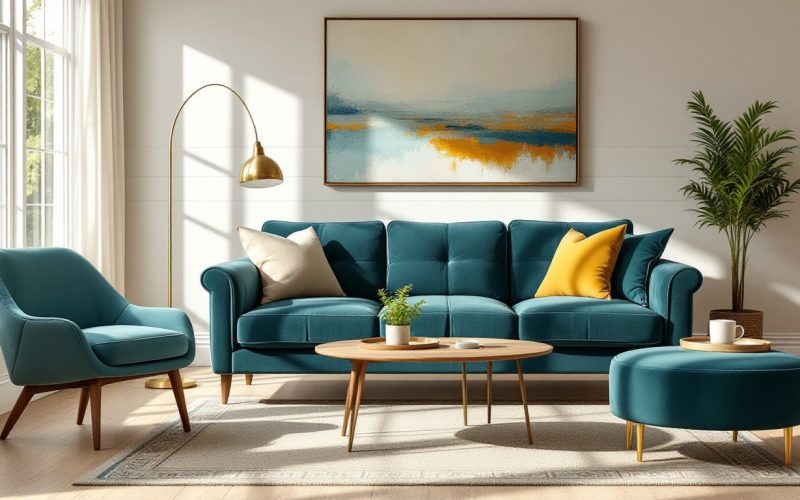
Teal sofas are the anchor piece in most living rooms. A standard three-seater in teal velvet or performance fabric can handle daily use while making a statement. Velvet is popular for its richness and light-reflective quality, but it shows wear in high-traffic homes. Performance fabrics like Crypton or Sunbrella-treated textiles offer stain resistance and durability, ideal for homes with kids or pets.
When selecting a teal sofa, pay attention to frame construction. Hardwood frames (oak, maple, or beech) with mortise-and-tenon joinery last decades. Avoid particleboard or stapled frames, especially on a statement piece meant to anchor the room for years. Cushion fill matters too: high-density foam (at least 1.8 lbs per cubic foot) or down-wrapped foam cores provide support without going flat after a year.
Teal sectionals work well in open-concept spaces or larger living rooms. L-shaped configurations fit corners efficiently, while U-shaped sectionals create conversation zones. Modular sectionals offer flexibility, sections can be rearranged or separated if someone moves or redesigns the space. Look for pieces with removable covers if investing in a bold color: the ability to clean or replace upholstery extends the life of the furniture.
For those tackling upholstery themselves, reupholstering an existing sofa in teal fabric is a cost-effective alternative to buying new. Standard upholstery-weight fabric (at least 50,000 double rubs on the Martindale scale) runs $20–$60 per yard depending on fiber content. A standard sofa requires 12–16 yards. Replacing foam and batting adds $100–$200 in materials. The project demands a heavy-duty sewing machine, upholstery stapler, and patience, but it’s doable for intermediate DIYers.
Teal Accent Chairs and Ottomans
Accent chairs in teal offer a lower-commitment way to introduce the color. Mid-century modern silhouettes, think tapered legs, angled backs, and slim arms, pair well with teal. The color emphasizes clean lines without overwhelming smaller spaces.
Wingback chairs in teal velvet add traditional elegance, especially in rooms with crown molding or wainscoting. Club chairs and barrel chairs work in transitional spaces, bridging modern and classic aesthetics. When selecting teal furniture pieces, many homeowners consider how statement pieces integrate with existing layouts.
For DIY enthusiasts, painting wooden chair frames before reupholstering seats in teal fabric is a weekend project. Strip old finish with a chemical stripper or sander (wear a respirator and work outdoors or in a well-ventilated space). Prime with a bonding primer, then apply two coats of furniture-grade paint or stain. Let cure for 72 hours before reattaching upholstered seats.
Ottomans in teal function as footrests, extra seating, or coffee table alternatives when topped with a tray. Storage ottomans with hinged lids add hidden space for blankets or remotes. Standard ottoman dimensions range from 18″ × 18″ for compact spaces to 36″ × 36″ for larger rooms. Ensure the height aligns with sofa seat height (typically 17″–19″) for comfortable footrest use.
How to Style Teal Furniture in Different Design Schemes
Coastal and nautical schemes are natural fits for teal. Pair teal sofas with white or sandy beige walls, jute rugs, and natural wood accents. Incorporate brass or brushed nickel hardware on side tables and lamps. Avoid going too literal with anchor motifs, subtle nods like rope-wrapped vase bases or driftwood frames keep it sophisticated.
Mid-century modern spaces benefit from teal’s retro roots. Combine teal accent chairs with walnut or teak wood furniture, geometric rugs in mustard or orange, and starburst mirrors. Keep lines clean and avoid heavy ornamentation. Tapered furniture legs and low-profile pieces maintain the era’s signature openness.
Bohemian or eclectic rooms can handle richer, more saturated teals. Layer patterns, think ikat pillows, Moroccan rugs, and block-printed throws. Mix metals (brass, copper, and aged bronze) and incorporate plants for texture. Teal pairs especially well with terracotta pots and natural fiber baskets.
Industrial loft settings use teal as a counterbalance to exposed brick, concrete floors, and metal fixtures. A teal leather sofa softens hard surfaces without losing edge. Pair with black metal shelving, Edison bulb lighting, and reclaimed wood coffee tables. The color adds warmth without clashing with raw materials.
Traditional and transitional spaces can incorporate teal through upholstered furniture with classic silhouettes. Tufted sofas, rolled-arm chairs, and skirted ottomans in teal velvet or linen blend formality with color. Balance with neutral walls (greige, soft white, or warm gray) and classic wood finishes like cherry or mahogany. Design enthusiasts often turn to resources like contemporary furniture galleries for styling inspiration.
Farmhouse and rustic interiors use muted teals (more green than blue) alongside whitewashed wood, galvanized metal, and linen textiles. A teal slipcovered sofa fits this aesthetic, especially in performance linen that mimics vintage fabric while resisting stains. Pair with chunky knit throws, wire baskets, and ceramic pottery in cream or sage.
Choosing the Right Shade of Teal for Your Space
Teal isn’t one color, it’s a spectrum. Understanding undertones prevents costly mistakes.
Blue-dominant teals (sometimes called peacock or ocean teal) lean cooler. They work well in rooms with warm wood tones, gold accents, or terracotta. These shades feel crisp and energizing, ideal for south-facing rooms with abundant natural light. Blue-heavy teals pair well with navy, charcoal, and white.
Green-dominant teals (jade, sea green, or duck egg) feel earthier and more subdued. They suit north-facing rooms, spaces with cooler light, or designs leaning toward organic, botanical themes. Green-leaning teals complement browns, tans, creams, and soft pinks.
Muted or dusty teals contain more gray, reducing intensity. These work in minimalist or Scandinavian-inspired spaces where bold color feels too aggressive. Muted teals pair with soft grays, whites, and black accents without competing for attention. Homeowners researching color palettes often explore modern decor trends for seasonal shade recommendations.
Saturated or jewel-tone teals (like emerald-teal hybrids) bring drama. They’re best reserved for accent pieces rather than large sofas unless the room is spacious and well-lit. Jewel tones pair with brass, gold, deep plum, and black.
Before committing to a teal furniture purchase, test fabric swatches in the actual room. Lighting, both natural and artificial, drastically changes how teal reads. Pin swatches to the wall and observe them at different times of day. Morning light, afternoon sun, and evening lamplight can make the same fabric look blue, green, or gray.
Consider existing fixed elements: flooring, trim, and built-ins. Teal works with most wood tones, but very orange oak may clash with cooler teals. Painted trim in bright white enhances teal’s vibrancy, while cream or ivory trim softens it.
If the room already has a dominant color (a red brick fireplace, for example), choose a teal that shares an undertone. A warm, green-leaning teal bridges better with red brick than an icy, blue-heavy teal.
Conclusion
Teal furniture offers a rare combination: bold enough to make a statement, versatile enough to adapt across styles, and timeless enough to avoid looking dated. Whether investing in a full sectional or testing the waters with an accent chair, the color brings depth and personality that neutrals can’t match. Choose the shade carefully, balance it with the room’s existing elements, and don’t shy away from mixing textures. Done right, teal transforms a living room from generic to genuinely memorable. Resources like design showcases provide ongoing inspiration as trends shift, but teal’s foundational appeal remains constant.